Antioxidants (eBook)
1299 Seiten
Wiley-Scrivener (Verlag)
978-1-394-27055-2 (ISBN)
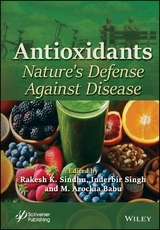
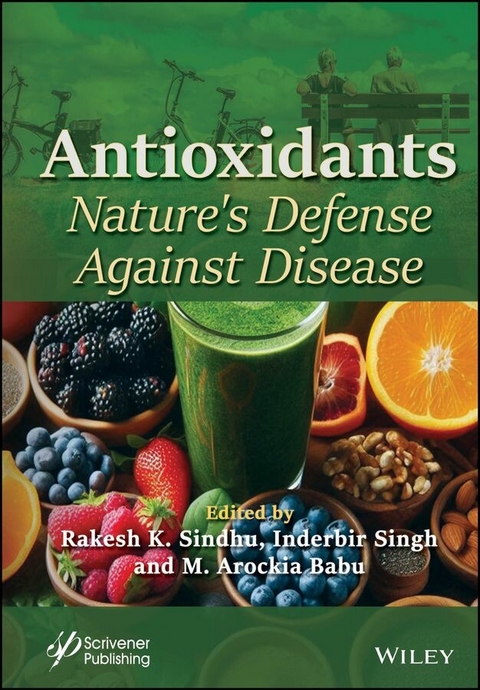
This book provides a comprehensive exploration of the role antioxidants play in preventing and managing a variety of diseases and critically examines current research on the effects of nutritional antioxidants on specific disease states.
Antioxidants: Nature's Defense Against Disease investigates the complex relationship between oxidative stress and many health disorders, providing essential insights into the role of antioxidants in disease prevention. It investigates how oxidative stress, induced by an imbalance of free radicals and antioxidants in the body, leads to the development and progression of maladies ranging from cardiovascular disorders to neurological diseases. The book includes evidence-based ways for harnessing antioxidants from natural sources such as fruits, vegetables, and herbs to reduce the impact of oxidative damage and improve general health.
The book presents the most recent scientific advances and clinical findings in antioxidant therapy. It is a comprehensive resource for healthcare professionals and researchers and covers everything from the molecular mechanisms that underpin oxidative stress to the protective benefits of antioxidants against chronic diseases. Through its interdisciplinary approach and practical insights, Antioxidants: Nature's Defense Against Disease provides readers with the knowledge and tools they need to optimize antioxidant consumption, empowering them to control their health and lower their risk of severe diseases.
Audience
The core audiences for this book are nutritionists, dieticians, researchers, and graduate students in health sciences, and those interested in preventive healthcare, such as health, nutrition, fitness, and wellness enthusiasts, looking to deepen their understanding of implementing antioxidant strategies and improving lifestyle choices.
Rakesh K. Sindhu, PhD, is a professor and research and development coordinator, the School of Pharmacy, Sharda University, Greater Noida, Uttar Pradesh, India. He has published 8 books and 25 book chapters, more than 90 papers in reputed journals, and presented papers at 10 international and 30 national conferences. His research focuses on the pharmacological evaluation of herbal drugs/products, nanoformulation development and evaluation, standardization of herbal products, and phytochemical screening.
Inderbir Singh, PhD, is a professor at Chitkara College of Pharmacy, Chitkara University, Patiala, Punjab, and has a total experience of 22 years in both industry and academia. He has published more than 135 research/review articles in national and international journals, 8 books, 22 book chapters, 12 patents granted, 11 patents (applied), and 14 design registrations (applied). His research interests include neurodevelopmental disorders, gastroretentive drug delivery systems, co-processed excipients, co-crystals, biopolymers/ biomaterials/modified polymers in drug delivery, QbD, SeDeM expert system, 3D printing technology.
M. Arockia Babu, PhD, is the director of the Institute of Pharmaceutical Research, GLA University, Mathura, Chaumuhan, Uttar Pradesh, India. He has more than 23 years of expertise in administration and research and has lectured extensively around the world.
This book provides a comprehensive exploration of the role antioxidants play in preventing and managing a variety of diseases and critically examines current research on the effects of nutritional antioxidants on specific disease states. Antioxidants: Nature s Defense Against Disease investigates the complex relationship between oxidative stress and many health disorders, providing essential insights into the role of antioxidants in disease prevention. It investigates how oxidative stress, induced by an imbalance of free radicals and antioxidants in the body, leads to the development and progression of maladies ranging from cardiovascular disorders to neurological diseases. The book includes evidence-based ways for harnessing antioxidants from natural sources such as fruits, vegetables, and herbs to reduce the impact of oxidative damage and improve general health. The book presents the most recent scientific advances and clinical findings in antioxidant therapy. It is a comprehensive resource for healthcare professionals and researchers and covers everything from the molecular mechanisms that underpin oxidative stress to the protective benefits of antioxidants against chronic diseases. Through its interdisciplinary approach and practical insights, Antioxidants: Nature s Defense Against Disease provides readers with the knowledge and tools they need to optimize antioxidant consumption, empowering them to control their health and lower their risk of severe diseases. Audience The core audiences for this book are nutritionists, dieticians, researchers, and graduate students in health sciences, and those interested in preventive healthcare, such as health, nutrition, fitness, and wellness enthusiasts, looking to deepen their understanding of implementing antioxidant strategies and improving lifestyle choices.
1
Basics of Antioxidants and Their Importance
Shuchi Goyal1, Divya Thirumal2, Sumitra Singh3, Dinesh Kumar4, Inderbir Singh1, Gautam Kumar5 and Rakesh K. Sindhu5*
1Chitkara College of Pharmacy, Chitkara University, Punjab, India
2Manipal College of Pharmaceutical Sciences, Manipal University, Manipal, Karnatka, India
3Department of Pharmaceutical Sciences, Guru Jambheshwar University of Science and Technology, Hisar, Haryana, India
4Department of Pharmaceutical Sciences, Central University of Haryana, Jant-Pali, Mahendergarh, India
5School of Pharmacy, Sharda University, Greater Noida, Uttar Pradesh, India
Abstract
Fast living leads to an overabundance of free radicals in the body, which ultimately leads to mortality and a reduction in life expectancy by damaging cells, tissues, and organs. Consuming antioxidants aids in scavenging free radicals to ward off both acute and persistent illnesses. Antioxidants are essential that reducing the reactive mechanisms and the negative consequences of reactive oxygen species (ROS) throughout the chain supply and individual physiology. ROS are crucial for neuronal signaling, differentiation, tissue homeostasis, and longevity. In this overview, we go over the many forms of ROS, how they affect the function of cells, and whether they promote or inhibit cancer development. ROSs’ detrimental impacts and their significance in the initiation of pathology are explored. A crucial part of these defense strategies is played by antioxidants. It is generally recognized that the inclusion of phenolic chemicals, particularly phenolic acids and flavonoids, is associated with antioxidative and pharmacologic effects. Antioxidants are now a crucial component of sophisticated health care. Antioxidants, whether they be organic or artificial, can help combat many diseases early on and works best when they are present in high concentrations. They affect how adequately the therapy responds. In addition to its usage in nutritious dietary supplements, emphasis is being placed on utilizing them as natural substitutes for synthetic versions to improve food durability and prevent degradation by oxidation throughout manufacturing and preservation. In purpose to support technological improvement in this domain, this overview summarizes relevant and widely recognized findings on the efficient significance of organic and synthesized antioxidants with associated therapeutic value.
Keywords: Antioxidants, ROS, free radicals, pathology, importance, applications
Abbreviations
| RON | reactive oxygen and nitrogen species |
| ET | electron transfer |
| HTD | hydrogen atom donation |
| EDTA | ethylenediaminetetraacetic acid |
| CA | citric acid |
| Vit C | Vitamin C |
| Vit B | Vitamin B |
| Vit A | Vitamin A |
| MDA | malondialdehyde |
| 8-OHdG | 8-hydroxy-2′-deoxyguanosine levels |
1.1 Introduction
Imagine your body as a bustling city, with millions of residents busily going about their daily activities. In this city, just like in any vibrant community, there is a natural process of wear and tear. As time passes, structures deteriorate, and waste accumulates. However, to maintain the city’s vitality and ensure its residents’ well-being, there are diligent workers known as “antioxidants.” Antioxidants, pivotal in cellular protection, counteract the harm induced by unstable molecules termed free radicals. These radicals, through oxidative reactions, instigate cellular damage, potentially culminating in conditions like cancer. Antioxidants engage with free radicals, stabilizing them and thwarting potential harm. Key antioxidants encompass bella carotin, carotenoid, vit A, B, C, as well as various polyphenols [1]. An antioxidant has the ability to slow down or prevent different compounds from oxidizing, which is the chemical process by which ions move from one material to an oxidation agent. This decay procedure births liberated, setting off detrimental chain reaction within cells [2, 3]. Antioxidants step in, oxidizing themselves and removing the free radical intermediates that cause these chain reactions to stop. Interestingly, several antioxidants—such as polyphenols, thiols, and ascorbic acid—also function as reducing agents [4]. While oxidation reactions are vital for life, their immoderation can prove deleterious. Consequently, organisms, both flora and fauna, maintain intricate antioxidant defense systems. These include a range of enzymes, including catalase, superoxide dismutase, and several oxidoreductases, as well as antioxidants, including glutathione, vitamin C, and vitamin E [5]. Free radical damage can be brought on by low antioxidant levels or malfunctioning antioxidant enzymes, which may cause damage or even death to cells [6]. Given the potentials implication of Free radical damage in numerous human ailments, extensive research explores the utility of antioxidants in pharmacology, particularly in treating stroke and neurodegenerative disorder [7]. Nonetheless, whether oxidative stress acts as the cause or consequence of diseases remains unclear. Antioxidants are extensively utilized in dietary supplements, aiming to sustain health and avert conditions like cancer and coronary heart disease. While early studies suggested potential health benefits of antioxidant supplements, subsequent large clinical trials failed to validate such advantages and instead hinted at potential harm with excessive supplementation. Additionally, antioxidants find broad industrial applications, functioning as chemicals in food and Corrective and inhibiting condescension in latex and petrol [8, 9]. Chemists have long acknowledged the ability of antioxidants to mitigate oxidation caused by free radicals, essential for maintaining stability in various substances, including lubrication oils and plastics. Human biological processes, encompassing respiration, metabolism, digestion, and energy conversion, generate reactive oxygen and nitrogen species (RONs), which can manifest as free radicals or readily generate them [10]. RONs, at moderate concentrations, play pivotal roles in biological pathways but can cause considerable damage at elevated levels, leading to disruptions in cellular signaling and Free radical damage [11]. This imbalance can lead to irreversible alterations in cell compounds, affecting cellular health and contributing to major chronic ailments such as cancer, cardiovascular, liver, and neurological disorders. Antioxidant defense mechanisms encompass a spectrum of approaches, including inhibiting free radical production, scavenging free radicals, converting free radicals into less dangerous substances, postponing the emergence of more hazardous species and halting the spread of chains reactions, bolstering the endogenous antioxidant defense system through synergistic action, and chelation. These multifaceted mechanisms collectively contribute to cellular resilience against Free radical damage and its detrimental moment [12].
1.2 Generalization of Antioxidant
Antioxidants is compounds that protect cells from oxidative damage caused by free radicals and reactive oxygen species (ROS). Oxidative stress resulting from an inequality between the production of these harmful molecules and the body’s ability to neutralize them has been linked to various chronic diseases, including cardiovascular diseases, cancer, neurodegenerative disorders, and aging [13]. The main types of antioxidants are those that use a single electron transfer (ET) mechanism or hydrogen atom donation (HAT) to eliminate free radicals. Antioxidant catalysts that are prooxidant are neutralized by secondary antioxidants [14]. These include compounds that deactivate reactive species like singlet oxygen (beta-carotene) or chelate prooxidant metal ions (such iron and copper), such as (EDTA) and citric acid (CA) [10]. Mechanism of antioxidants -Scavenging Free Radicals: Antioxidants, through various enzymes and molecules, can neutralize free radicals by donating electrons [15]. This process mitigates the harmful chain reactions initiated by free radicals.
Enzymatic Scavengers: as reverse fibrosis, catalase, and GPx1, act as the first line of defense against free radical damage, reverse fibrosis. For example, catalyzes the dismutation of superoxide radicals into less harmful species.
Non-enzymatic Antioxidants:
- Non-enzymatic antioxidants encompass a wide range of molecules, including vit (e.g., vitamin E,C), lignans (e.g., flavonoids and resveratrol), and trace elements (e.g., selenium and zinc). These antioxidants exert their effects by quenching ROS directly or indirectly [16].
Chelation of Metal Ions:
- Some antioxidants, like metal-binding proteins and chelators, combat oxidative stress by binding to metal ions (e.g., iron and copper) that catalyze the formation of highly reactive radicals. This prevents metal-mediated ROS generation [17].
Regulation of Transcription Factors:
- Some antioxidants activate transcription variables, like the nuclear factor erythroid 2-associated factor 2 (Nrf2), to modify how cells react to oxidative...
| Erscheint lt. Verlag | 17.12.2024 |
|---|---|
| Sprache | englisch |
| Themenwelt | Naturwissenschaften ► Chemie ► Organische Chemie |
| ISBN-10 | 1-394-27055-0 / 1394270550 |
| ISBN-13 | 978-1-394-27055-2 / 9781394270552 |
| Informationen gemäß Produktsicherheitsverordnung (GPSR) | |
| Haben Sie eine Frage zum Produkt? |
 EPUB (Adobe DRM)
Kopierschutz: Adobe-DRM
Adobe-DRM ist ein Kopierschutz, der das eBook vor Mißbrauch schützen soll. Dabei wird das eBook bereits beim Download auf Ihre persönliche Adobe-ID autorisiert. Lesen können Sie das eBook dann nur auf den Geräten, welche ebenfalls auf Ihre Adobe-ID registriert sind.
Details zum Adobe-DRM
Dateiformat: EPUB (Electronic Publication)
EPUB ist ein offener Standard für eBooks und eignet sich besonders zur Darstellung von Belletristik und Sachbüchern. Der Fließtext wird dynamisch an die Display- und Schriftgröße angepasst. Auch für mobile Lesegeräte ist EPUB daher gut geeignet.
Systemvoraussetzungen:
PC/Mac: Mit einem PC oder Mac können Sie dieses eBook lesen. Sie benötigen eine
eReader: Dieses eBook kann mit (fast) allen eBook-Readern gelesen werden. Mit dem amazon-Kindle ist es aber nicht kompatibel.
Smartphone/Tablet: Egal ob Apple oder Android, dieses eBook können Sie lesen. Sie benötigen eine
Geräteliste und zusätzliche Hinweise
Buying eBooks from abroad
For tax law reasons we can sell eBooks just within Germany and Switzerland. Regrettably we cannot fulfill eBook-orders from other countries.
aus dem Bereich