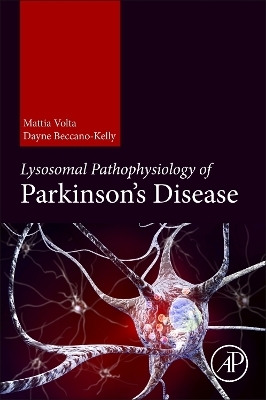
Lysosomal Pathophysiology of Parkinson’s Disease
Academic Press Inc (Verlag)
978-0-443-24050-8 (ISBN)
- Noch nicht erschienen (ca. November 2026)
- Versandkostenfrei
- Auch auf Rechnung
- Artikel merken
By exploring protein pathology and synaptic alterations, the book underscores the broader implications of autophagy-lysosome dysfunction. Additionally, it discusses how the molecular perspectives gleaned from Parkinson’s Disease can inform our understanding of these other conditions, presenting a unified approach to studying neurodegeneration.
Dr. Volta is a Senior Researcher and Team Leader at Eurac Research, in Italy. He has worked in Parkinson’s disease for his whole career, applying several complementary approaches in vitro and in vivo to better understand the causes of the disease and how to tackle them therapeutically. His current team has developed a strong focus on the investigation of the autophagy-lysosome pathway, assessing how it is affected by genes linked to Parkinson’s and identifying novel molecular mechanisms that could underlie disease etiology. This mechanistic effort is aimed at nominating and validating novel, effective targets for neuroprotection. Dr. Beccano-Kelly is a UKRI Future Leader Fellow and expert on synaptic dysfunction in Parkinson’s disease. With a degree in Biochemistry and over 17 years of neurodegenerative research experience, he has numerous publications in the field of electrophysiology, molecular mechanism in neurodegenerative conditions. His particular focus has been on Parkinson’s, utilizing various models of the disease including induced pluripotent stem cells and murine models. Via assessment of late-onset disease causing mutations in critical genes (LRRK2, GBA, VPS35, DNAJC13) his target has been to recapitulate the insidious and progressive nature of Parkinson’s disease in an effort to understand the pathophysiological timeline and identify ways in which to intervene with the disease process
Part 1: A molecular reappraisal of Parkinson’s disease
1. Clinical and neuropathological presentation of Parkinson’s disease
2. The genetic revolution: towards an etiology-based view
3. Neuronal processes involved in etiology
4. Non-neuronal mechanisms of disease
5. The autophagy-lysosome pathway as convergence point of pathogenesis
Part 2: Autophagy-Lysosome function in Parkinson’s pathophysiology
6. Molecular biology of the autophagy pathway
7. The functional roles of lysosomes
8. Physiology of lysosomes in the critical electrophysiological function of neurons
9. Lysosomes in Parkinson’s disease neuropathology
10. Lysosomal dysfunction in Parkinson’s disease etiology
Part 3: Therapeutic options targeting lysosome biology
11. Current therapies for PD
12. Targeting options in lysosome biology
13. Autophagy-Lysosome-based therapies in neurological disorders
14. An update on clinical trials for autophagy-lysosome therapies in Parkinson’s disease
15. Prospective targeting strategies and drug development
Part 4: Neurobiological commonalities with other neurodegenerative proteinopathies
16. The autophagy-lysosome pathway and overlaps with Alzheimer-like pathologies
17. The autophagy-lysosome pathway in other neurodegenerative diseases
18. Synaptic dysfunction in neurodegeneration
19. Towards a common pathophysiology scenario in neurodegenerative diseases?
| Erscheint lt. Verlag | 1.11.2026 |
|---|---|
| Verlagsort | San Diego |
| Sprache | englisch |
| Maße | 152 x 229 mm |
| Themenwelt | Studium ► 1. Studienabschnitt (Vorklinik) ► Physiologie |
| Naturwissenschaften ► Biologie ► Humanbiologie | |
| Naturwissenschaften ► Biologie ► Zoologie | |
| ISBN-10 | 0-443-24050-7 / 0443240507 |
| ISBN-13 | 978-0-443-24050-8 / 9780443240508 |
| Zustand | Neuware |
| Informationen gemäß Produktsicherheitsverordnung (GPSR) | |
| Haben Sie eine Frage zum Produkt? |
aus dem Bereich