The Biology of Peatlands
Oxford University Press (Verlag)
978-0-19-852872-2 (ISBN)
- Titel ist leider vergriffen;
keine Neuauflage - Artikel merken
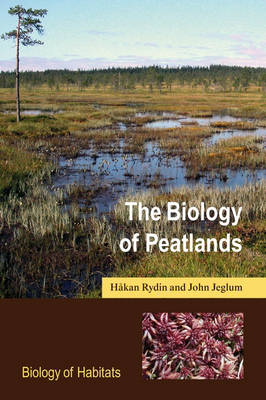
The Biology of Peatlands provides a comprehensive overview of peatland ecosystems. Coverage is international although there is a focus on boreal and north temperate peatlands. As well as thoroughly referencing the latest research, the authors expose a rich older literature where an immense repository of natural history has accumulated. The book begins with an overview of the main peatland types (marsh, swamp, fen and bog), which provides the basis for a deeper understanding of the subject. Chapters then follow on the diversity of the entire range of biota present (microbes, invertebrates, plants, and vertebrates), together with their specific adaptations to peatland habitats. Detailed coverage is devoted to the moss genus Sphagnum, one of the most important functional plant groups in northern peatlands. Throughout the book, the interactions between organisms and environmental conditions (especially wetness, availability of oxygen, and pH) are stressed. In the study of peatland biology, it is essential to learn about peat itself and how its accumulation reflects the history and development of peatland over centuries and millennia.The book therefore contains chapters on the physical and chemical characteristics of peat, the role of peat as an archive of past vegetation and climate, and peatland succession and development.
Several other key factors and processes are then examined including hydrology, nutrient cycling, light, and temperature. The authors describe the intriguing patterns and landforms characteristic of peatlands in different parts of the world, together with theories on how they have developed. The role of peatlands as sources or sinks for atmospheric carbon dioxide and methane, and their influence on climatic change, is also outlined. A final chapter considers peatland management, conservation and restoration issues. This accessible text is suitable for students and researchers of peatlands as well as the professional ecologists and conservation biologists requiring a concise, authoritative and up-to-date overview of the topic.
Hakan Rydin is professor in Plant Ecology at Uppsala University, where he teaches ecology courses. His research focusses on the ecology of peatlands and the biology of bryophytes, both in peatlands and in other ecosystems. Over the years he has used peatlands to discuss ecological topics such as plant community structure, succession, and vegetation dynamics. His studies on the peat mosses (Sphagnum) cover ecophysiology, competition, niche relations, and dispersal. In more applied projects Rydin has dealt with the effects of nitrogen deposition and increased levels of carbon dioxide on mire ecosystems across Europe, and also worked with experiments on the restoration of drained peatlands. John Jeglum, recently retired, was Professor in Forest Peatland Science at the Swedish University of Agricultural Sciences in Umea, where he taught wetland ecology and peatland forestry. His research dealt with forest and peatland succession, and GIS analysis of peatland distribution in relation to state factors. Jeglum has studied peatlands in Canada (Saskatchewan, Ontario, Hudson-James Bay Lowlands), Sweden, Finland, and Ireland. Contributing authors have provided sections by on tropical and southern hemisphere peatlands "
Preface ; 1. Peatland habitats ; 2. Diversity of life in peatlands ; 3. Adaptations to the peatland habitat ; 4. Sphagnum - the builder of boreal peatlands ; 5. Peat and organic soil ; 6. The peat archives ; 7. Peatland succession and development ; 8. Hydrology of peatlands ; 9. Nutrients, light, and temperature ; 10. Peatland patterns and landforms ; 11. Peatlands around the world ; 12. Productivity and carbon balance ; 13. Uses, functions, and management of peatlands ; Glossary
| Erscheint lt. Verlag | 8.6.2006 |
|---|---|
| Reihe/Serie | Biology of Habitats |
| Co-Autor | John R. Jeglum |
| Zusatzinfo | numerous halftones, line drawings and tables |
| Verlagsort | Oxford |
| Sprache | englisch |
| Maße | 157 x 234 mm |
| Gewicht | 523 g |
| Themenwelt | Naturwissenschaften ► Biologie ► Botanik |
| Naturwissenschaften ► Biologie ► Ökologie / Naturschutz | |
| ISBN-10 | 0-19-852872-8 / 0198528728 |
| ISBN-13 | 978-0-19-852872-2 / 9780198528722 |
| Zustand | Neuware |
| Informationen gemäß Produktsicherheitsverordnung (GPSR) | |
| Haben Sie eine Frage zum Produkt? |
aus dem Bereich