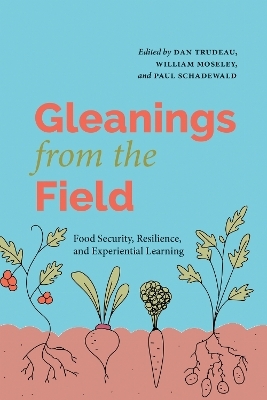
Gleanings from the Field
Lever Press (Verlag)
978-1-64315-072-7 (ISBN)
- Titel nicht im Sortiment
- Artikel merken
In recent years, the concept of “food security” has garnered significant attention among policymakers, activists, and educators. Stemming from a growing awareness of the complexities surrounding access to sufficient food globally, movements advocating for food justice and sovereignty have emerged in response to these systemic inequities and health disparities, particularly in local communities. With the COVID-19 pandemic, conflicts in regions such as Ukraine and Gaza, and the escalating impacts of climate change, reliable food security has become exacerbated by these existing disparities. Gleanings from the Field argues that addressing food security is essential for tackling broader sustainability challenges facing humanity and recognizes the role of food in community-building, cultural exchange, and quality of life. However, promoting food security entails navigating intricate trade-offs, such as balancing economic interests in food supply with environmental concerns.
This timely essay collection frames our food security challenges as “wicked problems,” puzzles without clear solutions that are characterized by evolving complexities and divergent stakeholder priorities. In classroom settings, they argue for the usage of experiential learning to cultivate “wicked problem-solving skills” among students. Gleanings from the Field exemplifies this approach, offering pedagogical interventions to prepare students for tackling these wicked problems, while advocating for high-impact learning experiences that enable students to grapple with the interconnected systems influencing food security. Through hands-on experiences and reflective practice, students gain a deeper understanding of these systems and their societal implications. Importantly, the contributions outlined in this volume underscore the need for a multidimensional view of food security, thus examining the intersections of economic interests, government policies, and social movements. By contextualizing food security within broader political-economic arrangements, educators can empower students to enact meaningful change.
Gleanings from the Field argues for a holistic approach to food security education, one that acknowledges the fraught nature of wicked problems and equips students with the skills and knowledge needed for effective action. By integrating experiential learning, conceptual frameworks about food security and resilience, and real-world engagement, educators can cultivate a new generation of resilient problem-solvers committed to addressing food insecurity and other wicked problems.
Dan Trudeau is Professor in the Department of Geography at Macalester College in Saint Paul, Minnesota, USA. William G. Moseley is DeWitt Wallace Professor of Geography, and Director of the Food, Agriculture and Society Program, at Macalester College. He formerly served on the UN High Level Panel of Experts for Food Security and Nutrition and is the author of 11 books. Paul Schadewald is Senior Project Manager for Bringing Theory to Practice, a national initiative to advance engaged, holistic, and equitable change in higher education, based at Elon University in Elon, N.C.
Preface and Acknowledgements
Section I: The Big Picture
Chapter 1. Introduction: Promoting Food Security and Resilience through Experiential Learning
Chapter 2. Fostering Undergraduate Learning: A Civic Engagement Practitioner's Perspective
Section II: Case Studies
Chapter 3. Out of the Classroom and on to the Farm: Collaborative Learning Experiences at Common Harvest CSA Farm
Chapter 4. How Community-Engaged Learning Spurs Meaningful Understandings in Economics
Chapter 5. Enhancing Physical Accessibility and Knowledge Transfer at the Student-Run Beloit College Urban Garden
Chapter 6. Pedagogy for a Public Geography of Poor Farms
Chapter 7. Supporting Students with Dignity: Belonging and Social Justice Learning in the First-Year Experience
Chapter 8. Relational, Logistica, and Pedagogical Considerations in Developing Urban Food Cultivation "Land School" Programs
Chapter 9. Community you can Consume: Cooking to Teach in a Time of Trauma
Chapter 10. Community-Building through Food: A Story of Resilience in the Face of Challenge
Chapter 11 Teaching Food Chemistry through Cooking
Chapter 12. Pedagogy of Mess: Taking Action Despite Uncertainty
Chapter 13. Building a Cluster of Community-Based Learning Courses
Chapter 14. Ethical Engagement in the Anthropology and Philosophy of Food: Community-Based Learning Across Disciplines
Section III: Moving Forward
Chapter 15. Conclusion: Praxis for a Better Future
About the Contributors
| Erscheinungsdatum | 10.04.2025 |
|---|---|
| Zusatzinfo | 31 black-and-white images |
| Sprache | englisch |
| Maße | 152 x 229 mm |
| Themenwelt | Schulbuch / Wörterbuch |
| Naturwissenschaften ► Biologie ► Ökologie / Naturschutz | |
| Sozialwissenschaften ► Pädagogik | |
| Technik ► Lebensmitteltechnologie | |
| ISBN-10 | 1-64315-072-3 / 1643150723 |
| ISBN-13 | 978-1-64315-072-7 / 9781643150727 |
| Zustand | Neuware |
| Informationen gemäß Produktsicherheitsverordnung (GPSR) | |
| Haben Sie eine Frage zum Produkt? |
aus dem Bereich