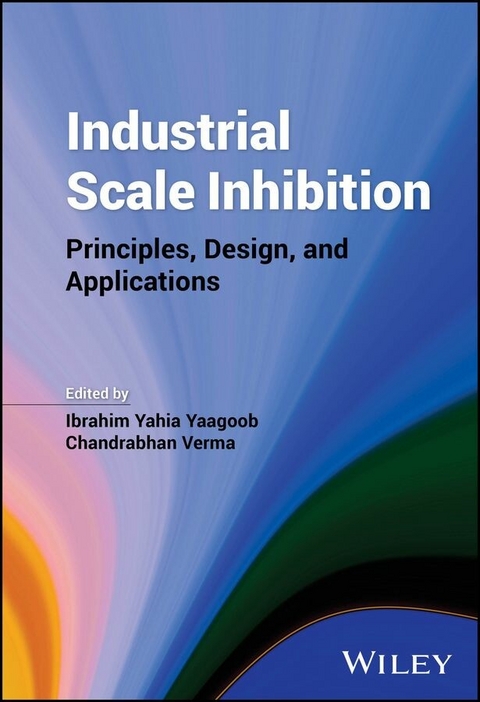
Industrial Scale Inhibition (eBook)
592 Seiten
Wiley (Verlag)
978-1-394-19119-2 (ISBN)
Learn the synthesis, characterization, scaling mechanisms, and applications of green antiscalants to be utilized in modern industrial platforms
Scale formation, or mineral accumulation on the interior surfaces of water lines and containers, is a serious and expensive hazard in numerous industries. The prevention and elimination of scales has long been a major project demanding the production of antiscalant materials; increasing awareness of the toxicity of traditional antiscalants, however, and rising environmental consciousness has increased demand for green antiscalants. It's an exciting time for new chemists and chemical engineers to get involved in this growing field.
Industrial Scale Inhibition provides a comprehensive introduction to existing and ongoing developments in green antiscalants. With coverage of synthesis, characterization, and many more subjects, it promises to make a serious contribution to environmentally conscious industry. The range of environmentally alternatives to traditional toxic antiscalants is explored and analyzed in this crucial volume.
Industrial Scale Inhibition readers will also find:
- Detailed coverage of both synthetic and natural antiscalants
- Up-to-date reference material including pertinent websites and connections to the latest research
- Analysis of plant extracts, natural polymers, oleochemicals, and many more
Industrial Scale Inhibition is a useful reference for chemists and chemical engineers working in research and development and academia, as well as high-level researchers working in the fields of material science and engineering, nanotechnology, energy, environment, colloid sciences, among others.
Ibrahim Yahia Yaagoob, PhD, is a Post-Doctoral Fellow in the Department of Chemistry, King Fahd University of Petroleum and Minerals (KFUPM), Dhahran, Saudi Arabia, and is a member of the American Chemical Society (ACS). He has received national and international awards including the Ministry of Higher Education and Scientific Research Prize for an Excellent Academic Performance in Chemistry, awarded by Sudan Institute for Natural Sciences (SIFNS-2006).
Chandrabhan Verma, PhD, is working at the Department of Chemical Engineering, Khalifa University of Science and Technology, Abu Dhabi, United Arab Emirates. He has received several national and international awards for his academic achievements.
Learn the synthesis, characterization, scaling mechanisms, and applications of green antiscalants to be utilized in modern industrial platforms Scale formation, or mineral accumulation on the interior surfaces of water lines and containers, is a serious and expensive hazard in numerous industries. The prevention and elimination of scales has long been a major project demanding the production of antiscalant materials; increasing awareness of the toxicity of traditional antiscalants, however, and rising environmental consciousness has increased demand for green antiscalants. It s an exciting time for new chemists and chemical engineers to get involved in this growing field. Industrial Scale Inhibition provides a comprehensive introduction to existing and ongoing developments in green antiscalants. With coverage of synthesis, characterization, and many more subjects, it promises to make a serious contribution to environmentally conscious industry. The range of environmentally alternatives to traditional toxic antiscalants is explored and analyzed in this crucial volume. Industrial Scale Inhibition readers will also find: Detailed coverage of both synthetic and natural antiscalantsUp-to-date reference material including pertinent websites and connections to the latest researchAnalysis of plant extracts, natural polymers, oleochemicals, and many more Industrial Scale Inhibition is a useful reference for chemists and chemical engineers working in research and development and academia, as well as high-level researchers working in the fields of material science and engineering, nanotechnology, energy, environment, colloid sciences, among others.
List of Contributors
- Sidikov Abdujalol
- Faculty of Chemical Technology
- Tashkent Institute of Chemical Technology
- Tashkent
- Uzbekistan
- Soroush Ahmadi
- Department of Chemical Engineering
- Faculty of Oil, Gas and Petrochemical Engineering
- Persian Gulf University
- Bushehr
- Iran
- Khamdam Akbarov
- Faculty of Chemistry
- National University of Uzbekistan
- Tashkent
- Uzbekistan
- Ekemini Daniel Akpan
- Centre for Materials Science
- College of Science, Engineering and Technology
- University of South Africa
- Johannesburg
- South Africa
and
- Institute for Nanotechnology and Water Sustainability (iNanoWS)
- College of Science and Engineering Technology
- University of South Africa
- Johannesburg
- South Africa
- Nayef Alanazi
- Research and Analytical Services Department
- Saudi Aramco
- Dhahran
- Saudi Arabia
- Rashed Aleisa
- Research and Development Center
- Saudi Aramco
- Dhahran
- Saudi Arabia
- Valentine Chikaodili Anadebe
- Corrosion and Materials Protection Division
- CSIR‐Central Electrochemical Research Institute
- Karaikudi
- Tamil Nadu
- India
and
- Academy of Scientific and Innovative Research
- Ghaziabad
- Uttar Pradesh
- India
and
- Department of Chemical Engineering
- Alex Ekwueme Federal University Ndufu‐Alike
- Abakakili Ebonyi State
- Nigeria
- Priyabrata Banerjee
- Electric Mobility and Tribology Research Group
- CSIR‐Central Mechanical Engineering Research Institute
- Durgapur West Bengal
- India
and
- Academy of Scientific and Innovative Research
- Ghaziabad
- Uttar Pradesh
- India
- Rakesh Chandra Barik
- Corrosion and Materials Protection Division
- CSIR‐Central Electrochemical Research Institute
- Karaikudi
- Tamil Nadu
- India
and
- Academy of Scientific and Innovative Research
- Ghaziabad
- Uttar Pradesh
- India
- Sumayah Bashir
- Department of Chemistry
- Central University of Kashmir
- Ganderbal
- Jammu & Kashmir
- India
- Said Ben‐aazza
- Process Engineering Laboratory
- Team “Materials and Physico‐Chemistry of Water” Faculty of Sciences
- Ibn Zohr University
- Agadir
- Morocco
- M'barek Belattar
- Process Engineering Laboratory
- Team “Materials and Physico‐Chemistry of Water” Faculty of Sciences
- Ibn Zohr University
- Agadir
- Morocco
- Elyor Berdimurodov
- Chemical & Materials Engineering
- New Uzbekistan University
- Tashkent
- Uzbekistan
and
- Natural Sciences, University of Tashkent for Applied Sciences
- Tashkent
- Uzbekistan
and
- Faculty of Chemistry
- National University of Uzbekistan
- Tashkent
- Uzbekistan
- Khasan Berdimuradov
- Faculty of Industrial Viticulture and Food Production Technology
- Shahrisabz Branch of Tashkent Institute of Chemical Technology
- Shahrisabz
- Uzbekistan
- Bakhtiyor Borikhonov
- Faculty of Chemistry‐Biology
- Karshi State University
- Karshi city
- Uzbekistan
- Feiyu Chen
- Weihai Key Laboratory of Active Factor of Marine Products
- Weihai Marine Organism & Medical Technology Research Institute
- Harbin Institute of Technology
- Weihai
- PR China
- Vitalis Ikenna Chukwuike
- Corrosion and Materials Protection Division
- CSIR‐Central Electrochemical Research Institute
- Karaikudi
- Tamil Nadu
- India
and
- Academy of Scientific and Innovative Research
- Ghaziabad
- Uttar Pradesh
- India
and
- Department of Industrial Chemistry
- Federal University of Medical Science
- Uburu Ebonyi State
- Nigeria
- Yong‐Yin Cui
- Weihai Key Laboratory of Active Factor of Marine Products
- Weihai Marine Organism & Medical Technology Research Institute
- Harbin Institute of Technology
- Weihai
- PR China
- Omar Dagdag
- Department of Mechanical Engineering
- Gachon University
- Seongnam
- Republic of Korea
- Walid Daoudi
- Department of Chemistry
- Multidisciplinary Faculty of Nador
- Laboratory of Molecular Chemistry
- Materials and Environment (LCM2E)
- University Mohamed I
- Nador
- Morocco
- Konstantinos D. Demadis
- Crystal Engineering, Growth & Design Laboratory
- Department of Chemistry
- University of Crete
- Crete
- Greece
- Ali Driouiche
- Process Engineering Laboratory
- Team “Materials and Physico‐Chemistry of Water” Faculty of Sciences
- Ibn Zohr University
- Agadir
- Morocco
- Eno Effiong Ebenso
- Centre for Materials Science
- College of Science, Engineering and Technology
- University of South Africa
- Johannesburg
- South Africa
and
- Institute for Nanotechnology and Water Sustainability (iNanoWS)
- College of Science, Engineering and Technology
- University of South Africa
- Johannesburg
- South Africa
- Saheed Eluwale Elugoke
- Centre for Material Science
- College of Science, Engineering and Technology
- University of South Africa
- Johannesburg
- South Africa
and
- Institute for Nanotechnology and Water Sustainability (iNanoWS)
- College of Science, Engineering and Technology
- University of South Africa
- Johannesburg
- South Africa
- Ilyos Eliboev
- Faculty of Natural Sciences
- Uzbekistan‐Finland Pedagogical Institute
- Samarkand
- Uzbekistan
- Pi‐Xian Gong
- Weihai Key Laboratory of Active Factor of Marine Products
- Weihai Marine Organism & Medical Technology Research Institute
- Harbin Institute of Technology
- Weihai
- PR China
- Abdallah Hadfi
- Process Engineering Laboratory
- Team “Materials and Physico‐Chemistry of Water” Faculty of Sciences
- Ibn Zohr University
- Agadir
- Morocco
- Rajesh Haldhar
- School of Chemical Engineering
- Yeungnam University
- Gyeongsan
- Republic of Korea
- Rohan Hasda
- Department of Science and Humanities
- Gangarampur Government Polytechnic
- Gangarampur
- West Bengal
- India
- Mohamed El Housse
- Process Engineering Laboratory
- Team “Materials and Physico‐Chemistry of Water” Faculty of Sciences
- Ibn Zohr University
- Agadir
- Morocco
- Brahim El Ibrahimi
- Department of Applied Chemistry
- Faculty of Applied Sciences
- IBNOU ZOHR University
- Aït Melloul
- Morocco
and
- Laboratoire de Chimie Organique et de Chimie Physique
- Faculté des Sciences
- Université IBNOU ZOHR
- Agadir
- Morocco
- Michaela Kamaratou
- Crystal Engineering, Growth & Design Laboratory
- Department of Chemistry
- University of Crete
- Crete
- Greece
- Ilham Karmal
- Process Engineering Laboratory
- Team “Materials and Physico‐Chemistry of Water” Faculty of Sciences
- Ibn Zohr University
- Agadir
- Morocco
- Jasdeep Kaur
- Department of Chemistry
- Chandigarh University
- Mohali
- India
- Ashish Kumar
- Nalanda College of Engineering
- Bihar Engineering University
- Department of Science, Technology and Technical Education
- Government of Bihar
- India
- Abduvali Kholikov
- Faculty of Chemistry
- National University of Uzbekistan
- Tashkent
- Uzbekistan
- Azizollah Khormali
- Department of Chemistry
- Faculty of Basic Sciences and Engineering
- Gonbad Kavous University
- Gonbad Kavous
- Iran
- Seong‐Cheol Kim
- School of Chemical Engineering
- Yeungnam University
- Gyeongsan
- Republic of Korea
- Stefania Liakaki‐Stavropoulou
- Crystal Engineering, Growth & Design Laboratory
- Department of Chemistry
- University of...
| Erscheint lt. Verlag | 25.6.2024 |
|---|---|
| Sprache | englisch |
| Themenwelt | Naturwissenschaften ► Chemie |
| ISBN-10 | 1-394-19119-7 / 1394191197 |
| ISBN-13 | 978-1-394-19119-2 / 9781394191192 |
| Informationen gemäß Produktsicherheitsverordnung (GPSR) | |
| Haben Sie eine Frage zum Produkt? |
 EPUB (Adobe DRM)
Kopierschutz: Adobe-DRM
Adobe-DRM ist ein Kopierschutz, der das eBook vor Mißbrauch schützen soll. Dabei wird das eBook bereits beim Download auf Ihre persönliche Adobe-ID autorisiert. Lesen können Sie das eBook dann nur auf den Geräten, welche ebenfalls auf Ihre Adobe-ID registriert sind.
Details zum Adobe-DRM
Dateiformat: EPUB (Electronic Publication)
EPUB ist ein offener Standard für eBooks und eignet sich besonders zur Darstellung von Belletristik und Sachbüchern. Der Fließtext wird dynamisch an die Display- und Schriftgröße angepasst. Auch für mobile Lesegeräte ist EPUB daher gut geeignet.
Systemvoraussetzungen:
PC/Mac: Mit einem PC oder Mac können Sie dieses eBook lesen. Sie benötigen eine
eReader: Dieses eBook kann mit (fast) allen eBook-Readern gelesen werden. Mit dem amazon-Kindle ist es aber nicht kompatibel.
Smartphone/Tablet: Egal ob Apple oder Android, dieses eBook können Sie lesen. Sie benötigen eine
Geräteliste und zusätzliche Hinweise
Buying eBooks from abroad
For tax law reasons we can sell eBooks just within Germany and Switzerland. Regrettably we cannot fulfill eBook-orders from other countries.
aus dem Bereich