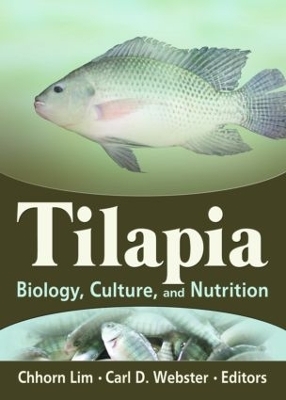
Tilapia
Crc Press Inc (Verlag)
978-1-56022-888-2 (ISBN)
Learn to maximize tilapia production in different areas around the world
Tilapia is the second-most cultured fish species in the world, and its production is increasing each year. However, for several reasons profit margins remain slim. Tilapia: Biology, Culture, and Nutrition presents respected international experts detailing every aspect of tilapia production around the world. Biology, breeding and larval rearing, farming techniques, feeding issues, post-harvest technology, and industry economics are clearly presented. This concise yet extensive reference provides the latest research and practical information to efficiently and economically maximize production in diverse locales, conditions, and climates.
Tilapia: Biology, Culture, and Nutrition comprehensively explores all types of tilapia with a detailed biologic description of the fish that takes readers from egg through harvesting. The book authoritatively discusses production issues such as feed nutrition, temperature, water quality, parasites, and disease control to guide readers on how to best encourage fast, efficient growth. Economic and marketing information are examined, including industry data and projections by country. Each chapter approaches a specific facet of tilapia and provides the most up-to-date research available in that area. This resource gives the most current, detailed information needed for effective tilapia farming in one compact economical volume. Extensively referenced with an abundance of clear, helpful tables, photographs, and figures.
Tilapia: Biology, Culture, and Nutrition discusses in detail:
complete biology, including sex ratios, optimum temperatures for growth and spawning, water quality parameters, and disease tolerance
industry predictions
hormonal control of growth
genetic improvement
sex determination, manipulation, and control
seed production
culture practices
earthen and lined pond production
culture in flowing water
cage culture
feed formulation and processing, and feeding management
soil, water, and effluent quality
saline tolerance levels with optimum rate of acclimation to seawater
polyculture of tilapia with shrimp
bottom soil conditions
nutrient requirements with non-nutrient components
parasites and diseases
Tilapia: Biology, Culture, and Nutrition is essential reading for aquaculturists, nutritionists, geneticists, hatchery managers, feed formulators, feed mill operators, extension specialists, tilapia growers, fish farmers/producers, educators, disease specialists, aquaculture veterinarians, policy makers, educators, and students.
Carl D Webster, Chhorn Lim
About the Editors,, Contributors,, Preface,, Acknowledgments,, Chapter 1. Biology (William L. Shelton and Thomas J. Popma),, Introduction,, Taxonomic Relationships,, Biogeography,, Bionomics and Life History ,, Environmental Biology,, Chapter 2. Prospect and Potential for Global Production (Kevin Fitzsimmons),, Introduction,, Overview of Tilapia Produced for International Trade,, Regional Production and Markets,, Industry Predictions and Outlook,, Chapter 3. Control of Growth: Developments and Prospects (Brian S. Shepherd, Gregory M. Weber, Mathilakath M. Vijayan, Andre Seale, Larry G. Riley, M. Fernanda Rodriguez, N. Harold Richman III, Tetsuya Hirano, and E. Gordon Grau),, Introduction,, Relevance of Neuroendocrine Research to Tilapia Aquaculture,, Hormonal Control of Growth in Tilapia,, Nonhormonal Control of Growth in Tilapia,, Novel Approaches to Growth Enhancement,, Conclusions,, Chapter 4. Recent Directions in Genetics (C. Greg Lutz),, Traditional Animal Breeding Approaches,, Artificial Spawning: Implications for Genetic Improvement,, Chromosomal Manipulations,, Transgenic Tilapia,, Molecular Discrimination/Characterization and Gene Mapping,, Chapter 5. Fingerling Production Systems (Bartholomew W. Green),, Introduction,, Production Methodologies,, Interspawning Interval,, Incubation,, Fry Rearing,, Hatchery-Phase Fishing Health Management,, Fingerling Nursery Rearing,, Chapter 6. Hormone Manipulation of Sex (Ronald P. Phelps),, Introduction,, Chemicals Used to Dire
| Erscheint lt. Verlag | 1.9.2006 |
|---|---|
| Verlagsort | Bosa Roca |
| Sprache | englisch |
| Maße | 152 x 229 mm |
| Gewicht | 1202 g |
| Themenwelt | Naturwissenschaften ► Biologie ► Zoologie |
| Weitere Fachgebiete ► Land- / Forstwirtschaft / Fischerei | |
| ISBN-10 | 1-56022-888-1 / 1560228881 |
| ISBN-13 | 978-1-56022-888-2 / 9781560228882 |
| Zustand | Neuware |
| Informationen gemäß Produktsicherheitsverordnung (GPSR) | |
| Haben Sie eine Frage zum Produkt? |
aus dem Bereich