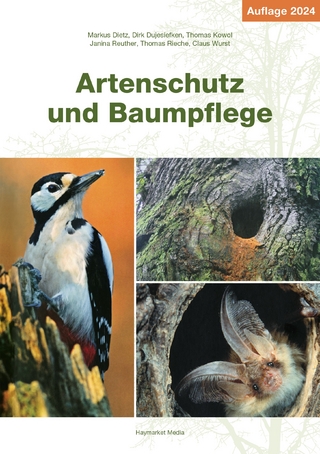
Urban Wildlife Management
Crc Press Inc (Verlag)
978-0-8493-9645-8 (ISBN)
- Titel erscheint in neuer Auflage
- Artikel merken
A CHOICE Outstanding Academic Title While much has been written about the factors that either promote or prevent proliferation of wildlife in urban settings, forward-thinking professors instructing in this area have had to rely on their own ability to collect information from the published literature. Even then, it has been a challenge to find research that examines the entire picture of human-wildlife interaction, beyond those that focus on problems associated with nuisance urban wildlife.
Urban Wildlife Management is the first comprehensive text to examine the issues that have led to the need for human-wildlife interface management strategies. The book focuses not only on ecological matters, but also incorporates the political, economic, and societal issues relevant to the development of proactive management planning. Synthesizing hundreds of journal articles, as well as countless other sources on urban wildlife management, the book organizes a wealth of material under five subject areas: urban landscapes, urban ecosystems, urban habitats and hazards, sociopolitical issues, and special management considerations.
Urban Wildlife Management educates students in the fundamental principles of ecology required to understand how human-made environments lead to the need for urban wildlife management
Exploring the changing landscape of wildlife management, the authors offer students a historical perspective, along with a look at current trends and future directions of wildlife management. They include selected lessons in ecology relevant to understanding the presence or absence of wildlife species in urban communities. These lessons look at the impacts of urbanization on ecosystem structure and function, including waterways, predation, and population dynamics. Urban habitats are discussed in terms of the unique features of green and gray spaces, urban streams, and urban soils. The book also considers both endangered species and overabundant wildlife populations.
Comprehensive literature citations are included at the end of every chapter
INTRODUCTION: A NEW WILDLIFE MANAGEMENT PARADIGM
A Snapshot of the Urban Wildlife Management Landscape
The Need for a Comprehensive Treatment of Urban Wildlife Management.......
Understanding and Meeting the Future Challenges of Wildlife Management....
Sidebar: Job Description for an Urban Wildlife Biologist
SECTION I - URBAN LANDSCAPES
Wildlife Management: Past and Present
A Brief History of Wildlife Management in North America, Rise of the American Conservation Movement, Changing Wildlife Values, A New Kind of Wildlife, The Unique Ecology of Urban Wildlife, Special Challenges for Wildlife Management within Urban Settings, Management Considerations
Case Study: Downtown Deer
The Changing Landscape of Wildlife Management
Demographic Factors That Set the Stage for Urban Wildlife Management, The Separation of People and Wildlife, The Need for Wildlife Management in Urban Areas, The Need for Public Education Programs about Urban Wildlife, Outcomes of Human–Wildlife Encounters, Urbanites Need to Reconnect with the Natural World, Urban Wildlife Species Are Increasing Sometimes to Nuisance Levels, Some Insights into the Magnitude of Urban Wildlife Problems, Wildlife as a Dominant Focus of Wildlife Professionals, The Infrastructure for Urban Wildlife Management Is Missing
Perspective Essay: Human–Wildlife Interactions in the 1950s
Case Study: Neighborhood Moose Killed by Kindness
SECTION II - URBAN ECOSYSTEMS
Ecosystem Principles Structure, Functions, and Services
Ecological Principles, Ecosystem Structure, Symbiotic Relationships, Biotic Communities, Ecosystem Function, Ecosystem Services
Perspective Essays: For the Love Of Lawns; People and Wildlife — The Lesser Anteater
Principles of Population Dynamics
Survival, Adaptations, Density, Factors Affecting Population Densities; Effects of Habitat Fragmentation, Supplemental Feeding, Animal Damage Control Activities, and Environmental Pollutants on Wildlife Population Dynamics
SECTION III - URBAN HABITATS AND HAZARDS
Special Habitat Considerations - Green Spaces
Remnant Habitat Patches, Successional Habitat Patches, Managed Habitat Patches
Perspective Essay: Birds in Texas Cemeteries
Special Habitat Considerations - Gray Spaces
Buildings, Windows, Towers, Roads and Highways; Landfills, Dumpsters, Garbage Cans; Airports
Perspectives: The Peregrine Story; Home Composting on a Small Scale
Special Habitat Considerations — Urban Streams and Soils
The Water Cycle — Nature’s Filter, Abiotic Effects of Urbanization on Stream Ecology, Biotic Effects of Urbanization on Stream Ecology, Caring For the Water Cycle, Impacts of Urbanization on Soil Structure and Function, Physical Processes That Influence Urban Soil, Taking Better Care of Urban Soil
Perspective Essay: Darwin’s Earthworms
SECTION IV - SOCIOPOLITICAL ISSUES
Human Dimensions in Urban Wildlife Management
The “People Factor,” Conducting Human Dimensions Research, The Role of Human Dimensions in Urban Wildlife Management
Case Study: Ducks and Traffic
Perspective Essay: Urbanites’ Fear of the Natural World around Them
The Stakeholder Approach and Urban Wildlife Management
The Policy Life Cycle and Urban Wildlife Management, What Is a Stakeholder? The Changing Face of Wildlife Stakeholders, A Guide to Major Stakeholders, Governmental Entities, Nongovernmental Organizations (NGOs), Academic Institutions, The Public.
Case Study: Stakeholders Disagree on Best Approach for Managing Fallow Deer
Legal Aspects of Urban Wildlife Management
Federal Laws, State Laws, County and City Laws, Local Ordinances, Protecting the Health and Safety of All
Sidebars: New Berlin v. Hagar; Urban Wildlife Damage Principles
Case Study: Operation Remove Excrement
SECTION V - SPECIAL MANAGEMENT CONSIDERATIONS
The Ecology and Management Consideration of Selected Species
Predators: Coyotes, Black Bear
Endangered Species: San Joaqin Kit Fox, Florida Key Deer
Roosting Species: American Crows, Mexican Free-Tailed Bat
Feral Species: Free-ranging domestic cats, Wild Hogs
Sidebar: Wild Hogs Threaten Texas Nature Center
Distribution, Abundance, and Management Consideration of Resident Canada Geese and Urban White-Tailed Deer
Factors that Contribute to Geese and Deer Abundance in Urban America, Distribution of Resident Canada Geese and White-Tailed Deer in the Continental U.S., The Human Response to Resident Canada Geese and Urban White-Tailed Deer, Ecological Impacts of Resident Canada Geese and Urban White-Tailed Deer, Health and Safety Issues Related to Resident Canada Geese, The Urban White-Tailed Deer, White-Tailed Deer and Lyme Disease, Feasible and Acceptable Management Strategies for Overabundant Resident Canada Geese and Urban White-Tailed Deer Populations.
| Erscheint lt. Verlag | 12.12.2005 |
|---|---|
| Zusatzinfo | 37 Tables, black and white; 13 Illustrations, color; 92 Illustrations, black and white |
| Verlagsort | Bosa Roca |
| Sprache | englisch |
| Maße | 156 x 234 mm |
| Gewicht | 590 g |
| Themenwelt | Naturwissenschaften ► Biologie ► Ökologie / Naturschutz |
| ISBN-10 | 0-8493-9645-X / 084939645X |
| ISBN-13 | 978-0-8493-9645-8 / 9780849396458 |
| Zustand | Neuware |
| Informationen gemäß Produktsicherheitsverordnung (GPSR) | |
| Haben Sie eine Frage zum Produkt? |
aus dem Bereich