Marine Biology (eBook)
722 Seiten
Wiley (Verlag)
978-1-394-20009-2 (ISBN)
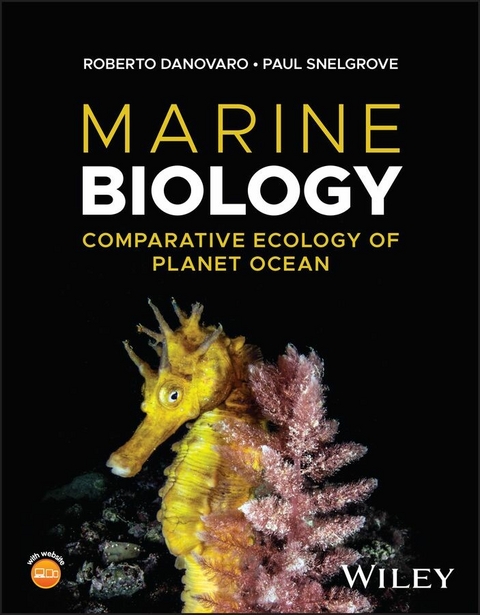
Marine Biology: Comparative Ecology of Planet Ocean provides a learning tool to those who love the ocean to help them understand and learn about the life that populates it, the extraordinary adaptations of marine organisms to their environment, and the spectacular variety of marine life forms that inhabit the many marine habitats and contribute to the life support system of Planet Ocean.
The book introduces marine biology by seeing the ocean through the eyes of its inhabitants, describing the properties of sea water, the surface waters and its currents, and the characteristics of the seabed according to how marine organisms perceive, exploit, and shape them. This book explains to the reader and those who love the ocean not only how to recognize the most common marine organisms and habitats, from the coast to great depths, but it also explains their complex life cycles and the environmental factors controlling their distribution, reproduction, and growth. Finally, the book evaluates the role that living biota play in how different marine ecosystems function in order to understand better their characteristics, peculiarities, and threats.
This book offers an up-to-date and comprehensive text on the study of marine biology, presenting insights into the methodologies scientists have adopted for the study of marine ecosystems. It also includes chapters about human impacts on marine biodiversity, from overfishing to climate change, from pollution (including microplastics), to alien-species invasions, from conservation of marine resources to the restoration of degraded marine habitats.
The authors developed this text for Bachelor and Master's level students taking classes on marine biology and marine ecology, but it will also interest high-school students and marine enthusiasts (dive masters, tour guides) who wish to deepen their knowledge of marine biology.
Roberto Danovaro is a Professor of Marine Ecology at the Polytechnic University of Marche, Italy. He is a Member of the EU Academy of Science and of the Academia Europaea (London). Editor in Chief of Marine Ecology (Wiley) and Chemistry & Ecology (T&F). Coordinator of several EU and international projects. Author of >500 scientific articles and 3 books, his research interests are focused on marine biodiversity and ecosystem functioning, and on the impact of climate change on deep-sea ecosystems. According to ExpertScape he has been the most influential World Scientist in the Category 'Ocean and Seas' for the decade 2010-2020.
Paul Snelgrove is a Professor of Ocean Sciences and Biology at Memorial University of Newfoundland in Canada. From 2008-2021 he led the Natural Sciences and Engineering Research Council of Canada (NSERC) Canadian Healthy Oceans Network, a national research network that supported sustainable oceans. He currently plays the role of Associate Scientific Director of The Ocean Frontier Institute, which gathers researchers in Atlantic Canada and beyond to advance safe and sustainable ocean objectives. He has published >150 papers and book chapters as well as one book. His research focuses on biodiversity, functioning, and conservation of seafloor ecosystems.
MARINE BIOLOGY Marine Biology: Comparative Ecology of Planet Ocean provides a learning tool to those who love the ocean to help them understand and learn about the life that populates it, the extraordinary adaptations of marine organisms to their environment, and the spectacular variety of marine life forms that inhabit the many marine habitats and contribute to the life support system of Planet Ocean. The book introduces marine biology by seeing the ocean through the eyes of its inhabitants, describing the properties of sea water, the surface waters and its currents, and the characteristics of the seabed according to how marine organisms perceive, exploit, and shape them. This book explains to the reader and those who love the ocean not only how to recognize the most common marine organisms and habitats, from the coast to great depths, but it also explains their complex life cycles and the environmental factors controlling their distribution, reproduction, and growth. Finally, the book evaluates the role that living biota play in how different marine ecosystems function in order to understand better their characteristics, peculiarities, and threats. This book offers an up-to-date and comprehensive text on the study of marine biology, presenting insights into the methodologies scientists have adopted for the study of marine ecosystems. It also includes chapters about human impacts on marine biodiversity, from overfishing to climate change, from pollution (including microplastics), to alien-species invasions, from conservation of marine resources to the restoration of degraded marine habitats. The authors developed this text for Bachelor and Master s level students taking classes on marine biology and marine ecology, but it will also interest high-school students and marine enthusiasts (dive masters, tour guides) who wish to deepen their knowledge of marine biology.
?????????????????????????????????????????????????????????????????????????????????????????????????Marine Biology? 2
Contents 8
Acknowledgments 18
Preface 20
About the Companion Website 22
Part I The Ocean Domain: Introduction to Planet Ocean 24
1 The Life Aquatic 26
1.1 Introduction 26
1.2 Comparison Between Sea and Land 26
1.3 Fractal Complexity of Marine and Terrestrial Ecosystems 29
2 The Seabed 36
2.1 Ocean Basins 36
2.2 Ocean Bottom: A (Mostly) Static Habitat of Ocean Life 38
2.3 Characteristics of Sediments 43
2.4 Boundary Layers and Their Characteristics 43
2.5 Sediment Movement 46
2.6 Characteristics of Hard Substrata 49
2.7 Characteristics of Soft Sediments 49
3 The Water Column 52
3.1 Properties and Characteristics of Seawater 52
3.1.1 Hydrogen Bonds 54
3.1.2 Salinity 54
3.1.3 Temperature 57
3.1.4 Density 58
3.1.5 Viscosity 61
3.1.6 Pressure 61
3.1.7 Sound 62
3.1.8 Light 63
3.1.9 Inorganic Nutrients and Trace Elements 65
3.1.10 Oxygen 66
3.1.11 Dissolved Gases 66
3.2 An Ocean In Motion 67
3.2.1 Ocean Currents 67
Part II Life in Seas and Oceans: Fundamentals of Marine Biology 76
4 General Adaptations in Marine Organisms I: From the Ocean Surface to the Seabed 78
4.1 Adaptations to Temperature 78
4.2 Adaptations to Low Oxygen Concentrations 83
4.3 Adaptation to Salinity 87
4.4 Adaptation to Pressure 91
4.5 Adaptations to Light 92
4.5.1 Photosynthesis 92
4.5.2 Vision and Bioluminescence 92
4.6 Adaptations to Nutrients 96
4.7 Electrical Conductivity Adaptations 97
4.8 Ectocrine Adaptations 97
4.9 Adaptations to Produce Sound and Communicate in Water 97
5 Adaptations in Marine Organisms II: Life in a Fluid Habitat 102
5.1 Adaptions to Life in the Water Column 102
5.1.1 Density, Shape, and Buoyancy 102
5.1.2 Swimming and Dispersal 109
6 Adaptations in Marine Organisms III: Benthic Biota between a Rock and a Soft Place 114
6.1 Adaptations to Life on the Seafloor 114
6.2 Support and Protection Structures 114
6.2.1 Bioconstructors 116
6.3 Adaptation to Waves and Energy 117
6.4 Feeding and Nutrition 118
6.5 Adaptation to Aerial Exposure 121
6.6 Adaptation to Extreme Temperatures and Potentially Toxic Chemicals 121
Part IIB Life in Seas and Oceans: Fundamentals of Marine Biology 124
7 Marine Biodiversity 126
7.1 Introduction 126
7.2 Origin and Evolution of Marine Life 126
7.2.1 Theories on the Origin of Life 126
7.2.2 Evolution of Marine Biodiversity 129
7.3 Mechanisms of Marine Speciation 130
7.4 Quantifying Marine Organism Biodiversity 136
7.4.1 Definition of Biodiversity 136
7.4.2 Defining Different Ways of Measuring Biodiversity: Species Richness 136
7.4.3 Comparison Between Marine and Terrestrial Biodiversity 138
7.4.4 Measures of Biodiversity 142
7.4.5 Composite Measures of Species Diversity 144
8 Biodiversity Patterns 148
8.1 Broad-Scale Biodiversity Patterns 148
8.2 Processes Controlling the Distribution of Marine Biodiversity 148
8.2.1 Biodiversity Hotspots 148
8.2.2 Latitudinal Gradient of Biodiversity 149
8.2.3 Longitudinal Gradients in Tropical Biodiversity 151
8.2.4 Bathymetric Patterns in Marine Biodiversity 151
8.3 Marine Biogeography 151
8.3.1 Terrestrial and Marine Biogeography 153
8.3.2 Biogeographical Regions 153
8.3.3 Species Distributions Within Biogeographic Regions 154
8.3.4 Biogeography of the Mediterranean 155
8.4 Theories on Evolution and Maintenance of Biodiversity: The Deep-Sea as Examplar 159
9 Biodiversity of the Benthos 164
9.1 Introduction: Benthos and Plankton 164
9.2 Benthic Biota 164
9.3 Classification of Benthos Based on Size 167
9.3.1 Femtobenthos 167
9.3.2 Picobenthos 170
9.3.3 Nanobenthos 171
9.3.4 Microbenthos 172
9.3.5 Meiobenthos (Meiofauna) 174
9.3.6 Macrobenthos 175
9.3.7 Megabenthos 176
Part IIC Life in Seas and Oceans: Fundamentals of Marine Biology 180
10 Ecology of Benthos 182
10.1 Ecology of the Benthos: From Microbes to Megafauna 182
10.2 Trophic Groups: Classification of Benthos Based on Diet 187
10.3 Comparison Between Hard and Soft Bottom Benthos 188
10.4 Ecology of Benthos Inhabiting Soft Bottoms 190
10.5 Changes in Benthos in Space and Time 193
10.6 Organization of Benthic Assemblages 194
10.7 Zonation of Benthic Organisms 195
11 Biodiversity of the Plankton 202
11.1 Introduction to the Plankton 202
11.2 Planktonic Organisms 203
11.3 Planktonic Classification Based on Water Column Distributions 204
11.4 Plankton Classification Based on Life Cycles 205
11.5 Plankton Size Classes 207
11.5.1 Virioplankton 209
11.5.2 Picoplankton 212
11.5.3 Nanoplankton 215
11.5.4 Microplankton 216
11.5.5 Mesozooplankton 217
11.5.6 Macro and Mega-zooplankton 218
11.6 Abundance Comparisons Among Different Planktonic Components 220
12 Ecology of the Plankton 224
12.1 Plankton Distribution 224
12.1.1 Physical Control of Macro-scale Plankton Distribution: The Case of El Niño 224
12.1.2 Small-scale Plankton Distribution: The Vertical Migration Example 225
12.2 Ecology of Plankton 231
12.3 How Many Phytoplankton Species Coexist in a Volume of Water? “Homage to Santa Rosalia” 234
12.4 Zooplankton Nutritional Mode 234
Part IID Life in Seas and Oceans: Fundamentals of Marine Biology 238
13 Biodiversity of the Nekton 240
13.1 Species Contributing to the Nekton 240
13.2 Main Organisms and Characteristics of Nekton 241
13.3 Fishes 241
13.3.1 Osteichthyes – The Bony Fishes 243
13.3.2 Chondricthyes – The Cartilaginous Fishes 245
13.3.3 Agnatha – The Jawless Fishes 247
13.4 Marine Mammals 247
13.5 Cephalopods 250
13.6 Reptiles – The “Land-based” Marine Species 251
13.7 Seabirds 251
13.7 Patterns of Biodiversity in Nekton 252
14 Ecology of the Nekton 256
14.1 Introduction 256
14.2 Fishes and Formation of Fish Shoals 256
14.3 Ecology of Chondrichthyes 258
14.4 Sharks at Risk of Extinction from Indiscriminate Hunting 259
14.4.1 Measuring Abundance of Sharks 259
14.4.2 Shark Attacks – How Often Do Sharks Attack Humans? 259
14.5 Ecology of Cephalopods 259
14.6 Marine Reptile Ecology 262
14.7 Ecology of Seabirds 264
14.8 Ecology of Marine Mammals 265
14.9 Great Migrations of Nekton 270
14.10 Role of Top Predators in Food Webs 278
15 Life Cycles and Larval Ecology 284
15.1 Life Cycles and Reproduction 284
15.2 Larval Ecology 287
15.3 Life History Strategies 290
15.4 Supply Side Ecology 293
15.5 Forms of Resistance and Benthic-pelagic Coupling 293
Part III Comparative Marine Ecology: Habitat Types, Their Biodiversity, and Their Functioning 298
16 Ecosystem Functioning I: Primary and Secondary Production 300
16.1 Introduction 300
16.2 Primary Production 300
16.3 Chemosynthetic Primary Production in the Ocean 301
16.4 Photosynthetic Primary Production 303
16.4.1 Primary Producers 309
16.5 Secondary Production 310
16.5.1 Methods of Measurement of Secondary Production in the Sea 311
16.6 Respiration 313
17 Ecosystem Functioning II: Organic Matter Recycling 316
17.1 Introduction – Extra-Specific Processes 316
17.2 Organic Matter and Detritus in the Ocean 316
17.3 Dissolved Organic Matter in the Ocean (DOM) 322
17.4 Pelagic-Benthic Coupling 323
17.4.1 Organic Aggregates in the Ocean 325
17.5 Consequences of Organic Matter Export to the Seabed 330
18 Interspecific Interactions and Trophic Cascades 336
18.1 Biodiversity and Ecosystem Functioning 336
18.2 Facilitation and Cooperation – Positive Interactions 338
18.3 Symbiosis 342
18.4 Complex Biotic Interactions: Trophic Networks and Cascades 346
18.4.1 Trophic Networks 346
18.4.2 Detrital Trophic Network 349
18.4.3 Trophic Networks Based on Dissolved Organic Matter 350
18.4.4 Microbial Loop 350
18.4.5 Viral Shunt 351
18.4.6 Bottom-Up Control of Trophic Food Webs 352
18.4.7 Top-Down Control on Trophic Food Webs 354
18.4.8 Mixed Wasp-Waist Control 355
18.5 Keystone Species 356
18.6 Trophic Cascades 356
Part IIIB Comparative Marine Ecology: Habitat Types, Their Biodiversity, and Their Functioning 364
19 Interspecific Interactions II: Negative Interactions 366
19.1 Predation 366
19.2 Methods to Escape Predation 371
19.3 Competition 372
19.4 Parasitism 374
19.5 Diseases of Marine Organisms 377
19.5.1 Coral Diseases 378
20 Intertidal Ecosystems and Lagoons 382
20.1 Rocky Intertidal Habitats 382
20.1.1 Survival Strategies for Rocky Intertidal Environments 384
20.1.2 Rocky Intertidal Zonation 384
20.1.3 Rocky Intertidal Primary Producers 386
20.1.4 Rocky Intertidal Consumers 387
20.1.5 Competition in Rocky Intertidal Environments 389
20.1.6 Predation in Intertidal Habitats and the Intermediate Disturbance Hypothesis 389
20.1.7 Keystone Species 392
20.1.8 Rocky Intertidal Trophic Food Webs 393
20.1.9 Comparison Between Soft and Hard Bottom Intertidal Environments 393
20.1.10 Niche Displacement to Reduce Competition 394
20.2 Transitional Environments Between Land and Ocean 395
20.2.1 Lagoons 395
20.2.2 Ecology of Coastal Lagoons 398
20.2.3 Lagoon Functioning 399
20.2.4 Models of Functional Zonation of Coastal Lagoons 400
20.2.5 Lagoon Biodiversity 401
20.3 Mangroves 403
20.3.1 Biodiversity Associated with Mangals 405
20.3.2 Mangal Ecosystem Functioning 407
20.4 Salt Marshes 408
20.4.1 Biodiversity Associated with Salt Marshes 410
20.4.2 Salt Marsh Ecosystem Functioning 410
20.5 Summary 411
21 Subtidal Hard Substrata Ecosystems 414
21.1 Introduction 414
21.2 Subtidal Distributions 414
21.2.1 Effect of Physical Variables and Disturbance on Benthic Communities 414
21.2.2 Biotic Factors 416
21.3 Kelp Forests 417
21.3.1 Biodiversity Associated with Kelp 419
21.3.2 Trophic Networks 420
21.3.3 Macroalgal Forests in the Mediterranean 421
21.4 Coral Reefs 422
21.4.1 Zonation within Coral Reefs 423
21.4.2 Types of Coral Reef 424
21.4.3 Theory of Coral Reef Formation 424
21.4.4 Characteristics of Reef Building (Bioconstructor) Corals 425
21.4.5 Coral Reproduction 425
21.4.6 Coral Feeding and Symbiosis with Zooxanthellae 427
21.4.7 Primary Factors Limiting Coral Growth 430
21.4.8 Coral Reef Biodiversity 430
21.4.9 Coral Reefs Functioning and Trophic Food Webs 435
21.4.10 Primary Consumers 435
21.4.11 Deposit Feeders / Scavengers 436
21.4.12 Secondary Consumers 436
21.4.13 Tertiary Consumers 436
21.4.14 Competition for Space in Coral Reefs 437
21.4.15 Interactions Between Coral Reefs and Adjacent Ecosystems 440
21.5 Coralligenous Habitats 441
21.6 Rhodolith Beds (Maërl) 445
21.7 Underwater Caves 446
21.7.1 Cave Biodiversity 448
21.7.2 Adaptations in Marine Invertebrates to Life in Caves 449
21.7.3 Food Webs and Functioning in Caves 449
21.8 Summary 452
Part IIIC Comparative Marine Ecology: Habitat Types, Their Biodiversity, and Their Functioning 454
22 Estuarine, Seagrass, and Sedimentary Habitats 456
22.1 Estuaries 456
22.1.1 The Complexity of Estuarine Environments 458
22.1.2 Survival Strategies for Living in Estuaries 458
22.1.3 Estuarine Food Webs 460
22.1.4 Why are Estuaries Important? 461
22.1.5 Pressures on Estuaries 461
22.2 Seagrass Beds 461
22.2.1 Biodiversity Associated With Seagrasses 465
22.2.2 Seagrass Functioning 469
22.3 Sedimentary Habitats 469
22.3.1 Food Sources for Sedimentary Fauna 472
22.3.2 Sedimentary Environments and Ecosystem Functioning 474
23 Polar Ecosystems 478
23.1 Biogeography and Characteristics 480
23.2 Biodiversity 483
23.3 Biodiversity Within Sea Ice 483
23.4 Pelagic Biodiversity 485
23.5 Fishes 487
23.6 Marine Mammals 488
23.7 Benthic Biodiversity 488
23.8 Food Webs and Functioning 489
23.9 Antarctica 490
23.9.1 Zonation, Extent, and Distribution 490
23.9.2 Antarctic Habitats 495
23.9.3 Biodiversity 497
23.9.4 Birds and Mammals 501
23.9.5 Trophic Webs and Functioning 501
23.10 Summary 506
24 Neritic Aquatic Ecosystems 508
24.1 Introduction 508
24.2 Zonation, Extent, and Distribution 508
24.3 Biogeography and Characteristics 508
24.4 Biological Characteristics 510
24.4.1 Primary Producers 511
24.4.2 Zooplankton 511
24.4.3 Nekton 512
24.5 Ecosystem Functioning in the Neritic Zone 513
24.6 Fisheries Production 515
24.7 Factors Influencing Functioning of Neritic Systems 516
24.7.1 Intertwining of Vertical and Horizontal Currents 516
24.7.2 Physical and Chemical Factors 516
24.7.3 Large-Scale Currents 516
24.7.4 Terrestrial Inputs 517
24.7.5 Coastal Upwelling 517
24.7.6 Large-Scale Changes in Water Masses 517
24.7.7 River Plumes 518
24.7.8 Fronts 518
24.7.9 Neritic Food Webs 518
24.8 Summary 520
Part IIID Comparative Marine Ecology: Habitat Types, Their Biodiversity, and Their Functioning 522
25 Deep-Sea Ecosystems along Continental Margins 524
25.1 Introduction to the Deep Sea 524
25.1.1 Is the Deep Sea on a Diet? 526
25.1.2 Extreme and Harsh Conditions? 526
25.1.3 Are Deep-Sea Ecosystems Depauperate? 528
25.1.4 Metabolism and Functioning of Deep Ecosystems 529
25.2 Deep-Sea Biodiversity 531
25.2.1 Oases or Biological Deserts? 531
25.2.2 Deep Faunal Origins 533
25.2.3 Mechanisms of Generation and Maintenance of Deep-Sea Biodiversity 534
25.3 Deep-Sea Habitats 534
25.4 Submarine Canyons 535
25.4.1 Canyon Biodiversity 536
25.4.2 Canyon Functioning 537
25.5 Deep-Water Corals 538
25.6 Cold Seep (Hydrocarbon-Based) Ecosystems 540
25.7 Cold Seep Biodiversity and Symbiotic Organisms 541
25.7.1 Functioning of Cold Seep Ecosystems 544
25.8 Hypoxic and Anoxic Systems (Dead Zones) 545
25.9 Oxygen Minimum Zones, OMZs 545
25.10 Summary 549
26 Deep Ocean Basins 554
26.1 Introduction 554
26.2 Abyssal Plains 554
26.3 Abyssal Biodiversity and Adaptations 554
26.4 Abyssal Gigantism and Dwarfism 556
26.5 Functioning of Abyssal Systems 558
26.5.1 Seamounts 558
26.5.2 Seamount Biodiversity 561
26.6 Deep-Sea Hydrothermal Vents 564
26.6.1 Biodiversity Associated with Deep–Sea Hydrothermal Vents 566
26.6.2 Ecosystem Functioning at Hydrothermal Vents 569
26.7 Whale Carcasses 574
26.7.1 Whale Carcass Biodiversity 575
26.7.2 Functioning of Whale Carcass Systems 575
26.8 Affinities Between Vent and Seep Communities 577
26.9 Anoxic Basins 577
26.9.1 Hypersaline Anoxic Systems 578
26.10 Ocean Trenches 579
26.10.1 Hadal Biodiversity 581
26.11 Summary 585
27 Oceanic Ecosystems 590
27.1 Introduction 590
27.2 Factors Influencing the Life and Distribution of Pelagic Organisms 590
27.2.1 Light, Darkness, and Nutrients 590
27.2.2 Pressure 591
27.2.3 Shallow-Deep Connectivity 591
27.2.4 Vertical Migrations 591
27.2.5 Feeding and Recruitment in the Deep 592
27.2.6 Body Size 592
27.2.7 Biodiversity 593
27.3 Classification of Pelagic Regions 594
27.4 Functional Classification of Pelagic Systems 596
27.5 Vertical Zonation in Pelagic Ecosystems 598
27.6 Biodiversity of Pelagic Systems 600
27.6.1 Epipelagic Biodiversity 600
27.6.2 Mesopelagic Biodiversity 601
27.6.3 Bathypelagic Biodiversity 602
27.6.4 Abyssopelagic Biodiversity 602
27.6.5 Hadopelagic Biodiversity 602
Part IV Human Impacts and Solutions for Planet Ocean: Applied Marine Biology 604
28 Human Impacts on Marine Ecosystems 606
28.1 Historical Data 606
28.1.1 Marine Animal Populations in Human History 607
28.2 Biodiversity Loss 610
28.3 The Main Threats to Marine Life and Ecosystems 613
28.3.1 Contamination 613
28.3.2 Habitat Degradation, Fragmentation, and Destruction 613
28.3.3 Overfishing 613
28.3.4 Extraction of Abiotic Resources 615
28.3.5 Non-indigenous or Alien Species 615
28.3.6 Global Climate Change 616
28.4 Synergistic Impacts on Marine Ecosystems 620
29 Marine Biodiversity Conservation 626
29.1 Introduction 626
29.2 Conservation Objectives 626
29.3 The Third Dimension of Marine Conservation 629
29.4 Conservation Strategies 629
29.4.1 Access to Fisheries: Who and How 630
29.4.2 When to Fish: Time-Based Approaches 631
29.4.3 Where to Fish: Area-Based Tools 631
29.5 Marine Protected Areas 631
29.5.1 Criteria for Prioritizing Marine Areas to Protect 632
29.5.2 What Have We Learned from Existing Marine Protected Areas? 634
29.6 Cumulative Impacts and Biodiversity Conservation 636
29.7 Conservation Frameworks 637
29.8 Legal Instruments 638
29.9 Science Challenges and Solutions – Moving Science to Policy? 639
29.10 How Science Can Contribute 639
30 Restoring Marine Habitats 642
30.1 A Decade For Ecosystem Restoration 642
30.2 Defining Ecological Restoration 643
30.3 A Global Plan for Marine Ecosystem Restoration 646
30.4 Restoring Fragile Marine Habitats 646
30.5 Restoration of Coral Reefs 648
30.6 Restoration of Seagrass Meadows 649
30.7 Restoration of Macroalgal Forests 650
30.7.1 Restoration of Kelp Forests 650
30.7.2 Restoration of Cystoseira spp. Forests 650
30.8 Restoring Ecosystem Engineers: The Case of Coralligenous Outcrops 652
30.9 Restoration of Deep-Sea Habitats 653
30.10 Perspectives of Marine Ecosystem Restoration 654
31 How Far We Have Come: Past, Present, and Future Research on the Marine Biology of Planet Ocean 656
31.1 Introduction 656
31.2 The Birth of Marine Biology 657
31.3 The History of Ocean Exploration 659
31.4 Present and Future of Marine Biology 660
31.4.1 Sampling Platforms 660
31.4.2 Implementation of Technologies Enabling Biological Observations At Sea 664
31.4.3 Sensors 666
31.5 Application of Marine Technologies 667
31.6 Marine Biology Research in the Next Decade 668
Glossary 672
Glossary 672
Index 698
EULA 722
| Erscheint lt. Verlag | 3.4.2024 |
|---|---|
| Sprache | englisch |
| Themenwelt | Naturwissenschaften ► Biologie ► Ökologie / Naturschutz |
| Schlagworte | marine alien species • Marine Biology • Marine conservation • Marine Ecosystems • Marine environment • Marine habitats • marine life forms • Marine Organisms • marine pollution • marine resources • Microplastics • ocean • Overfishing |
| ISBN-10 | 1-394-20009-9 / 1394200099 |
| ISBN-13 | 978-1-394-20009-2 / 9781394200092 |
| Informationen gemäß Produktsicherheitsverordnung (GPSR) | |
| Haben Sie eine Frage zum Produkt? |
 PDF (Adobe DRM)
Kopierschutz: Adobe-DRM
Adobe-DRM ist ein Kopierschutz, der das eBook vor Mißbrauch schützen soll. Dabei wird das eBook bereits beim Download auf Ihre persönliche Adobe-ID autorisiert. Lesen können Sie das eBook dann nur auf den Geräten, welche ebenfalls auf Ihre Adobe-ID registriert sind.
Details zum Adobe-DRM
Dateiformat: PDF (Portable Document Format)
Mit einem festen Seitenlayout eignet sich die PDF besonders für Fachbücher mit Spalten, Tabellen und Abbildungen. Eine PDF kann auf fast allen Geräten angezeigt werden, ist aber für kleine Displays (Smartphone, eReader) nur eingeschränkt geeignet.
Systemvoraussetzungen:
PC/Mac: Mit einem PC oder Mac können Sie dieses eBook lesen. Sie benötigen eine
eReader: Dieses eBook kann mit (fast) allen eBook-Readern gelesen werden. Mit dem amazon-Kindle ist es aber nicht kompatibel.
Smartphone/Tablet: Egal ob Apple oder Android, dieses eBook können Sie lesen. Sie benötigen eine
Geräteliste und zusätzliche Hinweise
Buying eBooks from abroad
For tax law reasons we can sell eBooks just within Germany and Switzerland. Regrettably we cannot fulfill eBook-orders from other countries.
aus dem Bereich