


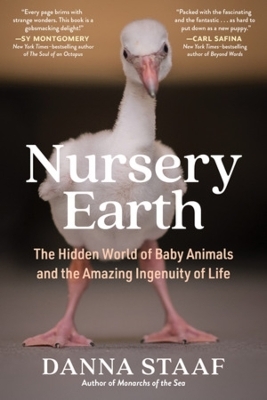
Nursery Earth
The Hidden World of Baby Animals and the Amazing Ingenuity of Life
Seiten
2024
The Experiment LLC (Verlag)
978-1-891011-71-9 (ISBN)
The Experiment LLC (Verlag)
978-1-891011-71-9 (ISBN)
A first-of-its-kind pop-science journey into the hidden world of baby animals
Entire ecosystems rest on the shoulders (or tentacles, or jointed exoskeletons) of animal babies; it’s time we paid them more attention. In Nursery Earth, researcher Danna Staaf invites readers to explore these tiny, secret lives, revealing some of nature’s strangest and most ingenious workings. A salamander embryo breathes with the help of algae inside its cells. The young grub of a Goliath beetle dwarfs its parents. Fluffy flamingo chicks delay turning pink for years to let adults know they’re not mating rivals and to encourage friendly behavior.
Our bias toward adult animals (not least because babies can be hard to find) means these wonders have long gone under-researched. But for all kinds of animals, if we overlook their babies, we miss out on the most fascinating—and consequential—time in their lives. Nursery Earth makes the case that these young creatures are not just beings in progress but beings in their own right. Our planet needs them all: the maggots as much as the kittens!
Entire ecosystems rest on the shoulders (or tentacles, or jointed exoskeletons) of animal babies; it’s time we paid them more attention. In Nursery Earth, researcher Danna Staaf invites readers to explore these tiny, secret lives, revealing some of nature’s strangest and most ingenious workings. A salamander embryo breathes with the help of algae inside its cells. The young grub of a Goliath beetle dwarfs its parents. Fluffy flamingo chicks delay turning pink for years to let adults know they’re not mating rivals and to encourage friendly behavior.
Our bias toward adult animals (not least because babies can be hard to find) means these wonders have long gone under-researched. But for all kinds of animals, if we overlook their babies, we miss out on the most fascinating—and consequential—time in their lives. Nursery Earth makes the case that these young creatures are not just beings in progress but beings in their own right. Our planet needs them all: the maggots as much as the kittens!
Danna Staaf earned a PhD in biology from Stanford University with her studies of baby squid. She is the author of Monarchs of the Sea and The Lady and the Octopus, and she has written for Science, Atlas Obscura, and Nautilus. She lives in California with her human family, a cat, and a garden full of grubs, caterpillars, maggots, and innumerable other babies. Richard Strathmann, PhD, is an expert in the diverse patterns of animal development, with a particular focus on marine animals. He finds the beauty and variety of changes from eggs through embryos, larvae, and metamorphosis endlessly entertaining. He joined the faculty of the University of Washington in 1973.
| Erscheinungsdatum | 23.04.2024 |
|---|---|
| Vorwort | Richard Strathmann |
| Zusatzinfo | 8-page color photo insert |
| Verlagsort | New York |
| Sprache | englisch |
| Maße | 142 x 211 mm |
| Gewicht | 295 g |
| Themenwelt | Sachbuch/Ratgeber ► Natur / Technik ► Natur / Ökologie |
| Naturwissenschaften ► Biologie ► Ökologie / Naturschutz | |
| ISBN-10 | 1-891011-71-5 / 1891011715 |
| ISBN-13 | 978-1-891011-71-9 / 9781891011719 |
| Zustand | Neuware |
| Informationen gemäß Produktsicherheitsverordnung (GPSR) | |
| Haben Sie eine Frage zum Produkt? |
Mehr entdecken
aus dem Bereich
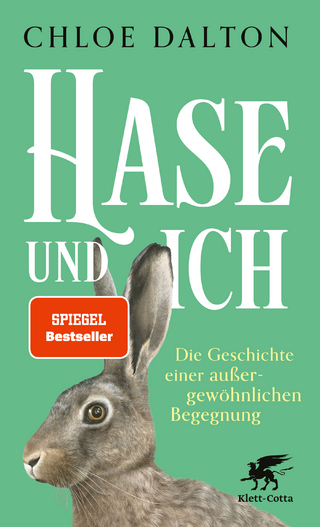


aus dem Bereich
die Geschichte einer außergewöhnlichen Begegnung
Buch | Hardcover (2025)
Klett-Cotta (Verlag)
CHF 34,90
eine Geschichte der letzten 500 Jahre
Buch | Hardcover (2025)
C.H.Beck (Verlag)
CHF 47,60


