Seismic Vulnerability Index Assessment Framework of RC Structures (eBook)
91 Seiten
Springer Nature Singapore (Verlag)
9789819950386 (ISBN)
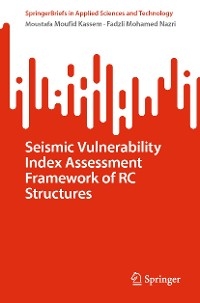
This book represents a significant step toward a new contribution in the process of developing the seismic vulnerability index. This is accomplished by releasing or reducing the role of the rapid visual screening that is created by the opinions and decisions of experts, which depend on observations made while investigating the vulnerability damages caused by earthquakes. Alternatively, the computational analytical technique is preferable since it can be effective in determining the seismic vulnerability index before the occurrence of an earthquake by modeling the most affected influencing parameters that regulate the building performance. In addition, the seismic vulnerability index is supported by the vulnerability curves, which describe the probability of damages and are used to estimate the economic damage grade for each building which is the topic of inquiry. In the end, this helps to establish a clear vision and sort of recommendations for engineers and specialists to follow inorder to take into consideration certain indices and factors before designing any specific structure. Because of this, the simplified work is utilized to manage and put into action measures that will protect against the effects of seismic events before an earthquake really occurs. In addition to this benefit, the work that has been done is of significant assistance to the authorities that are accountable for the restoration of the preexisting buildings and the cultural heritages.
This book represents a significant step toward a new contribution in the process of developing the seismic vulnerability index. This is accomplished by releasing or reducing the role of the rapid visual screening that is created by the opinions and decisions of experts, which depend on observations made while investigating the vulnerability damages caused by earthquakes. Alternatively, the computational analytical technique is preferable since it can be effective in determining the seismic vulnerability index before the occurrence of an earthquake by modeling the most affected influencing parameters that regulate the building performance. In addition, the seismic vulnerability index is supported by the vulnerability curves, which describe the probability of damages and are used to estimate the economic damage grade for each building which is the topic of inquiry. In the end, this helps to establish a clear vision and sort of recommendations for engineers and specialists to follow inorder to take into consideration certain indices and factors before designing any specific structure. Because of this, the simplified work is utilized to manage and put into action measures that will protect against the effects of seismic events before an earthquake really occurs. In addition to this benefit, the work that has been done is of significant assistance to the authorities that are accountable for the restoration of the preexisting buildings and the cultural heritages.
| Erscheint lt. Verlag | 5.8.2023 |
|---|---|
| Reihe/Serie | SpringerBriefs in Applied Sciences and Technology | SpringerBriefs in Applied Sciences and Technology |
| Zusatzinfo | X, 91 p. 45 illus., 40 illus. in color. |
| Sprache | englisch |
| Themenwelt | Naturwissenschaften ► Physik / Astronomie ► Mechanik |
| Technik ► Bauwesen | |
| Technik ► Maschinenbau | |
| Schlagworte | Earthquake Engineering • European Macroseismic Approach • Gruppo Nazionale Difesa Terremoti (GNDT) • National Group for Earthquake Protection • Non-Linear Parametric Analysis (NL-PA) • Reinforced Concrete (RC) Structures • Seismic Risk Management • Seismic Vulnerability Index (SVI) • Soil Mechanics |
| ISBN-13 | 9789819950386 / 9789819950386 |
| Informationen gemäß Produktsicherheitsverordnung (GPSR) | |
| Haben Sie eine Frage zum Produkt? |
 PDF (Wasserzeichen)
DRM: Digitales Wasserzeichen
Dieses eBook enthält ein digitales Wasserzeichen und ist damit für Sie personalisiert. Bei einer missbräuchlichen Weitergabe des eBooks an Dritte ist eine Rückverfolgung an die Quelle möglich.
Dateiformat: PDF (Portable Document Format)
Mit einem festen Seitenlayout eignet sich die PDF besonders für Fachbücher mit Spalten, Tabellen und Abbildungen. Eine PDF kann auf fast allen Geräten angezeigt werden, ist aber für kleine Displays (Smartphone, eReader) nur eingeschränkt geeignet.
Systemvoraussetzungen:
PC/Mac: Mit einem PC oder Mac können Sie dieses eBook lesen. Sie benötigen dafür einen PDF-Viewer - z.B. den Adobe Reader oder Adobe Digital Editions.
eReader: Dieses eBook kann mit (fast) allen eBook-Readern gelesen werden. Mit dem amazon-Kindle ist es aber nicht kompatibel.
Smartphone/Tablet: Egal ob Apple oder Android, dieses eBook können Sie lesen. Sie benötigen dafür einen PDF-Viewer - z.B. die kostenlose Adobe Digital Editions-App.
Buying eBooks from abroad
For tax law reasons we can sell eBooks just within Germany and Switzerland. Regrettably we cannot fulfill eBook-orders from other countries.
aus dem Bereich