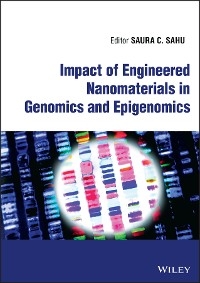
Impact of Engineered Nanomaterials in Genomics and Epigenomics (eBook)
448 Seiten
John Wiley & Sons (Verlag)
978-1-119-89624-1 (ISBN)
Overview of current research and technologies in nanomaterial science as applied to omics science at the single cell level
Impact of Engineered Nanomaterials in Genomics and Epigenomics is a comprehensive and authoritative compilation of the genetic processes and instructions that specifically direct individual genes to turn on or off, focusing on the developing technologies of engineering nanomaterials and their role in cell engineering which have become important research tools for pharmaceutical, biological, medical, and toxicological studies.
Combining state-of-the art information on the impact of engineered nanomaterials in genomics and epigenomics, from a range of internationally recognized investigators from around the world, this edited volume offers unique insights into the current trends and future directions of research in this scientific field.
Impact of Engineered Nanomaterials in Genomics and Epigenomics includes detailed information on sample topics such as:
* Impact of engineered nanomaterials in genomics and epigenomics, including adverse impact on glucose energy metabolism
* Toxicogenomics, toxicoepigenomics, genotoxicity and epigenotoxicity, and mechanisms of toxicogenomics and toxicoepigenomics
* Adverse effects of engineered nanomaterials on human environment and metabolomics pathways leading to ecological toxicity
* Meta-analysis methods to identify genomic toxicity mechanisms of engineered nanomaterials and biological effects of engineered nanomaterial exposure
* Artificial intelligence and machine learning of single-cell transcriptomics of engineered nanoparticles and trends in plant nano-interaction to mitigate abiotic stresses
This comprehensive work is a valuable and excellent source of authoritative and up-to-date information for advanced students and researchers, toxicologists, the drug industry, risk assessors and regulators in academia, industry, and government, as well as for clinical scientists working in hospital and clinical environments.
Saura C. Sahu, PhD, is a former Research Chemist with the Division of Toxicology at the Office of Applied Research and Safety Assessment, Center for Food Safety and Applied Nutrition at the United States Food and Drug Administration.
| Erscheint lt. Verlag | 20.5.2023 |
|---|---|
| Sprache | englisch |
| Themenwelt | Naturwissenschaften ► Chemie |
| Schlagworte | Biowissenschaften • Chemie • Chemistry • Genomforschung u. Proteomik • Genomics & Proteomics • Life Sciences • nanomedicine • Nanomedizin • Nanotechnologie • nanotechnology • Pharmaceutical & Medicinal Chemistry • Pharmazeutische u. Medizinische Chemie |
| ISBN-10 | 1-119-89624-X / 111989624X |
| ISBN-13 | 978-1-119-89624-1 / 9781119896241 |
| Informationen gemäß Produktsicherheitsverordnung (GPSR) | |
| Haben Sie eine Frage zum Produkt? |
 EPUB (Adobe DRM)
Kopierschutz: Adobe-DRM
Adobe-DRM ist ein Kopierschutz, der das eBook vor Mißbrauch schützen soll. Dabei wird das eBook bereits beim Download auf Ihre persönliche Adobe-ID autorisiert. Lesen können Sie das eBook dann nur auf den Geräten, welche ebenfalls auf Ihre Adobe-ID registriert sind.
Details zum Adobe-DRM
Dateiformat: EPUB (Electronic Publication)
EPUB ist ein offener Standard für eBooks und eignet sich besonders zur Darstellung von Belletristik und Sachbüchern. Der Fließtext wird dynamisch an die Display- und Schriftgröße angepasst. Auch für mobile Lesegeräte ist EPUB daher gut geeignet.
Systemvoraussetzungen:
PC/Mac: Mit einem PC oder Mac können Sie dieses eBook lesen. Sie benötigen eine
eReader: Dieses eBook kann mit (fast) allen eBook-Readern gelesen werden. Mit dem amazon-Kindle ist es aber nicht kompatibel.
Smartphone/Tablet: Egal ob Apple oder Android, dieses eBook können Sie lesen. Sie benötigen eine
Geräteliste und zusätzliche Hinweise
Buying eBooks from abroad
For tax law reasons we can sell eBooks just within Germany and Switzerland. Regrettably we cannot fulfill eBook-orders from other countries.
aus dem Bereich