Isotope Geochemistry (eBook)
John Wiley & Sons (Verlag)
978-1-119-72994-5 (ISBN)
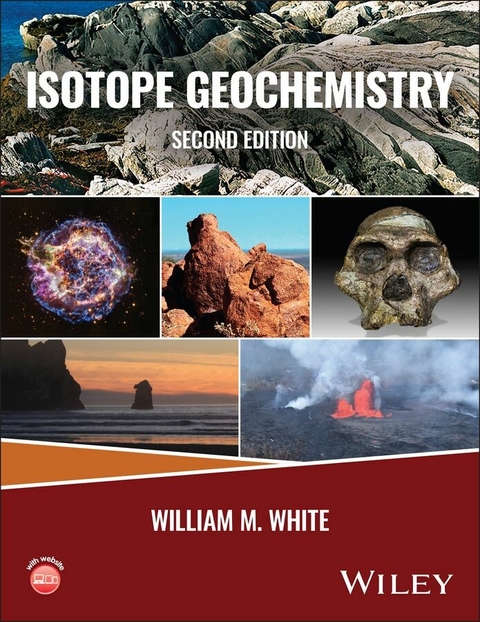
Provides a thorough and up-to-date overview of radiogenic and stable isotope geochemistry
Now in its second edition, Isotope Geochemistry presents a comprehensive introduction to radiogenic and stable isotope geochemistry. The first five chapters cover fundamentals including the physics of nuclei, radioactive decay, nucleosynthesis, geochronology, and the theory of stable isotope fractionation. The next chapter focuses on the isotope geochemistry of meteorites and their constraints on the formation of the solar system and the Earth. The subsequent three chapters cover radiogenic and stable isotope geochemistry evolution of the Earth's mantle and crust. Three more chapters are devoted to the Earth's surface, the exogene, including the hydrologic system, the biosphere, and climate. A new chapter in this edition focuses on the use of isotopes in paleontology and archeology. The final chapter is devoted to the isotope geochemistry of the noble gases.
Illustrated in full color throughout, Isotope Geochemistry is intended primarily as a textbook for advanced undergraduate and graduate students. It is also intended as a reference for earth science professionals, reflecting the impact that isotope geochemistry has on virtually every aspect of the earth sciences, from climate change and geomorphology to geodynamics.
William M. White is Professor Emeritus of Earth and Atmospheric Sciences at Cornell University. He received his B.Sc. in geology at the University of California at Berkeley and a Ph.D. in oceanography at the University of Rhode Island. His is the author of Geochemistry, also published by Wiley, the editor of the Encyclopedia of Geochemistry, and the founding editor of the journal Geochemistry, Geophysics, Geosystems. He is a Geochemistry Fellow of the Geochemical Society and European Association of Geochemistry, a fellow of the AGU and an ISI highly cited researcher. He was awarded the 2022 Urey Medal of the European Association of Geochemistry.
ISOTOPE GEOCHEMISTRY Provides a thorough and up-to-date overview of radiogenic and stable isotope geochemistry Now in its second edition, Isotope Geochemistry presents a comprehensive introduction to radiogenic and stable isotope geochemistry. The first five chapters cover fundamentals including the physics of nuclei, radioactive decay, nucleosynthesis, geochronology, and the theory of stable isotope fractionation. The next chapter focuses on the isotope geochemistry of meteorites and their constraints on the formation of the solar system and the Earth. The subsequent three chapters cover radiogenic and stable isotope geochemistry evolution of the Earth s mantle and crust. Three more chapters are devoted to the Earth s surface, the exogene, including the hydrologic system, the biosphere, and climate. A new chapter in this edition focuses on the use of isotopes in paleontology and archeology. The final chapter is devoted to the isotope geochemistry of the noble gases. Illustrated in full color throughout, Isotope Geochemistry is intended primarily as a textbook for advanced undergraduate and graduate students. It is also intended as a reference for earth science professionals, reflecting the impact that isotope geochemistry has on virtually every aspect of the earth sciences, from climate change and geomorphology to geodynamics.
William M. White is Professor Emeritus of Earth and Atmospheric Sciences at Cornell University. He received his B.Sc. in geology at the University of California at Berkeley and a Ph.D. in oceanography at the University of Rhode Island. His is the author of Geochemistry, also published by Wiley, the editor of the Encyclopedia of Geochemistry, and the founding editor of the journal Geochemistry, Geophysics, Geosystems. He is a Geochemistry Fellow of the Geochemical Society and European Association of Geochemistry, a fellow of the AGU and an ISI highly cited researcher. He was awarded the 2022 Urey Medal of the European Association of Geochemistry.
1: Atoms and Nuclei: Their Physics and Origins 1.1 Introduction 1.2 Physics of the nucleus 1.3 Radioactive Decay 1.4 Nucleosynthesis
2: Decay Systems and Geochronology I 2.1 Basics of Radioactive Isotope Geochemistry 2.2 Fundamentals of Geochronology 2.3 The K-Ar-Ca system 2.4 The Rb-Sr System 2.5 Rare Earth Decay Systems 2.6 The Re-Os-Pt System
3: Decay Systems and Geochronology II: U and Th 3.1 Introduction 3.2 Pb-Pb Ages and Isochrons 3.3 Zircon Dating 3.4 U-Decay Series Dating
4: Geochronology III: Other Dating Methods 4.1 Introduction 4.2 Cosmogenic Nuclides 4.3 Thermochronology
5: Fractionation of isotopes 5.1 Introduction 5.2 Notation, definitions, and standards 5.3 Theory of Equilibrium isotopic fractionations 5.4 Kinetic fractionation 5.5 Mass dependent versus mass dependent fractionation
6: Isotope Cosmochemistry 6.1 Introduction 6.2 Star Birth 6.3 Meteorites 6.4 Cosmochronology 6.5 Stardust 6.6 Isotopic variations in bulk meteorites 6.7 Cosmic ray exposure ages of meteorites
7: Isotope Geochemistry of the Mantle 7.1 Introduction 7.2 Composition of the Earth's Mantle 7.3 Radiogenic isotopes in oceanic basalts 7.4 Inferences on mantle structure and evolution 7.5 The Subcontinental Lithosphere 7.6 U-Series Isotopes and Melt Generation
8: Isotope geochemistry of the continental crust 8.1 Introduction 8.2 Mechanisms of crustal growth 8.3 The earliest continental crust 8.4 The continental crust through time 8.5 Isotopic composition of the continental crust 8.6 Subduction Zones
9: Stable Isotopes in the solid Earth 9.1 Introduction 9.2 Equilibrium Fractionations Among Minerals 9.3 Geothermometry 9.4 Stable Isotope Composition of the Mantle 9.5 Oxygen Isotopes in Hydrothermal Systems 9.6 Sulfur Isotopes in magmatic and hydrothermal systems 9.7 Copper isotopes in ore deposits
10: Light Stable Isotopes in the exogene 10.1 Introduction 10.2 The hydrologic system 10.3 isotope ratios in the biosphere 10.4 isotope ratios in the atmosphere
11: Non-traditional stable and radiogenic isotopes in the exogene 11.1 Introduction 11.2 Radiogenic isotopes in the modern ocean 11.3 Stable isotope ratios of conservative elements 11.4 Stable isotope ratios of nutrient elements 11.5 Stable isotope ratios of transition metals
12: Paleoclimate, paleoceanography, and atmospheric history 12.1 Introduction 12.2 The Pleistocene Climate Record in Deep Sea Sediments 12.3 Isotopes in paleoceanography 12.4 Climate in the Cenozoic 12.5 Carbon isotopes, atmospheric carbon dioxide, and climate 12.6 Tracing the evolution of atmospheric oxygen
13: Life, Paleoecology, and Human History 13.1 Introduction 13.2 Isotopes in evolution 13.3 Isotopes and diet: you are what you eat 13.4 Paleoecology of grasslands 13.5 Paleoecology of the Pleistocene Tundra Steppe 13.6.1 Domestication of maize 13.7 The metallurgical revolution
14: Noble Gas Isotope Geochemistry 14.1 Introduction 14.1.1 Noble Gas Chemistry 14.2 Noble Gases in the Solar System 14.3 Helium 14.4 Neon 14.5 Argon 14.6 Krypton 14.7 Xenon 14.8 Implications of Noble Gas Isotope Ratios for the Origin and Evolution of the Earth 14.9 Noble gas constraints on formation and evolution of the Earth
Chapter 1
Atoms and Nuclei: Their Physics and Origins
1.1 INTRODUCTION
Isotope geochemistry has grown over the last 60 years to become one of the most important fields in the earth sciences. It has two broad subdivisions, namely, radiogenic isotope geochemistry and stable isotope geochemistry. These subdivisions reflect the two primary reasons why the relative abundances of isotopes of elements vary in nature, which are radioactive decay and chemical fractionation; in this context, “fractionation” is any process in which the isotopes of the same element behave differently. One might recognize a third subdivision, i.e., cosmogenic isotope geochemistry, where interactions with high‐energy cosmic rays produce nuclear changes.
The growth in the importance of isotope geochemistry reflects its remarkable success in attacking fundamental problems of earth science, as well as problems in astrophysics, physics, and biology (including medicine). Isotope geochemistry has played an important role in transforming geology from a qualitative, observational science into a modern quantitative one. To appreciate the point, consider the Ice Ages, a phenomenon that has fascinated the geologist and the layman alike for more than 150 years. The idea that much of the Northern Hemisphere was once covered by glaciers was first advanced by Swiss zoologist Louis Agassiz in 1837. His theory was based on observations of geomorphology and modern glaciers in the Alps. Over the next 100 years, this theory advanced very little, other than the discovery that there had been more than one ice advance and that it was a global phenomenon. No one knew exactly when these ice advances had occurred, how long they lasted, or why they occurred. Stable and radiogenic isotopic studies in the last 60 years have determined the exact times of these ice ages and the exact extent of temperature change (i.e., about 3°C or so in temperate latitudes, and more at the poles). Knowing the timing of these glaciations has allowed us to conclude that variations in the Earth’s orbital parameters (the Milankovitch parameters) and resulting changes in insolation have been the pacemaker of these ice ages. Comparing isotopically determined temperatures with carbon dioxide (CO2) concentrations in bubbles in carefully dated ice cores leads to the conclusion that changes in atmospheric CO2 concentration in response to these changes in insolation were the immediate cause of these climate swings. Careful uranium–thorium (U–Th) dating of corals has also revealed the detailed timing of the melting of the ice sheet and the consequent rise in sea level. Comparing this with stable isotope geothermometry shows that melting lagged warming (not too surprisingly). Other isotopic studies revealed changes in the ocean circulation system as the last ice age ended. In turn, changes in ocean circulation were likely the principal driver of changes in atmospheric CO2. Forty years ago, all this seemed very interesting, but not very “relevant.” Today, it provides us with critical insights into how the planet’s climate system works. With the current concern over potential global warming and greenhouse gases, this information seems extremely “relevant.”
Some isotope geochemistry even seeps into public consciousness through its application to archeology and forensics. For example, a National Geographic television documentary described how carbon‐14 dating of 54 beheaded skeletons in a mass grave in Dorset, England revealed these skeletons were from the tenth century and how strontium and oxygen isotope ratios revealed they were those of Vikings executed by Anglo‐Saxons and not vice versa, as originally suspected. And the story of how isotopic analysis of the remains of English King Richard III, which were found under a parking lot in Leicester, revealed details of his life was widely reported in newspapers. Forensic isotopic analysis gets occasional mention both in shows, such as CSI: Crime Scene Investigation, and in newspaper reporting of real crime investigations.
Other examples of the impact of isotope geochemistry would include diverse topics, such as ore genesis, mantle dynamics, hydrology and hydrocarbon migration, monitors of the cosmic ray flux, crustal evolution, the origin of life, plate tectonics, volcanology, oceanic circulation, atmospheric evolution, environmental protection and monitoring, and paleontology. Indeed, there are few, if any, areas of geological inquiry where isotopic studies have not had a significant impact.
One of the first applications of isotope geochemistry remains one of the most important, namely geochronology, the determination of the timing of events in the history of the Earth and the Solar System. The first “date” was obtained in 1907 by Bertram Boltwood, a Yale University chemist, who determined the age of uranium ore samples by measuring the amount of the radiogenic daughter of U, namely, lead (Pb), present. Other early applications include determining the natural abundance of isotopes carried out by Alfred Nier in the first half of the twentieth century, providing key constraints on models of the nucleus and the origin of the elements (nucleosynthesis). Work on the latter problem still proceeds. The origins of stable isotope geochemistry date to the work of Harold Urey and his colleagues in the late 1940s. Paleothermometry was one of the first applications of stable isotope geochemistry as it was Urey who recognized the potential of stable isotope geochemistry to solving the riddle of the Ice Ages.
This book touches on many, though not all, of these applications. Chapter 1 begins with a brief consideration of the physics of the nucleus and then that of the process that created the elements, called nucleosynthesis. Chapters 2 through 4 explore geochronology, and the myriad ways in which isotopes can be used as clocks. We will then introduce the fundamental principles underlying stable isotope geochemistry. With a basic understanding of both stable geochemistry and radiogenic geochemistry, we can then explore how they are used to understand the origin of the Solar System and the Earth. The following three chapters (i.e., Chapters 7–9) explore the isotope geochemistry of the mantle and crust, with radiogenic isotope geochemistry in Chapters 7 and 8 and stable isotope geochemistry in Chapter 9. Chapters 10 and 11 focus on the stable isotope geochemistry of the interactions occurring in the oceans, atmosphere, and land surface, called the “exogene.” Chapter 13 elaborates the use of isotopes in the history of the life and archeology. Finally, Chapter 14 explores the isotope geochemistry of those elements at the first right of the periodic table, the noble gases, whose isotopic variations are due to both nuclear and chemical processes and provide special insights into the origins and behavior of the Earth.
1.2 PHYSICS OF THE NUCLEUS
1.2.1 Early development of atomic and nuclear theory
John Dalton, an English schoolteacher, first proposed in 1806 that all matter consists of atoms. In 1815, William Prout found that atomic weights were integral multiples of the mass of hydrogen (H). This observation was strong support for the atomic theory, though it was subsequently shown to be only approximate. Joseph John Thomson of the Cavendish Laboratory in Cambridge developed the first mass spectrograph and in 1912, his analysis of neon1 showed why: those elements not having integer weights had several isotopes, each of which had mass that was an integral multiple of the mass of H. In the meantime, Ernest Rutherford, who was also from the Cavendish Laboratory, had made another important observation: that atoms consisted mostly of empty space. This led to Niels Bohr’s model of the atom proposed in 1910; the model held that the atoms consisted of a nucleus, which contained most of the mass, and electrons in orbit about it.
In 1913, Frederick Soddy, then at the University of Glasgow, formulated the concept of isotopes: that certain elements exist in two or more forms, which have different atomic weights but are indistinguishable chemically. It was nevertheless unclear why some atoms had different atomic weights than other atoms of the same element. The answer to this question finally provided in 1932 by James Chadwick, who had been a student of Rutherford, was “the neutron”. Chadwick won the 1935 Nobel Prize in physics for his discovery, although Walther Bothe and Herbert Becker from Germany had earlier discovered the particle but mistook it for gamma radiation. Various other experiments showed the neutron could be emitted and absorbed by nuclei; hence, it became clear that differing numbers of neutrons caused some atoms of an element to be heavier than others. This bit of history leads to our first basic observation about the nucleus that it consists of protons and neutrons.
1.2.2 Some definitions and units
Before we consider the nucleus in more detail, let us set out some definitions – N: the number of neutrons; Z: the number of protons (same as atomic number since the number of protons dictates the chemical properties of the atom); A: mass number (N + Z); M: atomic mass; and I: neutron excess number (I = N ‐ Z). Isotopes have the same number of protons but different number of neutrons; isobars have the same mass number (N + Z); and isotones have the same number of neutrons...
| Erscheint lt. Verlag | 13.2.2023 |
|---|---|
| Sprache | englisch |
| Themenwelt | Naturwissenschaften ► Geowissenschaften ► Geologie |
| Schlagworte | Boden- u. Geochemie • Chemie • Chemistry • earth sciences • Geochemie • Geochemie, Mineralogie • Geochemistry & Minerology • Geowissenschaften • Isotopenanalyse • Isotopenchemie • Soil & Geochemistry |
| ISBN-10 | 1-119-72994-7 / 1119729947 |
| ISBN-13 | 978-1-119-72994-5 / 9781119729945 |
| Informationen gemäß Produktsicherheitsverordnung (GPSR) | |
| Haben Sie eine Frage zum Produkt? |
 EPUB (Adobe DRM)
Kopierschutz: Adobe-DRM
Adobe-DRM ist ein Kopierschutz, der das eBook vor Mißbrauch schützen soll. Dabei wird das eBook bereits beim Download auf Ihre persönliche Adobe-ID autorisiert. Lesen können Sie das eBook dann nur auf den Geräten, welche ebenfalls auf Ihre Adobe-ID registriert sind.
Details zum Adobe-DRM
Dateiformat: EPUB (Electronic Publication)
EPUB ist ein offener Standard für eBooks und eignet sich besonders zur Darstellung von Belletristik und Sachbüchern. Der Fließtext wird dynamisch an die Display- und Schriftgröße angepasst. Auch für mobile Lesegeräte ist EPUB daher gut geeignet.
Systemvoraussetzungen:
PC/Mac: Mit einem PC oder Mac können Sie dieses eBook lesen. Sie benötigen eine
eReader: Dieses eBook kann mit (fast) allen eBook-Readern gelesen werden. Mit dem amazon-Kindle ist es aber nicht kompatibel.
Smartphone/Tablet: Egal ob Apple oder Android, dieses eBook können Sie lesen. Sie benötigen eine
Geräteliste und zusätzliche Hinweise
Buying eBooks from abroad
For tax law reasons we can sell eBooks just within Germany and Switzerland. Regrettably we cannot fulfill eBook-orders from other countries.
aus dem Bereich