The Diversity of Fishes (eBook)
John Wiley & Sons (Verlag)
978-1-119-34180-2 (ISBN)
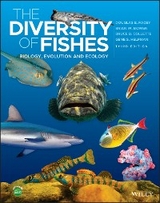
The third edition of The Diversity of Fishes is a major revision of the widely adopted ichthyology textbook, incorporating the latest advances in the biology of fishes and covering taxonomy, anatomy, physiology, biogeography, ecology, and behavior. Key information on the evolution of various fishes is also presented, providing expansive and conclusive coverage on all key topics pertaining to the field.
To aid in reader comprehension, each chapter begins with a summary that provides a broad overview of the content of that chapter, which may be particularly useful for those using the text for a course who don't intend to address every chapter in detail. Detailed color photographs throughout the book demonstrate just some of the diversity and beauty of fishes that attract many to the field. A companion website provides related videos selected by the authors, instructor resources, and additional references and websites for further reading.
Sample topics covered and learning resources included in The Diversity of Fishes are as follows:
- How molecular genetics has transformed many aspects of ichthyology
- The close relationship between structure and function, including adaptations to special environments
- Many physical and behavioral adaptations reflecting the fact that many fishes are both predators and prey
- Fish interactions with other species within fish assemblages and broader communities, plus their impacts on ecosystems
- Global maps that more accurately represent the comparative sizes of oceans and land masses than maps used in prior editions
For students, instructors, and individuals with an interest in ichthyology, The Diversity of Fishes is an all-in-one introductory resource to the field, presenting vast opportunities for learning, many additional resources to aid in information retention, and helpful recommendations on where to go to explore specific topics further.
Douglas E. Facey, Emeritus Professor of Biology, Saint Michael's College, Vermont, USA.
Brian W. Bowen, Research Professor, Hawaii Institute of Marine Biology, University of Hawaii at Manoa, Honolulu, Hawaii, USA.
Bruce B. Collette, Research Associate, NOAA, National Museum of Natural History, Smithsonian Institution, Washington, DC, USA.
Gene S. Helfman, Emeritus Professor of Ecology, Odum School of Ecology, University of Georgia, Athens, Georgia, USA.
THE DIVERSITY OF FISHES The third edition of The Diversity of Fishes is a major revision of the widely adopted ichthyology textbook, incorporating the latest advances in the biology of fishes and covering taxonomy, anatomy, physiology, biogeography, ecology, and behavior. Key information on the evolution of various fishes is also presented, providing expansive and conclusive coverage on all key topics pertaining to the field. To aid in reader comprehension, each chapter begins with a summary that provides a broad overview of the content of that chapter, which may be particularly useful for those using the text for a course who don t intend to address every chapter in detail. Detailed color photographs throughout the book demonstrate just some of the diversity and beauty of fishes that attract many to the field. A companion website provides related videos selected by the authors, instructor resources, and additional references and websites for further reading. Sample topics covered and learning resources included in The Diversity of Fishes are as follows: How molecular genetics has transformed many aspects of ichthyology The close relationship between structure and function, including adaptations to special environments Many physical and behavioral adaptations reflecting the fact that many fishes are both predators and prey Fish interactions with other species within fish assemblages and broader communities, plus their impacts on ecosystems Global maps that more accurately represent the comparative sizes of oceans and land masses than maps used in prior editions For students, instructors, and individuals with an interest in ichthyology, The Diversity of Fishes is an all-in-one introductory resource to the field, presenting vast opportunities for learning, many additional resources to aid in information retention, and helpful recommendations on where to go to explore specific topics further.
Douglas E. Facey, Emeritus Professor of Biology, Saint Michael's College, Vermont, USA. Brian W. Bowen, Research Professor, Hawaii Institute of Marine Biology, University of Hawaii at Manoa, Honolulu, Hawaii, USA. Bruce B. Collette, Research Associate, NOAA, National Museum of Natural History, Smithsonian Institution, Washington, DC, USA. Gene S. Helfman, Emeritus Professor of Ecology, Odum School of Ecology, University of Georgia, Athens, Georgia, USA.
Preface to the third edition
Preface to the second edition
Preface to the first edition
Phylogenetic relationships among living and extinct fish groups
About the companion website
Part I - Introduction
Chapter 1 - The Science of Ichthyology
Chapter 2 - Systematic Procedures
Part II - Form, Function, Ontogeny
Chapter 3 - Structure and Function of the Head
Chapter 4 - Structure and Function of the Trunk
Chapter 5 - Circulation, Gas Transport, Digestion, Metabolism, and Energetics
Chapter 6 - Nervous and Sensory Systems
Chapter 7 - Homeostasis
Chapter 8 - Reproduction and Early Life History
Chapter 9 - Juveniles, Age and, Growth
Chapter 10 - Special Habitats and Adaptations
Part III - Taxonomy, Phylogeny, and Evolution
Chapter 11 - "A History of Fishes"
Chapter 12 - Chondrichthyes
Chapter 13 - Living Representatives of Primitive Fishes
Chapter 14 - Teleosts I
Chapter 15 - Teleosts II
Part IV - Fish Behavior
Chapter 16 - Fishes as Predators and Prey
Chapter 17 - Fishes as Social Animals
Chapter 18 - Cycles of Activity and Behavior
Part V - Fish Distribution, Ecology, and Conservation
Chapter 19 - Zoogeography
Chapter 20 - Fish Populations
Chapter 21 - Communities, Ecosystems, and the Functional Role of Fishes
Chapter 22 - Conservation
Index
| Erscheint lt. Verlag | 6.10.2022 |
|---|---|
| Sprache | englisch |
| Themenwelt | Naturwissenschaften ► Biologie ► Ökologie / Naturschutz |
| Schlagworte | Animal Science & Zoology • Aquaculture, Fisheries & Fish Science • Aquakultur, Fischereiwesen u. Fischforschung • Biowissenschaften • Ecology & Organismal Biology • Fische • Fisch u. Fischfang • Fish & Fisheries • Fish Anatomy • Fish assemblages • Fish behavior • fish biogeography • fish biology • fish communities • Fish Ecology • Fish Genetics • fish interactions • fish physiology • Fish Science • Fish taxonomy • fish textbook • Ichthyology • ichthyology course • ichthyology professor • ichthyology student • ichthyology textbook • Life Sciences • Ökologie u. Biologie der Organismen • Zoologie |
| ISBN-10 | 1-119-34180-9 / 1119341809 |
| ISBN-13 | 978-1-119-34180-2 / 9781119341802 |
| Informationen gemäß Produktsicherheitsverordnung (GPSR) | |
| Haben Sie eine Frage zum Produkt? |
 PDF (Adobe DRM)
Kopierschutz: Adobe-DRM
Adobe-DRM ist ein Kopierschutz, der das eBook vor Mißbrauch schützen soll. Dabei wird das eBook bereits beim Download auf Ihre persönliche Adobe-ID autorisiert. Lesen können Sie das eBook dann nur auf den Geräten, welche ebenfalls auf Ihre Adobe-ID registriert sind.
Details zum Adobe-DRM
Dateiformat: PDF (Portable Document Format)
Mit einem festen Seitenlayout eignet sich die PDF besonders für Fachbücher mit Spalten, Tabellen und Abbildungen. Eine PDF kann auf fast allen Geräten angezeigt werden, ist aber für kleine Displays (Smartphone, eReader) nur eingeschränkt geeignet.
Systemvoraussetzungen:
PC/Mac: Mit einem PC oder Mac können Sie dieses eBook lesen. Sie benötigen eine
eReader: Dieses eBook kann mit (fast) allen eBook-Readern gelesen werden. Mit dem amazon-Kindle ist es aber nicht kompatibel.
Smartphone/Tablet: Egal ob Apple oder Android, dieses eBook können Sie lesen. Sie benötigen eine
Geräteliste und zusätzliche Hinweise
Buying eBooks from abroad
For tax law reasons we can sell eBooks just within Germany and Switzerland. Regrettably we cannot fulfill eBook-orders from other countries.
aus dem Bereich