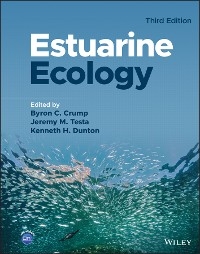
Estuarine Ecology (eBook)
John Wiley & Sons (Verlag)
9781119534624 (ISBN)
A detailed and accessible exploration of the fundamentals and the latest advances in estuarine ecology
In the newly revised third edition of Estuarine Ecology, a team of distinguished ecologists presents the current knowledge in estuarine ecology with particular emphasis on recent trends and advances. The book is accessible to undergraduate students while also providing a welcome summary of up-to-date content for a more advanced readership.
This latest edition is optimized for classroom use, with a more intuitive mode of presentation that takes into account feedback from the previous edition's readers. Review questions and exercises have been added to assist in the learning and retention of complex concepts.
Estuarine Ecology remains the gold standard for the discipline by taking stock of the manifold scientific breakthroughs made in the field since the last edition was written. It also offers:
- Thorough introductions to estuarine geomorphology, circulation, and chemistry
- In-depth treatments of estuarine primary and secondary production, including coastal marshes and mangrove wetlands
- A holistic view of estuarine ecosystems, their modeling and analysis, as well as the impact of human activities and climate change
- A companion website with detailed answers to exercise questions
Perfect for students of estuarine ecology, environmental science, fisheries science, oceanography, and natural resource management, Estuarine Ecology will also earn a place in the libraries of professionals, government employees, and consultants working on estuary and wetlands management and conservation.
Byron C. Crump, PhD, Oregon State University, USA
Jeremy M. Testa, PhD, University of Maryland Center for Environmental Science, USA
Kenneth H. Dunton, PhD, University of Texas at Austin, USA
Estuarine Ecology A detailed and accessible exploration of the fundamentals and the latest advances in estuarine ecology In the newly revised third edition of Estuarine Ecology, a team of distinguished ecologists presents the current knowledge in estuarine ecology with particular emphasis on recent trends and advances. The book is accessible to undergraduate students while also providing a welcome summary of up-to-date content for a more advanced readership. This latest edition is optimized for classroom use, with a more intuitive mode of presentation that takes into account feedback from the previous edition s readers. Review questions and exercises have been added to assist in the learning and retention of complex concepts. Estuarine Ecology remains the gold standard for the discipline by taking stock of the manifold scientific breakthroughs made in the field since the last edition was written. It also offers: Thorough introductions to estuarine geomorphology, circulation, and chemistry In-depth treatments of estuarine primary and secondary production, including coastal marshes and mangrove wetlands A holistic view of estuarine ecosystems, their modeling and analysis, as well as the impact of human activities and climate change A companion website with detailed answers to exercise questions Perfect for students of estuarine ecology, environmental science, fisheries science, oceanography, and natural resource management, Estuarine Ecology will also earn a place in the libraries of professionals, government employees, and consultants working on estuary and wetlands management and conservation.
Byron C. Crump, PhD, Oregon State University, USA Jeremy M. Testa, PhD, University of Maryland Center for Environmental Science, USA Kenneth H. Dunton, PhD, University of Texas at Austin, USA
Cover 1
Title Page 5
Copyright Page 6
Contents 9
Preface 11
Acknowledgments 12
List of Contributors 13
Chapter 1 Introduction to Estuarine Ecology 17
1.1 Background, Theory, and Issues 17
1.2 Definitions, Terms, and Objectives 20
1.2.1 Definitions of Estuary and Ecology, and Difficulties in Applying These Definitions to Estuaries 20
1.3 Three Views of a Generalized Estuary 22
1.3.1 Top view 22
1.3.2 Cross-Section View 23
1.3.3 Longitudinal Section 24
1.4 Estuarine Food Webs and Energy Flow 24
1.5 The Ever-Changing Dynamic Properties of an Estuary 26
1.6 High Productivity: An Estuarine Focal Point 27
1.6.1 Reasons for High Estuarine Primary Productivity 27
1.6.2 Other Important Hypotheses about Estuarine Ecology 28
1.7 Human Impacts and Management of Estuarine Ecosystems 28
1.8 The Potential Impacts of Future Trends on Estuarine Ecosystems 29
1.9 How We Will Proceed Through the Book 30
Further Reading 30
References 30
Chapter 2 Estuarine Geomorphology, Circulation, and Mixing 32
2.1 Introduction 32
2.2 Glaciation Cycles 32
2.3 Definition 33
2.4 Classification of Estuaries 33
2.4.1 Geomorphic Classification 33
2.4.2 Water Balance Classification and Gravitational Circulation 38
2.4.3 Classification by Salinity Stratification 39
2.4.4 Classification Based on Dynamics 41
2.4.5 Characterizing Conditions with Reynolds and Richardson Numbers 42
2.5 Tidal Circulation 44
2.6 Wind-Driven Circulation 45
2.7 Concluding Remarks 46
Review Questions 48
References 49
Chapter 3 Estuarine Chemistry 52
3.1 Basics in Biogeochemical Cycles and Chemical Principles 52
3.1.1 Linking Estuarine Chemistry with Estuarine Ecology 52
3.1.2 Global Biogeochemistry 52
3.1.3 Thermodynamics and Kinetics 53
3.1.4 Redox Chemistry 54
3.2 Mixing and Particle Effects on the Chemistry of Estuarine Waters 54
3.2.1 Reactivity of Dissolved Constituents 54
3.2.2 Sources and Mixing of Dissolved Salts in Estuaries 56
3.2.3 Measurement of Salinity 57
3.2.4 Dissolved Gases and Atmosphere–Water Exchange 57
3.2.5 Dissolved CO2 and Carbonate Chemistry 59
3.2.6 Effects of Suspended Particulates and Chemical Interactions 59
3.2.7 Estuarine Turbidity Maximum, Benthic Boundary Layer, and Fluid Muds 61
3.3 Biogeochemistry of Organic Matter 61
3.3.1 Particulate and Dissolved Organic Matter in Estuaries 61
3.3.2 Decomposition of Organic Detritus 63
3.3.3 Early Diagenesis 64
3.3.4 Characterization of Organic Matter Using Biomarker Techniques 65
3.4 Macronutrient Cycling 66
3.4.1 Sources of Nitrogen in Estuaries 66
3.4.2 Transformations of Inorganic and Organic Nitrogen 68
3.4.3 Sediment–Water Exchange of Dissolved Nitrogen 70
3.4.4 Sources of Phosphorus to Estuaries 71
3.4.5 Phosphorus Fluxes Across the Sediment–Water Interface 72
3.4.6 Cycling of Inorganic and Organic Phosphorus 73
3.4.7 Sources of Silica to Estuaries 73
3.4.8 Cycling of Silica 74
3.4.9 Sources of Sulfur to Estuaries 74
3.4.10 Transformations of Inorganic and Organic Sulfur 75
3.4.11 Sulfur at the Sediment–Water Interface 76
3.4.12 Carbon Cycling in Estuaries 77
3.4.13 Transformations and Cycling of Dissolved and Particulate Organic Carbon (DOC and POC) 78
3.5 Concluding Remarks 80
Review Questions 81
References 82
Chapter 4 Estuarine Phytoplankton 94
4.1 Introduction 94
4.2 The Players: Phytoplankton Community Composition and Function 95
4.2.1 Cyanobacteria 96
4.2.2 Green Algae 96
4.2.3 Cryptophytes 97
4.2.4 Chrysophytes 97
4.2.5 Diatoms 97
4.2.6 Prymnesiophytes 98
4.2.7 Dinoflagellates 98
4.2.8 Assessing Phytoplankton Communities 99
4.3 Spatial and Temporal Patterns of Phytoplankton Biomass and Productivity 101
4.4 Factors Controlling Phytoplankton Productivity and Community Composition 104
4.4.1 Light 104
4.4.2 Nutrients 105
4.4.3 Temperature 107
4.4.4 “Top Down” Control: Herbivory 107
4.5 Human and Climatic Impacts on Coastal Phytoplankton Dynamics 108
4.5.1 Effects of Nutrient Over-Enrichment on Estuarine Phytoplankton 108
4.5.2 The Roles of Climatic Variability in Eutrophication Dynamics 108
4.6 Harmful Algal Blooms (HABs) 111
4.7 Nutrient Management of Phytoplankton Production and Composition 111
Acknowledgments 115
Review Questions 115
References 116
Chapter 5 Estuarine Seagrasses 122
5.1 Introduction 122
5.2 Diversity and Global Distribution 123
5.3 Biomass and Productivity 124
5.4 Factors Controlling Productivity and Community Composition 126
5.4.1 Light 127
5.4.2 Temperature 127
5.4.3 Salinity 128
5.4.4 Nutrients 128
5.4.5 Inorganic Carbon 129
5.4.6 Oxygen and Sulfide Dynamics 129
5.5 Ecosystem Benefits 130
5.5.1 Consequences of Physical Effects on Water Movement 130
5.5.2 Biogeochemical Effects 131
5.5.3 Submersed Plants as Food and Habitat 132
5.5.4 Ecosystem Services 133
5.6 Human Impacts and Management 134
Review Questions 136
References 137
Chapter 6 Coastal Marshes 142
6.1 Introduction 142
6.2 Diversity, Zonation, and Global Distribution 142
6.2.1 General Features and Typology of Coastal Marshes 142
6.2.2 Distribution and Zonation of Coastal Marshes 144
6.3 Patterns and Processes Controlling Structure, Biomass, and Productivity 148
6.3.1 The Effect of Measurement Method on Productivity Results 150
6.3.2 Factors Affecting Marsh Productivity 150
6.3.3 Top-down Control of Marsh Vegetation 153
6.3.4 Factors Affecting Marsh Accretion and Habitat Change 155
6.4 Carbon Dynamics and Greenhouse Gas Emissions in Coastal Marshes 156
6.4.1 Decomposition of Organic Matter in Coastal Marshes 157
6.4.2 Greenhouse Gas Emissions 157
6.5 Human Impacts, Management, and Assessment of Coastal Marshes 158
6.5.1 Upstream Alterations 159
6.5.2 Functions and Values of Coastal Marshes 160
6.5.3 Indicators of Coastal Marsh Stability and Productivity 160
Study Questions 162
References 163
Chapter 7 Mangrove Wetlands 169
7.1 Introduction 169
7.2 Biogeography 170
7.2.1 Diversity 170
7.2.2 Global Patterns 170
7.3 Ecogeomorphology and Ecosystem Processes 172
7.3.1 Hierarchy of Ecosystem Patterns 173
7.3.2 Biomass and Productivity 174
7.3.3 Litter Dynamics and Export 177
7.3.4 Mangrove Food Webs 178
7.3.5 Net Ecosystem Productivity and Nutrient Biogeochemistry 178
7.4 Factors Controlling Productivity and Distribution 181
7.4.1 Hydroperiod and Waterlogged Soils 181
7.4.2 Resources and Regulators 182
7.4.3 Vivipary 184
7.5 Human Impacts, Conservation, and Carbon Sequestration 185
7.5.1 Human Exploitation 185
7.5.2 Biodiversity 187
7.5.3 Mangroves as Invasive Species 187
7.5.4 Sea Level Rise 187
7.5.5 Mangroves as Blue Carbon Ecosystems 188
Study Questions 189
References 191
Chapter 8 Estuarine Benthic Algae 197
8.1 Introduction 197
8.2 Taxonomy 197
8.3 Functional Forms 199
8.4 Habitats 201
8.4.1 Soft-bottom: Mud/Sandflats, Seagrass Beds, and Marshes 201
8.4.2 Hard-bottom: Rocky Intertidal, Shallow Subtidal 201
8.4.3 Coral Reefs 202
8.5 Spatial Patterns of Biomass and Productivity 202
8.5.1 Broad Geographic Scale—Latitudinal Differences 202
8.5.2 Depth Distribution 203
8.5.3 Energy Regime 203
8.5.4 Diel Cycle 204
8.5.5 Seasonal Cycle 204
8.6 Methods for Determining Productivity 206
8.7 Factors Regulating Productivity and Community Composition 208
8.7.1 Light 208
8.7.2 Nutrients 208
8.7.3 Grazing 210
8.8 Energy Flow 211
8.8.1 Recycling of Nutrients 211
8.8.2 Carbon Storage 211
8.8.3 Herbivory 212
8.8.4 Detrital Pathway 212
8.8.5 Dissolved Organic Carbon 212
8.8.6 Export of Carbon 212
8.9 Feedbacks and Interactions 213
8.9.1 Feedbacks on Biogeochemical Cycling in Soft Sediment Estuaries 213
8.9.2 Feedbacks on Sediment Stabilization 214
8.9.3 Effects on Faunal Biomass, Diversity, and Abundance 214
8.9.4 Facilitation by Fauna 214
8.9.5 Competition Between Benthic Algal Primary Producers 215
8.9.6 Interactions with Marine Diseases 216
8.10 Human Impacts 216
8.10.1 Eutrophication 216
8.10.2 Invasions 217
8.10.3 Climate Change 219
Study Questions 220
References 221
Chapter 9 Estuarine Microbial Ecology 229
9.1 Introduction 229
9.2 Diversity and Global Distribution in Estuaries 229
9.2.1 Bacteria and Archaea 231
9.2.2 Protists 233
9.2.3 Fungi 233
9.2.4 Viruses 234
9.3 Factors Controlling Productivity and Community Composition 234
9.3.1 Microbial Food Webs 234
9.3.2 Organic Carbon Decomposition and Trophic Dynamics 235
9.3.3 Microbes and Productivity 237
9.3.4 Environmental Factors Affecting Microbial Communities 237
9.4 Metabolic Diversity and Element Cycling 238
9.4.1 Carbon Fixation and Mineralization 239
9.4.2 Nitrogen Cycling 240
9.4.3 Sulfur Cycling 241
9.4.4 Iron and Manganese Cycling 243
9.4.5 Phosphorous Cycling 243
9.5 Summary 244
Review Questions 244
References 246
Chapter 10 Estuarine Zooplankton 251
10.1 Introduction 251
10.1.1 Why Is this Important What Is Unique About These Organisms?
10.1.2 Key Concepts and Definitions 251
10.1.3 Brief Description of Tools and Approaches (Nets, Acoustics & Optics, Models)
10.2 Diversity and Global Distribution in Estuaries 254
10.3 Spatial and Temporal Patterns of Biomass and Productivity 256
10.3.1 Spatial Patterns of Biomass 256
10.3.2 Temporal Patterns in Biomass and Production 257
10.4 Factors Controlling Productivity and Community Composition 257
10.4.1 Physiological Challenges for Zooplankton in Estuaries 257
10.4.2 Trophic Interactions 259
10.5 Special Topics Unique to Zooplankton 262
10.5.1 Recruitment 262
10.5.2 Introduced Species 263
10.5.3 Eutrophication and Deoxygenation 264
10.5.4 Pollutants 264
10.5.5 Freshwater Diversions and Dams 265
Questions 265
Further Reading 266
References 266
Chapter 11 Estuarine Benthos 269
11.1 Introduction 269
11.1.1 Sampling 271
11.2 Diversity and Global Distribution in Estuaries 273
11.3 Spatial and Temporal Patterns of Abundance, Biomass, and Productivity 274
11.4 Factors Controlling Productivity and Community Composition 276
11.4.1 Salinity 276
11.4.2 Effects of Oxygen 277
11.4.3 Substrate–Benthos Relationships 279
11.4.4 Plant–Benthos Interactions 279
11.4.5 Recruitment and Planktonic Dispersal 280
11.4.6 Density-Dependent Controls and Population Cycles 281
11.4.7 Top-Down and Bottom-Up Controls 282
11.5 Special Topics for Estuarine Benthos 283
11.5.1 Human Impacts on Estuarine Benthos 283
11.5.2 Invasive Species 286
Study Questions 287
References 288
Chapter 12 Estuarine Nekton 290
12.1 Introduction 290
12.2 Diversity and Global Distribution in Estuaries 291
12.2.1 Physiological Adaptations to Environmental Conditions 291
12.2.2 Behavioral Adaptations to Environmental Conditions 293
12.2.3 Physiological Feeding Adaptations 294
12.2.4 Behavioral Feeding Adaptations 294
12.2.5 Nekton Diets and Food Webs 295
12.3 Spatial and Temporal Patterns of Biomass and Productivity 297
12.3.1 Habitat Usage 297
12.3.2 Habitat-Specific Use: Functional Relationships 298
12.3.3 Life History Strategies 299
12.4 Factors Controlling Productivity and Community Composition 301
12.4.1 Year Class Success 301
12.4.2 Survival and Growth 302
12.4.3 Biotic and Abiotic Factors 303
Review Questions 305
References 306
Chapter 13 Estuarine Wildlife 308
13.1 Introduction 308
13.2 Patterns of Diversity 309
13.2.1 The Players 309
13.2.2 Diversity 311
13.2.3 Endemism and Specialization 312
13.3 Temporal and Spatial Patterns in Biomass and Productivity 314
13.3.1 Time 314
13.3.2 Space 316
13.4 Species Interactions Affecting Productivity and Community Composition 316
13.4.1 Herbivory 317
13.4.2 Predation 318
13.4.3 Competition 319
13.4.4 Disease 320
13.5 Human Effects on Estuarine Wildlife 321
13.5.1 Sea Level Rise and Climate Change 321
13.5.2 Habitat Conversion and Fragmentation 321
13.5.3 Invasive Species 322
13.5.4 Pollution 323
13.5.5 Hunting and Disturbance 323
13.5.6 Management of Estuaries for Wildlife 324
Acknowledgments 324
Study Questions 325
References 326
Chapter 14 Estuarine Ecosystem Metabolism 329
14.1 Introduction 329
14.2 Basic Definitions and Concepts 330
14.3 Approaches for Estimating Ecosystem Metabolism 333
14.3.1 Measuring Components of Ecosystem Metabolism 333
14.3.2 Direct Air-Ecosystem Gas Exchange 336
14.3.3 Open Water Measurements 339
14.3.4 Input-Output Budgets 340
14.3.5 Transport-Transformation Models 340
14.4 Regulating Factors and Spatial and Temporal Patterns 340
14.4.1 Light and Water Clarity 341
14.4.2 Temperature 342
14.4.3 Inorganic Nutrient and Organic Matter Inputs and Toxic Contaminants 342
14.4.4 Exchanges of Organic Matter within Ecosystems 344
14.4.5 River Flow, Flushing, and Wind 344
14.4.6 Water Depth 345
14.5 Ecosystem Metabolism Applications and Case Studies 347
14.5.1 Tomales Bay 347
14.5.2 Parker River-Plum Island Sound 347
14.5.3 Chesapeake Bay System 352
14.5.4 Scheldt Estuary 354
14.6 Cross-Ecosystem Comparisons 356
14.6.1 Trophic State and Dominant Controls 356
14.6.2 Eutrophication Effects on Metabolism 356
14.6.3 Coastal Ecosystems and Global Carbon Balance 357
14.6.4 Estuaries and Blue Carbon Sequestration 358
14.7 Metabolic Responses to Climate Change and Variability 361
14.8 Summary and Conclusions 361
Acknowledgements 362
Study Questions 362
References 363
Chapter 15 Estuarine Food Webs 369
15.1 Introduction 369
15.1.1 Food Chains and Food Webs 370
15.1.2 Functional Groups and Trophic Guilds 371
15.1.3 Trophic Efficiencies 372
15.1.4 Food Chain Length 373
15.2 Portraying Food Webs 374
15.2.1 Ecological Pyramids 374
15.2.2 Projecting Food Webs to Food Chains 374
15.2.3 Trophic Spectra 375
15.2.4 Biomass Body-Size Spectra 375
15.3 Trophic Theory 377
15.3.1 Direct Trophic Interactions 377
15.3.2 Indirect Trophic Interactions 377
15.3.3 Trophic Cascades 378
15.4 Attributes of Estuarine Food Webs 379
15.4.1 Spatial Mosaic of Coastal Habitats 379
15.4.2 The Importance of Detritus 379
15.5 Constructing Food Web Models 380
15.5.1 Choosing the Appropriate Scale and Currency 381
15.5.2 Composition of the Food Web (Nodes) 381
15.5.3 Organism Abundance and Biomass 382
15.5.4 Bioenergetic Rates 382
15.5.5 Food Habits 382
15.5.6 Stable Isotopes in Estuarine Food Webs 383
15.6 Quantitative Analysis of Food Web Network Models 386
15.6.1 Mass Balance in Food Web Networks 387
15.6.2 Total System Properties 387
15.6.3 Trophic Structure 388
15.6.4 Indirect Interactions 388
15.6.5 Dynamic Simulation of Food Webs 389
15.7 Estuarine Food Webs in a Changing Climate 389
15.8 Summary 390
Review Questions 391
References 391
Chapter 16 Estuarine Ecological Modeling 396
16.1 Introduction 396
16.2 Classes of Models 397
16.3 Developing and Using Mechanistic models 398
16.3.1 Step 1: Defining the Question 399
16.3.2 Step 2: Conceptualization 400
16.3.3 Step 3: Formalization 400
16.3.4 Step 4: Implementation 400
16.3.5 Step 5: Parameterization 401
16.3.6 Step 6: Validation 401
16.3.7 Step 7: Analysis 403
16.3.8 Going Through the Steps 403
16.4 Example 1: Gulf of Mexico Hypoxia 403
16.4.1 Defining the Question 403
16.4.2 Simple Two-layer Hypoxia Model 404
16.4.3 Complex 3D-CoupledHydrodynamic–BiogeochemicalModel 407
16.4.4 Conclusions from Both Models 410
16.5 Example 2: Marsh Habitat and Brown Shrimp Production 412
16.5.1 Defining the Question 412
16.5.2 Conceptualization 413
16.5.3 Formalization and Implementation 413
16.5.4 Parametrization and Validation 416
16.5.5 Analysis 417
16.5.6 Conclusions 418
16.6 Example 3: Coastal Habitat Under Sea Level Rise 418
16.6.1 Defining the Question 418
16.6.2 Conceptualization 418
16.6.3 Formalization and Implementation 420
16.6.4 Parameterization and Validation 421
16.6.5 Analysis 421
16.6.6 Conclusions 423
16.7 Some Important Concepts from the Examples 424
16.8 The Future 425
16.9 Further Reading: Getting Started 425
Review Questions 426
References 426
Chapter 17 Estuarine Fisheries and Aquaculture 430
17.1 Introduction 430
17.2 Estuarine Yield 431
17.2.1 Global Patterns 432
17.2.2 Physical, Biological, and Evolutionary Drivers 432
17.3 Fish Population Dynamics and Its Four Factors 433
17.3.1 Russell’s Axiom 434
17.3.2 Growth of Fishes 434
17.3.3 Natural Mortality 436
17.3.4 Fishing Mortality and Catch-per-unit-effort 437
17.3.5 Recruitment 439
17.4 Management of Estuarine Fisheries and Aquaculture 441
17.4.1 Fisheries Management 441
17.4.2 Aquaculture Management 444
17.4.3 Future Challenges 446
17.5 Summary 447
Review Questions 447
References 449
Chapter 18 Global Climate Change and Estuarine Systems 455
18.1 Introduction 455
18.2 Climate Change: Historic Patterns and Projections 457
18.2.1 Historic Patterns and Projections 457
18.2.2 Temperature 458
18.2.3 Sea Level Rise (Eustatic and Relative) 458
18.2.4 Changes in Storm Frequency and Intensity 459
18.2.5 Freshwater Input, Sediment Transport, and Nutrient Delivery 460
18.3 Effects of Climate Change on Estuarine Ecosystems 460
18.3.1 Temperature 460
18.3.2 Accelerated Sea Level Rise 461
18.3.3 Modeling the Effects of Sea Level Rise on Estuarine Marshes 463
18.3.4 Impacts of Changes in Freshwater Input on Coastal Ecosystems 464
18.3.5 Storms and Extreme Weather Events 465
18.3.6 Ocean Acidification 465
18.4 Human Activity and Coastal Management Implications 465
18.5 Coastal Wetlands for Climate Change Mitigation: Blue Carbon 467
18.6 Summary 468
Study Questions 469
References 470
Appendix 1 Multiple Choice Question Answers 474
Index 475
EULA 483
| Erscheint lt. Verlag | 28.9.2022 |
|---|---|
| Sprache | englisch |
| Themenwelt | Naturwissenschaften ► Biologie ► Ökologie / Naturschutz |
| Schlagworte | aquatic ecology • biological oceanography • Biologische Ozeanographie • Biowissenschaften • earth sciences • Environmental Science • Environmental Studies • Estuarine climate change • estuarine ecology exercises • estuarine ecology fundamentals • estuarine ecology practice questions • estuarine ecology text • Estuarine ecosystems • estuarine environments • Fluss • Geowissenschaften • Life Sciences • Marine Ecosystems • Ökologie • Ökologie / Aquatische Lebensräume • Umweltforschung • Umweltwissenschaften • Wetlands Ecology • wetlands ecosystems |
| ISBN-13 | 9781119534624 / 9781119534624 |
| Informationen gemäß Produktsicherheitsverordnung (GPSR) | |
| Haben Sie eine Frage zum Produkt? |
 PDF (Adobe DRM)
Kopierschutz: Adobe-DRM
Adobe-DRM ist ein Kopierschutz, der das eBook vor Mißbrauch schützen soll. Dabei wird das eBook bereits beim Download auf Ihre persönliche Adobe-ID autorisiert. Lesen können Sie das eBook dann nur auf den Geräten, welche ebenfalls auf Ihre Adobe-ID registriert sind.
Details zum Adobe-DRM
Dateiformat: PDF (Portable Document Format)
Mit einem festen Seitenlayout eignet sich die PDF besonders für Fachbücher mit Spalten, Tabellen und Abbildungen. Eine PDF kann auf fast allen Geräten angezeigt werden, ist aber für kleine Displays (Smartphone, eReader) nur eingeschränkt geeignet.
Systemvoraussetzungen:
PC/Mac: Mit einem PC oder Mac können Sie dieses eBook lesen. Sie benötigen eine
eReader: Dieses eBook kann mit (fast) allen eBook-Readern gelesen werden. Mit dem amazon-Kindle ist es aber nicht kompatibel.
Smartphone/Tablet: Egal ob Apple oder Android, dieses eBook können Sie lesen. Sie benötigen eine
Geräteliste und zusätzliche Hinweise
Buying eBooks from abroad
For tax law reasons we can sell eBooks just within Germany and Switzerland. Regrettably we cannot fulfill eBook-orders from other countries.
aus dem Bereich