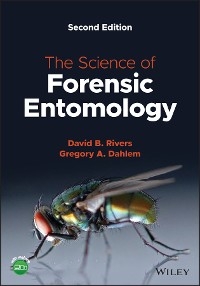
The Science of Forensic Entomology (eBook)
John Wiley & Sons (Verlag)
978-1-119-64061-5 (ISBN)
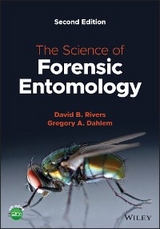
A thoroughly updated introduction to forensic entomology
In the newly revised second edition of The Science of Forensic Entomology, two distinguished entomologists deliver a foundational and practical resource that equips students and professionals to be able to understand and resolve questions concerning the presence of specific insects at crime scenes. Each chapter in the book addresses a topic that delves into the underlying biological principles and concepts relevant to the insect biology that grounds the use of insects in legal and investigational contexts.
In addition to non-traditional topics, including the biology of maggot masses, temperature tolerances of necrophagous insects, chemical attraction and communication, reproductive strategies of necrophagous flies, and archaeoentomology, the book also offers readers:
- A thorough introduction to the role of forensic science in criminal investigations and the history of forensic entomology
- Comprehensive discussions of the biology, taxonomy, and natural history of forensically important insects
- Fulsome treatments of the postmortem decomposition of human remains and vertebrate carrion
- In-depth introduction to the concepts of accumulated degree days and the use of insect development for estimation of the postmortem interval
- New chapters dedicated to forensic entomotoxicology, aquatic insects in forensic investigations, microbiomes of forensic insects and carrion, professional standards, and case studies
Perfect for graduate and advanced undergraduate students in forensic entomology, forensic biology, and general forensic science, The Science of Forensic Entomology will also earn a place in the libraries of law enforcement and forensic investigators, as well as researchers in forensic entomology
David B. Rivers is Professor of Biology and Director of Forensic Studies at Loyola University Maryland. His efforts are currently focused on training the next generation of biologists to assist in criminal investigations.
Gregory A. Dahlem, PhD, holds a teaching position at Northern Kentucky University and whose research involves the evolution, identification, and behavior of calyptrate Diptera.
A thoroughly updated introduction to forensic entomology In the newly revised second edition of The Science of Forensic Entomology, two distinguished entomologists deliver a foundational and practical resource that equips students and professionals to be able to understand and resolve questions concerning the presence of specific insects at crime scenes. Each chapter in the book addresses a topic that delves into the underlying biological principles and concepts relevant to the insect biology that grounds the use of insects in legal and investigational contexts. In addition to non-traditional topics, including the biology of maggot masses, temperature tolerances of necrophagous insects, chemical attraction and communication, reproductive strategies of necrophagous flies, and archaeoentomology, the book also offers readers: A thorough introduction to the role of forensic science in criminal investigations and the history of forensic entomology Comprehensive discussions of the biology, taxonomy, and natural history of forensically important insects Fulsome treatments of the postmortem decomposition of human remains and vertebrate carrion In-depth introduction to the concepts of accumulated degree days and the use of insect development for estimation of the postmortem interval New chapters dedicated to forensic entomotoxicology, aquatic insects in forensic investigations, microbiomes of forensic insects and carrion, professional standards, and case studies Perfect for graduate and advanced undergraduate students in forensic entomology, forensic biology, and general forensic science, The Science of Forensic Entomology will also earn a place in the libraries of law enforcement and forensic investigators, as well as researchers in forensic entomology
David B. Rivers is Professor of Biology and Director of Forensic Studies at Loyola University Maryland. His efforts are currently focused on training the next generation of biologists to assist in criminal investigations. Gregory A. Dahlem, PhD, holds a teaching position at Northern Kentucky University and whose research involves the evolution, identification, and behavior of calyptrate Diptera.
Preface xv
About the companion website xvii
Chapter 1 Role of forensic science in criminal investigations 1
Chapter 2 History of forensic entomology 17
Chapter 3 Role of insects and other arthropods in urban and stored product entomology 35
Chapter 4 Introduction to entomology 55
Chapter 5 Biology, taxonomy, and natural history of forensically important insects 77
Chapter 6 Reproductive strategies of necrophagous flies 103
Chapter 7 Chemical attraction and communication 121
Chapter 8 Biology of the maggot mass 143
Chapter 9 Temperature tolerances of necrophagous insects 167
Chapter 10 Postmortem decomposition of human remains and vertebrate carrion 195
Chapter 11 Insect succession on carrion under natural and artificial conditions 217
Chapter 12 Decomposition in aquatic environments 241
Chapter 13 Microbiomes of carrion and forensic insects 265
Chapter 14 Postmortem interval 283
Chapter 15 Insect stains and artifacts: alterations of bloodstain and body fluid evidence 311
Chapter 16 Necrophagous and parasitic flies as indicators of neglect and abuse 333
Chapter 17 Wildlife forensics 355
Chapter 18 Forensic entomotoxicology 365
Chapter 19 Application of molecular methods to forensic entomology 383
Chapter 20 Archaeoentomology: insects and archaeology 409
Chapter 21 Insects as weapons of war and threats to national security 427
Chapter 22 Insects and arthropods that cause death 451
Chapter 23 Professional standards and ethics 475
Chapter 24 Forensic entomology case studies 487
Appendix I Collection and preservation of calyptrate Diptera 505
Appendix II Getting specimens identified 511
Appendix III Necrophagous fly and beetle life table references 515
Appendix IV Current names for species in Aldrich's Sarcophaga and allies 521
Glossary 525
Index 537
Chapter 1
Role of forensic science in criminal investigations
For decades, the forensic science disciplines have produced valuable evidence that has contributed to the successful prosecution and conviction of criminals as well as to the exoneration of innocent people.
Committee on Identifying the Needs of the Forensic Sciences Community, National Research Council1
Overview
Before an in‐depth discussion of forensic entomology can really begin, there is a need to define the relationship between this discipline and the broader field of forensic science. As the name implies, science is the core of forensic analyses. It is only fitting, then, that Chapter 1 begins with an exploration of the application of science to legal matters, which also serves as a simple working definition of forensic science. Throughout the chapter, emphasis will be placed on the use of the scientific method in all forms of forensic analyses, from the process of analyzing physical and trace evidence to understanding the types of outcomes associated with forensic analyses. When the scientific method is applied properly to forensic investigations, integrity is maintained, and “junk” science should not encroach on the pursuit of justice. The different specialty areas of forensic science will be discussed to allow a perspective of the broad impact of science on criminal and civil investigations.
The big picture
- What is forensic science?
- Application of science to criminal investigations.
- Ensuring “good” science in forensic analysis.
- Recognized specialty disciplines in forensic science.
1.1 What is forensic science?
Science is used to solve crimes. In fact, it is instrumental in resolving cases involving both civil and criminal issues, particularly those of a violent nature. Not surprisingly, crime too has become more sophisticated, with today’s criminals relying on aspects of science to “hide” their crimes or even to commit an offense. One has to look no further than cybersecurity attacks to see a clear linkage between scientific understanding and criminal activity. This chapter is devoted to understanding the relationship between science and legal investigations. Particular attention is given to understanding the scientific method, a defined way of doing science, as it serves as the core principle for studying natural phenomena and in forensic analyses.
Forensic science has become a broad term, departing somewhat from the simple definition given earlier in which it was stated to be the application of science to law. The term “forensic” is defined as pertaining to or connected with the law, while “science” is the study of the physical and natural world through systematically arranged facts and principles that are rigorously tested by experimentation. When used together the two terms yield a discipline that addresses issues pertaining to or connected to the law through the application of tested facts and principles and by use of rigorous experimentation. As mentioned previously, the definition of forensic science has become more encompassing, now representing a vast array of medical, scientific (natural and applied), and social scientific disciplines (Table 1.1). So now, we may revise our definition of forensic science to reflect modern, broader approaches: “the use of scientific knowledge and technologies in civil and criminal matters, including case resolution, enforcement of laws, and national security.” The term criminalistics refers to the application of scientific techniques or tests in connection with detecting a crime or in processing a crime scene (Harris & Lee, 2020). Most aspects of applying science to the law, including those associated with forensic entomology, fall under the umbrella of criminalistics.
Table 1.1 Specialized areas of forensic science recognized by the American Academy of Forensic Sciences (AAFS).
| Section | Membership totals* |
|---|
| Anthropology | 567 |
| Criminalistics | 2720 |
| Digital & Multimedia Sciences | 130 |
| Engineering & Applied Sciences | 121 |
| General | 767 |
| Jurisprudence | 192 |
| Odontology | 342 |
| Pathology/Biology | 951 |
| Psychiatry & Behavioral Science | 125 |
| Questioned Documents | 167 |
| Toxicology | 552 |
| AAFS Total Membership | 6634 |
* Membership data as of December 20, 2019 at http://www.aafs.org/sections. Forensic entomologists typically belong to the Pathology/Biology section of AAFS.
Use of the term “forensics” as a substitute for “forensic” has created confusion about the terminology to some degree. The former term originally meant the study or art of debate or argumentation. Hence, a school debate team practices forensics or debating. Although “debate” between attorneys has a defined role in the courtroom, it does mean pertaining to the law. However, within the court of public or popular opinion, “forensics” has come to imply forensic science. In fact, a word search on the internet or in some dictionaries yields results which indicate that “forensics” can also be defined as referring to the law. In today’s society, practice tends to set policy or norms and, as such, “forensics” is quickly becoming an accepted term for forensic science. No doubt this expanding definition has its origins with the popular television crime shows.
Yet another impact of the rising popularity of forensic science through television programming is the phenomenon known as the crime scene investigation (CSI) effect (Saferstein, 2017). The name is derived from the very popular television series CSI: Crime Scene Investigation (which was aired on the CBS television network from 2000 to 2015). In general terms, the increased public attention to forensic science is usually linked to this TV series. However, there are numerous other influences that have contributed to the soaring popularity. Regardless of the source of influence, the public’s perception of what science can do for a criminal investigation has become distorted. Many individuals, including those who potentially serve as jurors, have become convinced from various media sources that when the experts (i.e., forensic scientists) are called in to investigate a crime, they will always find physical and/or trace evidence and that detailed analyses in the crime lab, using real and imaginary technologies2, will ultimately solve the crime by identifying the perpetrator (Figure 1.1). When delays occur during an investigation or when there is simply little or no evidence to go on, the victim(s), families, and even jurors become frustrated and believe the problem is the incompetence of the investigative team. After all, it only takes one hour for the CSI team to examine the crime scene, find evidence, analyze it, identify suspects, interview the suspects, and seal a full confession! This impressive effort is usually achieved by only one or two people, who perform all the functions that in real life would normally require a team of individuals. Of course, in reality the process is much more time‐consuming, requiring many individuals working together, and often a crime goes unsolved. When television fantasy is not separated from reality, the result is that unrealistic expectations are placed on law enforcement officials based on the public’s belief that television reflects the real world of forensic science and criminal investigations. It is important to note that some studies (Shelton et al., 2006; Holmgren & Fordham, 2011) investigating the legitimacy of the CSI effect have concluded that negative juror bias does not result from watching crime shows. In fact, potential jurors may be better informed about the appropriate types of evidence to expect for different types of crimes from their faithful viewing of CSI and similar sources of entertainment (Shelton et al., 2006).
Figure 1.1 A knife found at a crime scene is an example of physical evidence.
Source: Ricce/Wikimedia Commons/Public domain.
The reality is that the application of science to legal matters can profoundly influence the resolution of a crime. However, there are limitations to what can and cannot be done, some of which will be addressed later in this chapter. The real value of science in legal matters is that it relies on validation via scientific inquiry using the scientific method. The scientific method is the key, as its use requires adherence to defined, unbiased approaches to designing, conducting, and interpreting experiments. Human emotions or desires, as well as error, are minimized so that the facts, or truths in the case of law, can come to light. A more detailed discussion of the scientific method can be found in Section 1.2.3.
1.2 Application of science to...
| Erscheint lt. Verlag | 27.9.2022 |
|---|---|
| Sprache | englisch |
| Themenwelt | Naturwissenschaften ► Chemie |
| Schlagworte | Analytische Chemie / Forensik • Biowissenschaften • Chemie • Chemistry • Entomologie • Entomology • forensic entomologist text • forensic entomology in investigations • forensic entomology research • forensic entomology science • Forensic entomology text • Forensics • Forensic Science • forensic science textbook • Forensik • intro to forensic entomology • Life Sciences |
| ISBN-10 | 1-119-64061-X / 111964061X |
| ISBN-13 | 978-1-119-64061-5 / 9781119640615 |
| Informationen gemäß Produktsicherheitsverordnung (GPSR) | |
| Haben Sie eine Frage zum Produkt? |
 EPUB (Adobe DRM)
Kopierschutz: Adobe-DRM
Adobe-DRM ist ein Kopierschutz, der das eBook vor Mißbrauch schützen soll. Dabei wird das eBook bereits beim Download auf Ihre persönliche Adobe-ID autorisiert. Lesen können Sie das eBook dann nur auf den Geräten, welche ebenfalls auf Ihre Adobe-ID registriert sind.
Details zum Adobe-DRM
Dateiformat: EPUB (Electronic Publication)
EPUB ist ein offener Standard für eBooks und eignet sich besonders zur Darstellung von Belletristik und Sachbüchern. Der Fließtext wird dynamisch an die Display- und Schriftgröße angepasst. Auch für mobile Lesegeräte ist EPUB daher gut geeignet.
Systemvoraussetzungen:
PC/Mac: Mit einem PC oder Mac können Sie dieses eBook lesen. Sie benötigen eine
eReader: Dieses eBook kann mit (fast) allen eBook-Readern gelesen werden. Mit dem amazon-Kindle ist es aber nicht kompatibel.
Smartphone/Tablet: Egal ob Apple oder Android, dieses eBook können Sie lesen. Sie benötigen eine
Geräteliste und zusätzliche Hinweise
Buying eBooks from abroad
For tax law reasons we can sell eBooks just within Germany and Switzerland. Regrettably we cannot fulfill eBook-orders from other countries.
aus dem Bereich