From Swamp to Wetland (eBook)
University of Georgia Press (Verlag)
978-0-8203-6240-3 (ISBN)
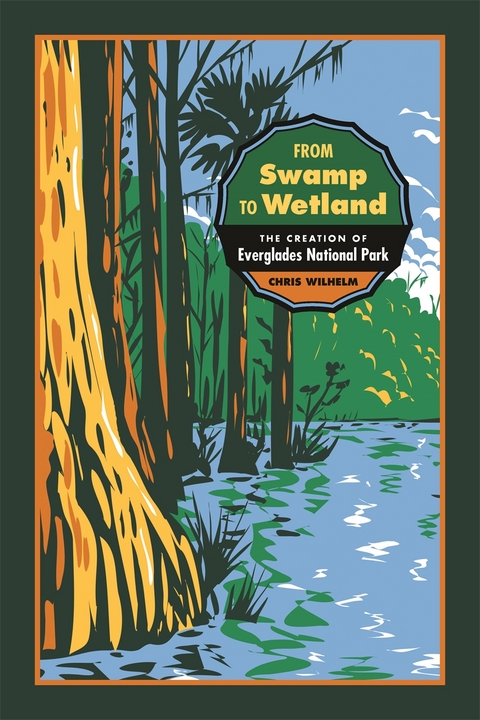
This book chronicles the creation of Everglades National Park, the largest subtropical wilderness in the United States. This effort, which spanned 1928 to 1958, was of central importance to the later emergence of modern environmentalism. Prior to the park’s creation, the Everglades was seen as a reviled and useless swamp, unfit for typical recreational or development projects. The region’s unusual makeup also made it an unlikely candidate to become a national park, as it had none of the sweeping scenic vistas or geological monuments found in other nationally protected areas.
Park advocates drew on new ideas concerning the value of biota and ecology, the importance of wilderness, and the need to protect habitats, marine ecosystems, and plant life to redefine the Everglades. Using these ideas, the Everglades began to be recognized as an ecologically valuable and fragile wetland—and thus a region in need of protective status.
While these new ideas foreshadowed the later emergence of modern environmentalism, tourism and the economic desires of Florida’s business and political elites also impacted the park’s future. These groups saw the Everglades’ unique biology and ecology as a foundation on which to build a tourism empire. They connected the Everglades to Florida’s modernization and commercialization, hoping the park would help facilitate the state’s transformation into the Sunshine State. Political conservatives welcomed federal power into Florida so long as it brought economic growth.
Yet, even after the park’s creation, conservative landowners successfully fought to limit the park and saw it as a threat to their own economic freedoms. Today, a series of levees on the park’s eastern border marks the line between urban and protected areas, but development into these areas threatens the park system. Rising sea levels caused by global warming are another threat to the future of the park. The battle to save the swamp’s biodiversity continues, and Everglades Park stands at the center of ongoing restoration efforts.
CHRIS WILHELM is associate professor of history at the College of Coastal Georgia. His research has appeared in the Journal of Southern History and the Florida Historical Quarterly. He lives in Brunswick, Georgia.
| Erscheint lt. Verlag | 30.9.2022 |
|---|---|
| Reihe/Serie | Environmental History and the American South |
| Environmental History and the American South Ser. | Environmental History and the American South Ser. |
| Vorwort | Erin Stewart Mauldin, James C. Giesen |
| Zusatzinfo | 5 b&w images |
| Verlagsort | Athens |
| Sprache | englisch |
| Themenwelt | Sachbuch/Ratgeber ► Natur / Technik |
| Geisteswissenschaften ► Geschichte ► Allgemeine Geschichte | |
| Geisteswissenschaften ► Geschichte ► Regional- / Ländergeschichte | |
| Naturwissenschaften ► Biologie ► Ökologie / Naturschutz | |
| Sozialwissenschaften ► Politik / Verwaltung ► Politische Systeme | |
| Sozialwissenschaften ► Politik / Verwaltung ► Politische Theorie | |
| Wirtschaft ► Volkswirtschaftslehre | |
| Schlagworte | Biology • Cape Sable • conservation • Environmentalism • Everglades • Everglades Drainage • everglades restoration • Florida • Habitat protection • History of Ecology • Marine protection • modern conservatism • National parks • New Deal • oil drilling • plant history • southern history • Sun Belt South • Ten Thousand Islands • wading birds • Wetlands • wilderness preservation |
| ISBN-10 | 0-8203-6240-9 / 0820362409 |
| ISBN-13 | 978-0-8203-6240-3 / 9780820362403 |
| Informationen gemäß Produktsicherheitsverordnung (GPSR) | |
| Haben Sie eine Frage zum Produkt? |
 EPUB (Adobe DRM)
Kopierschutz: Adobe-DRM
Adobe-DRM ist ein Kopierschutz, der das eBook vor Mißbrauch schützen soll. Dabei wird das eBook bereits beim Download auf Ihre persönliche Adobe-ID autorisiert. Lesen können Sie das eBook dann nur auf den Geräten, welche ebenfalls auf Ihre Adobe-ID registriert sind.
Details zum Adobe-DRM
Dateiformat: EPUB (Electronic Publication)
EPUB ist ein offener Standard für eBooks und eignet sich besonders zur Darstellung von Belletristik und Sachbüchern. Der Fließtext wird dynamisch an die Display- und Schriftgröße angepasst. Auch für mobile Lesegeräte ist EPUB daher gut geeignet.
Systemvoraussetzungen:
PC/Mac: Mit einem PC oder Mac können Sie dieses eBook lesen. Sie benötigen eine
eReader: Dieses eBook kann mit (fast) allen eBook-Readern gelesen werden. Mit dem amazon-Kindle ist es aber nicht kompatibel.
Smartphone/Tablet: Egal ob Apple oder Android, dieses eBook können Sie lesen. Sie benötigen eine
Geräteliste und zusätzliche Hinweise
Buying eBooks from abroad
For tax law reasons we can sell eBooks just within Germany and Switzerland. Regrettably we cannot fulfill eBook-orders from other countries.
aus dem Bereich