


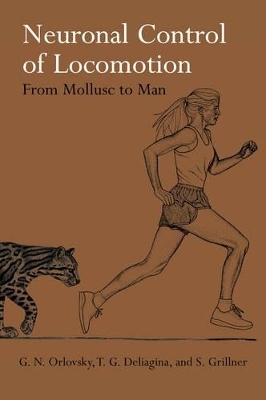
Neuronal Control of Locomotion
From Mollusc to Man
Seiten
1999
Oxford University Press (Verlag)
978-0-19-852405-2 (ISBN)
Oxford University Press (Verlag)
978-0-19-852405-2 (ISBN)
What does a swimming leech have to do with a running human? The evolution of the nervous system relates to a large extent to the evolution of locomotion. 'Neuronal Control of Locomotion: From Mollusc to Man' describes how the brains in very diverse and evolutionarily removed species control the animal's locomotion.
What does the swimming leech have to do with the running human? The ability to move actively in space is essential to members of the animal kingdom, and the evolution of the nervous system relates to a large extent to the evolution of locomotion. The extreme importance of locomotion has stimulated many studies of the neural mechanisms underlying locomotion across a range of species. For the first time, a group of three leading neurobiologists have undertaken a comparative study of these mechanisms. Neuronal Control of Locomotion: From Mollusc to Man describes how the brains in very diverse and evolutionarily removed species control the animal's locomotion. In doing so, the authors reveal unifying principles of brain function, making it essential reading for students and researchers in neurobiology generally, and motor control in particular. "In my opinion, the authors have produced a masterful and highly readable exposition on the neural control of locomotion. It is timely and relevant to avant- garde neuroscience. It will have a major impact on the field, and is sure to be referenced well into the second half of the next century." Douglas Stuart, University of Arizona College of Medicine
What does the swimming leech have to do with the running human? The ability to move actively in space is essential to members of the animal kingdom, and the evolution of the nervous system relates to a large extent to the evolution of locomotion. The extreme importance of locomotion has stimulated many studies of the neural mechanisms underlying locomotion across a range of species. For the first time, a group of three leading neurobiologists have undertaken a comparative study of these mechanisms. Neuronal Control of Locomotion: From Mollusc to Man describes how the brains in very diverse and evolutionarily removed species control the animal's locomotion. In doing so, the authors reveal unifying principles of brain function, making it essential reading for students and researchers in neurobiology generally, and motor control in particular. "In my opinion, the authors have produced a masterful and highly readable exposition on the neural control of locomotion. It is timely and relevant to avant- garde neuroscience. It will have a major impact on the field, and is sure to be referenced well into the second half of the next century." Douglas Stuart, University of Arizona College of Medicine
PART 1: LOCOMOTION IN INVERTEBRATES; PART 2 : SWIMMING LOCOMOTION IN LOWER VERTEBRATES; PART 3: QUADRUPEDAL LOCOMOTION IN MAMMALS; PART 4: HUMAN LOCOMOTION
| Erscheint lt. Verlag | 1.12.1999 |
|---|---|
| Reihe/Serie | Oxford Neuroscience Series |
| Zusatzinfo | line figures |
| Verlagsort | Oxford |
| Sprache | englisch |
| Maße | 163 x 242 mm |
| Gewicht | 612 g |
| Themenwelt | Naturwissenschaften ► Biologie ► Humanbiologie |
| Naturwissenschaften ► Biologie ► Zoologie | |
| ISBN-10 | 0-19-852405-6 / 0198524056 |
| ISBN-13 | 978-0-19-852405-2 / 9780198524052 |
| Zustand | Neuware |
| Informationen gemäß Produktsicherheitsverordnung (GPSR) | |
| Haben Sie eine Frage zum Produkt? |
Mehr entdecken
aus dem Bereich


aus dem Bereich
die Geschichte der Menschheit in 15 Porträts
Buch | Hardcover (2025)
DVA (Verlag)
CHF 39,20
23 Techniken, um Stress abzubauen, Negativspiralen zu unterbrechen …
Buch | Softcover (2023)
FinanzBuch Verlag
CHF 25,20
produktiv sein ohne Stress – und mehr vom Leben haben
Buch | Softcover (2023)
dtv Verlagsgesellschaft
CHF 25,20


