


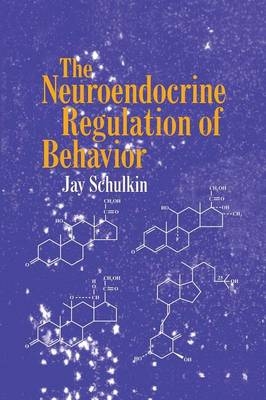
The Neuroendocrine Regulation of Behavior
Seiten
1998
Cambridge University Press (Verlag)
978-0-521-45985-3 (ISBN)
Cambridge University Press (Verlag)
978-0-521-45985-3 (ISBN)
This text discusses the important role of steroids and neuropeptides in the regulation of behavior. Chapters focus on developmental periods and sexually dimorphic behaviors; sodium and water appetite, and ingestion; food selection and appetite; parental behavior; and fear and stress. The last chapter deals with biological clocks.
This text discusses the important role of steroids and neuropeptides in the regulation of behavior. The guiding principle behind the discussion is the concept of using good model animal systems to help us to understand how hormones influence the brain. The book emphasizes that steroids, and peptides or neuropeptides affect behavior by acting directly on the brain, and that common neural circuits underlie a variety of different central motive states. The first chapter focuses on developmental periods and sexually dimorphic behaviors; the second discusses sodium and water appetite, and ingestion; the third deals with appetite, food selection and ingestion. The fourth chapter examines how hormones influence parental behavior; the fifth is on fear and stress. The last chapter deals with biological clocks and endogenous rhythms. Senior undergraduate and graduate students in neuroscience, endocrinology, and physiology will find this text a useful guide to the role of hormones in behavior.
This text discusses the important role of steroids and neuropeptides in the regulation of behavior. The guiding principle behind the discussion is the concept of using good model animal systems to help us to understand how hormones influence the brain. The book emphasizes that steroids, and peptides or neuropeptides affect behavior by acting directly on the brain, and that common neural circuits underlie a variety of different central motive states. The first chapter focuses on developmental periods and sexually dimorphic behaviors; the second discusses sodium and water appetite, and ingestion; the third deals with appetite, food selection and ingestion. The fourth chapter examines how hormones influence parental behavior; the fifth is on fear and stress. The last chapter deals with biological clocks and endogenous rhythms. Senior undergraduate and graduate students in neuroscience, endocrinology, and physiology will find this text a useful guide to the role of hormones in behavior.
Preface; Introduction; 1. Hormones, development and sexually dimorphic behaviors; 2. Hormonal regulation of water and sodium ingestion; 3. Hormonal regulation of food selection; 4. Hormones, attachment and parental care; 5. Hormonal regulation of fear and stress; 6. Hormones, behavior and clocks; Conclusion; References.
| Erscheint lt. Verlag | 28.12.1998 |
|---|---|
| Zusatzinfo | 4 Tables, unspecified; 8 Halftones, unspecified; 132 Line drawings, unspecified |
| Verlagsort | Cambridge |
| Sprache | englisch |
| Maße | 155 x 235 mm |
| Gewicht | 560 g |
| Themenwelt | Naturwissenschaften ► Biologie ► Humanbiologie |
| Naturwissenschaften ► Biologie ► Zoologie | |
| ISBN-10 | 0-521-45985-0 / 0521459850 |
| ISBN-13 | 978-0-521-45985-3 / 9780521459853 |
| Zustand | Neuware |
| Informationen gemäß Produktsicherheitsverordnung (GPSR) | |
| Haben Sie eine Frage zum Produkt? |
Mehr entdecken
aus dem Bereich

aus dem Bereich
die Geschichte der Menschheit in 15 Porträts
Buch | Hardcover (2025)
DVA (Verlag)
CHF 39,20
23 Techniken, um Stress abzubauen, Negativspiralen zu unterbrechen …
Buch | Softcover (2023)
FinanzBuch Verlag
CHF 25,20
produktiv sein ohne Stress – und mehr vom Leben haben
Buch | Softcover (2023)
dtv Verlagsgesellschaft
CHF 25,20


