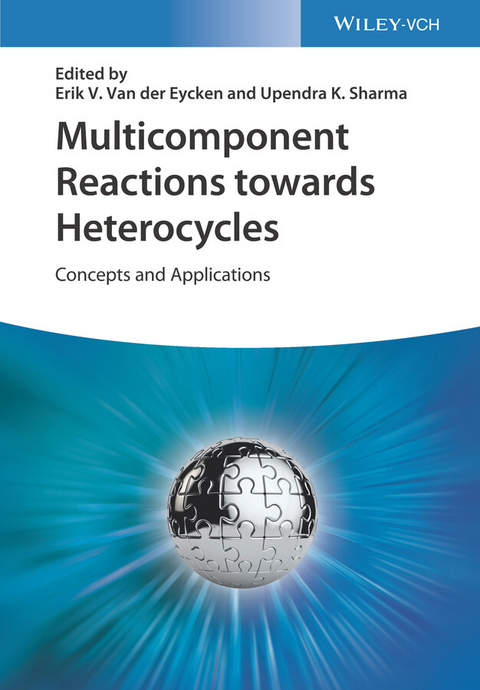
Multicomponent Reactions towards Heterocycles (eBook)
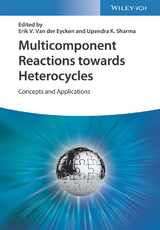
Presents a wide-ranging overview of essential topics and recent advances in MCR chemistry
Heterocycles are a central component in natural product chemistry, pharmaceuticals, agrochemicals, and material science. New synthetic methodologies integrating the sequencing of multicomponent reactions (MCRs) are today being used for the rapid synthesis of diversified heterocycles in just one step. Multicomponent Reactions towards Heterocycles presents an up-to-date summary MCR chemistry with a focus on the conjugation between modern synthetic methodologies and MCRs.
Featuring contributions by leaders in the field, this comprehensive resource highlights applications of MCRs in natural products and intermediate synthesis, discusses current trends and future prospects in MCR chemistry, outlines novel multicomponent procedures, and more. The authors provide the practical information required for designing new reaction strategies and mechanisms, covering topics including MCR-based green synthetic methods, cyclization and cycloaddition reactions, heterocycle multicomponent syntheses in a continuous flow, catalytic alkynoyl generation, MCR synthesis of saturated heterocycles, and C-H functionalization and multicomponent reactions.
- Provides a thorough overview of heterocycles as input in multicomponent reactions
- Discusses recent advances in the field of MCR chemistry and progress in the synthesis and functionalization of heterocycles
- Demonstrates the use of MCRs to simplify synthetic design and achieve complexity and diversity in novel bioactive molecules
- Highlights examples of multicomponent polymerizations, target-oriented synthesis, and applications of MCR in medicinal chemistry
- Explains the methodology of using on-resin MCRs to produce heterocycle compounds
Illustrating the key role of MCRs towards heterocycles in natural product synthesis, drug discovery, organic synthesis, and other applications, Multicomponent Reactions towards Heterocycles is required reading for synthetic chemists in academia and industry alike.
Erik V. Van der Eycken is Full Professor Organic Chemistry and head of the Division Molecular Design & Synthesis, as well as head of the Laboratory for Organic & Microwave-Assisted Chemistry at the University of Leuven (KU Leuven), Belgium. The main focus of his research is the investigation of the application of microwave irradiation in different domains of organic synthesis, i.e. synthesis of bioactive natural product analogues and heterocyclic molecules applying transition metal-catalyzed reactions (i.a. homogeneous and heterogeneous (nanoparticles) gold catalysis), C-H activation, multicomponent reactions (MCRs), post-MCR modifications, and solid phase organic synthesis. Also Flow Chemistry and Photoredox Chemistry have been recently addressed. He is presently author of >290 scientific manuscripts in peer reviewed journals and books and has an H-index of 44. Until now 32 PhD-students performed their research under his guidance.
Dr. Upendra K. Sharma received his master degree from Guru Nanak Dev University in 2004 and his PhD degree (2011) in organic chemistry under the supervision of Dr. Arun K. Sinha at CSIR-Institute of Himalayan Bioresource Technology, Palampur, India. Thereafter, he worked as Assistant Professor at National Institute of Technology (NIT), Jalandhar, India. Later on, he joined the research group of Prof. Dr. Erik Van der Eycken, LOMAC, University of Leuven, Belgium as a postdoctoral fellow and until now has published more than 50 research articles in reputed international journals as well as co-edited a Springer series book on Flow Chemistry of Heterocycles. Recently, he has been permanently appointed as Research Expert in LOMAC, Department of Chemistry, KU Leuven. His research interests include the development of new synthetic methods for biologically relevant molecules employing modern methods of synthesis viz. flow chemistry, MCRs, photoredox catalysis and transition metal-catalyzed C-H functionalizations.
Erik V. Van der Eycken is Full Professor Organic Chemistry and head of the Division Molecular Design & Synthesis, as well as head of the Laboratory for Organic & Microwave-Assisted Chemistry at the University of Leuven (KU Leuven), Belgium. The main focus of his research is the investigation of the application of microwave irradiation in different domains of organic synthesis, i.e. synthesis of bioactive natural product analogues and heterocyclic molecules applying transition metal-catalyzed reactions (i.a. homogeneous and heterogeneous (nanoparticles) gold catalysis), C-H activation, multicomponent reactions (MCRs), post-MCR modifications, and solid phase organic synthesis. Also Flow Chemistry and Photoredox Chemistry have been recently addressed. He is presently author of >290 scientific manuscripts in peer reviewed journals and books and has an H-index of 44. Until now 32 PhD-students performed their research under his guidance. Dr. Upendra K. Sharma received his master degree from Guru Nanak Dev University in 2004 and his PhD degree (2011) in organic chemistry under the supervision of Dr. Arun K. Sinha at CSIR-Institute of Himalayan Bioresource Technology, Palampur, India. Thereafter, he worked as Assistant Professor at National Institute of Technology (NIT), Jalandhar, India. Later on, he joined the research group of Prof. Dr. Erik Van der Eycken, LOMAC, University of Leuven, Belgium as a postdoctoral fellow and until now has published more than 50 research articles in reputed international journals as well as co-edited a Springer series book on Flow Chemistry of Heterocycles. Recently, he has been permanently appointed as Research Expert in LOMAC, Department of Chemistry, KU Leuven. His research interests include the development of new synthetic methods for biologically relevant molecules employing modern methods of synthesis viz. flow chemistry, MCRs, photoredox catalysis and transition metal-catalyzed C-H functionalizations.
Heterocycles as Inputs in MCRs: An Update
Heterocycles and Multi-Component Polymerisations
Multicomponent Reactions in Medicinal Chemistry
Solid-Phase Heterocycle Synthesis using Multicomponent Reactions
Green Synthesis of Heterocycles via MCRs
The Use of Flow Chemistry in the Multicomponent Synthesis of Heterocycles
C?H Functionalization as an Imperative Tool Towards Multicomponent Synthesis and Modification of Heterocycles
Multicomponent-Switched Reactions in Synthesis of Heterocycles
Recent Applications of Multicomponent Reactions towards Heterocyclic Drug Discovery
MCR Syntheses of Heterocycles by Catalytic Generation of Alkynoyl Intermediates
Synthesis of Saturated Heterocycles via Multicomponent Reactions
Multicomponent Reactions and Asymmetric Catalysis
Recent Trends in Metal-Catalyzed MCRs towards Heterocycles
1
Heterocycles as Inputs in MCRs: An Update
Ouldouz Ghashghaei, Marina Pedrola, Carmen Escolano, and Rodolfo Lavilla
University of Barcelona, Laboratory of Medicinal Chemistry, Faculty of Pharmacy and Food Sciences, and Institute of Biomedicine IBUB, Av. de Joan XXIII, 27-31, Barcelona 08028, Spain
1.1 Introduction
Multicomponent reactions (MCRs) hold a privileged position in organic synthesis and are currently gaining momentum in the fields where a fast access to high levels of structural diversity is needed. This is especially important in medicinal chemistry and key to drug discovery. In this endeavor, as the vast majority of small-molecule drugs are of heterocyclic nature, the interplay of heterocycles with MCRs becomes significant [1]. Although the majority of work has been devoted to the synthesis of heterocyclic adducts from non-heterocyclic reactants [2, 3], we will focus, however, on the intrinsic reactivity of basic heterocycles as a source of synthetically useful MCRs (Scheme 1.1). This approach, still quite unexplored in the MCR context, is arguably a rich source of novel, complex scaffolds. There is a wide choice of commercially available heterocyclic inputs, which together with their often-exclusive reactivity make this perspective simple, conceptually attractive, and synthetically productive. In this chapter, we describe a representative selection of relevant results in the last six years, as the field has experienced impressive growth since our last revision [4], and an exhaustive account is out of scope. This update groups the highlighted processes according to the main reactivity modes defining the MCRs: concerted, radical, metal-catalyzed, carbonyl/imine, and isocyanide-based processes. Finally, a miscellany section is included to cluster those MCRs that do not clearly fit in the classification. Occasionally, some significant post-transformations and applications have been detailed.
1.2 Concerted MCRs
The impact of heterocycle-based concerted MCRs in organic synthesis is quite relevant, with recent contributions arising from Povarov reactions, hetero Diels–Alder processes, and dipolar cycloadditions. The Povarov MCR, the interaction of an aromatic amine, an aldehyde, and an activated alkene, remains one of the best synthetic approaches to access tetrahydroquinolines (THQs) [5] and is especially productive in medicinal chemistry [6]. Although the concerted cycloaddition is a well-founded hypothesis for the reaction mechanism, there is evidence on polar stepwise processes in some cases, and both pathways are considered here.
Scheme 1.1 Heterocycles as inputs in MCRs.
For instance, a double Povarov process led to julolidine derivatives: the first MCR generates a secondary amine, which under calixarene-based polysulfonic acid catalysis spontaneously triggers a second MCR, leading to the final five-component adducts with good yields and modest stereoselectivity (Scheme 1.2) [7].
Indole derivatives participate in Povarov MCRs not only as aldehyde or olefin inputs, but also as aniline surrogates. Their specific structural arrangement, and the catalytic conditions used, determines the outcome. In this way, while indole-3-carbaldehyde gives the expected Povarov adduct [8], indole-7-carbaldehyde reacts in a different way, leading to fused adduct where the indole nitrogen closes a six-membered ring [9]. Interestingly, indole-2-carbaldehyde, depending on the catalysts used, may lead to the normal Povarov adduct or to a different scaffold, with a distinct connectivity through an alternative [3 + 2] cycloaddition mode (Scheme 1.3) [10].
As olefin inputs, indoles unsubstituted at C2 and C3 yield the THQ adduct, losing the aromaticity at the pyrrole ring [11]. In this respect, 2-vinylindoles react exclusively at the olefin moiety to yield the expected THQ adduct [12]. However, the isomeric 3-vinyl derivatives react quite differently, leading to bisindole-piperidines in a stereo- and enantio-controlled fashion, using chiral catalysts (Scheme 1.3) [13].
Regarding heterocyclic inputs, the interaction of aldehydes, 1,4-dhydropyridines as activated olefins, and aminocoumarin, as aniline surrogate, leads to complex functionalized chromenonaphthyridines [14]. Relevantly, 3-aminopyridine imines react with alkynes (terminal or internal) to regioselectively afford the naphthyridine scaffold [15]. Similarly, 3-aminopyridones also lead to oxidized Povarov adducts (Scheme 1.4) [16].
Scheme 1.2 Access to julolidines via double Povarov MCRs.
Scheme 1.3 Indoles as inputs in Povarov MCRs.
There are mechanistic variations that dramatically modify the connectivity pattern of standard Povarov MCRs. For instance, a Ferrier rearrangement was promoted during a Povarov process involving glycals [17]. An interesting example of interrupted Povarov process with salicylaldehydes, anilines, and dihydrofurans, instead of yielding the expected THQ adduct, follows a Mannich-type process with the enol ether, and the resulting intermediate is trapped by the phenolic hydroxyl, yielding the MCR adduct in a stereoselective fashion (Scheme 1.5) [18].
In a remarkable photoredox-catalyzed process, aldimines, dihydrofurans and trimethylsilyl azide, afforded azidotetrahydrofurans. The observed polarity reversal can be explained through a mechanism involving an azido radical, which adds on the β-position of the enol ether to promote the imine addition (Scheme 1.5) [19].
Finally, the Povarov MCR has enabled the selective tagging of benzaldehyde-functionalized DNA chains through the reaction with anilines and an N-protected dihydropyrrole [20].
Isochromenylium ions react with dienophiles in a [4 + 2] cycloaddition to yield adducts, which go through a Ritter-type domino process with acetonitrile to afford complex tetracyclic compounds [21]. Also, a formal concerted MCR connects in situ generated isoquinolinium salts with unsaturated aldehydes and alcohols in a process promoted by N-heterocyclic carbenes to give bridged azaheterocycles [22]. A [4 + 3] cycloaddition process is triggered by the condensation of an iminoindole with aldehydes to give an azadiene that reacts in situ with a sulfur ylide to yield azepinoindoles (Scheme 1.6) [23].
MCRs involving [3 + 2] cycloadditions have produced a substantial number of new transformations. The processes involving azinium ions have been reviewed [24]. The interaction of heterocyclic secondary amines with carbonyl inputs to generate dipoles is a common motif in the field. For instance, THQs, aldehydes, and ketomalonate afford the corresponding oxazolidine adducts [25].
Azomethine ylides, mostly generated by condensation or decarboxylation of α-amino acids, have been thoroughly used in MCRs in the presence of suitable dipolarophiles, often with applications in drug discovery [26]. The synthesis of pyrrolizidines and indolizidines through this MCR methodology has been reviewed [27]. A remarkable five-component interaction based on a double [3 + 2] cycloaddition of azomethine ylides has led to tetracyclic adducts in high yields in a stereoselective manner (Scheme 1.7) [28].
Azines are also present in this reactivity. α-Methylquinolines, aldehydes and alkynoates yield a fused adduct in a domino process starting with the formation of the dehydrated aldol-like intermediate [29]. Moreover, quinoline and pyridine dipoles react with azomethine ylides in an unprecedented fashion to yield complex fused pyrrolidine cycloadducts [30]. Finally, isatin undergoes a series of complex transformations triggered by the initial [3 + 2] cycloadduct generated through its interaction with proline and alkynoates (Scheme 1.8) [31].
Scheme 1.4 Aminoheterocycles in Povarov MCRs.
Scheme 1.5 Mechanistic variations of the Povarov-type processes.
Scheme 1.6 Cycloaddition-type MCRs.
Scheme 1.7 [3 + 2] Dipolar cycloaddition MCRs.
Scheme 1.8 Azines and isatins in dipolar MCRs.
Arynes yield dipoles through interaction with nucleophilic species. Their participation in MCRs has been recently reviewed [32]. Azines are N-arylated, and the resulting dipole interacts with carbonyl groups in an addition/cyclization mode or through proton transfer to generate second nucleophiles that trap the azinium intermediate. Also, the azine dipoles react with the aryne in [3 + 2] dipolar cycloaddition MCRs (Scheme 1.9).
In a series of related processes, epoxides, aziridines, and also four-membered cyclic amines and (thio)ethers react with arynes and protonucleophiles leading to the corresponding adduct featuring a substituted chain originated in the heterocycle (Scheme 1.10) [32].
1.3 Radical MCRs
The incorporation of radical chemistry into MCRs has unlocked access to new synthetic...
| Erscheint lt. Verlag | 22.11.2021 |
|---|---|
| Sprache | englisch |
| Themenwelt | Naturwissenschaften ► Chemie ► Organische Chemie |
| Schlagworte | Chemie • Chemistry • flow chemistry MCR heterocycles • Industrial Chemistry • MCR heterocycles • MCR heterocyclic drug discovery • MCR medicinal chemistry • metal-catalyzed MCR heterocycles • Methods - Synthesis & Techniques • multicomponent polymerization • multicomponent reactions heterocycles • multicomponent synthesis heterocycles • Organische Chemie / Methoden, Synthesen, Verfahren • Pharmaceutical & Medicinal Chemistry • Pharmazeutische u. Medizinische Chemie • Technische u. Industrielle Chemie |
| ISBN-10 | 3-527-83244-0 / 3527832440 |
| ISBN-13 | 978-3-527-83244-6 / 9783527832446 |
| Informationen gemäß Produktsicherheitsverordnung (GPSR) | |
| Haben Sie eine Frage zum Produkt? |
 EPUB (Adobe DRM)
Kopierschutz: Adobe-DRM
Adobe-DRM ist ein Kopierschutz, der das eBook vor Mißbrauch schützen soll. Dabei wird das eBook bereits beim Download auf Ihre persönliche Adobe-ID autorisiert. Lesen können Sie das eBook dann nur auf den Geräten, welche ebenfalls auf Ihre Adobe-ID registriert sind.
Details zum Adobe-DRM
Dateiformat: EPUB (Electronic Publication)
EPUB ist ein offener Standard für eBooks und eignet sich besonders zur Darstellung von Belletristik und Sachbüchern. Der Fließtext wird dynamisch an die Display- und Schriftgröße angepasst. Auch für mobile Lesegeräte ist EPUB daher gut geeignet.
Systemvoraussetzungen:
PC/Mac: Mit einem PC oder Mac können Sie dieses eBook lesen. Sie benötigen eine
eReader: Dieses eBook kann mit (fast) allen eBook-Readern gelesen werden. Mit dem amazon-Kindle ist es aber nicht kompatibel.
Smartphone/Tablet: Egal ob Apple oder Android, dieses eBook können Sie lesen. Sie benötigen eine
Geräteliste und zusätzliche Hinweise
Buying eBooks from abroad
For tax law reasons we can sell eBooks just within Germany and Switzerland. Regrettably we cannot fulfill eBook-orders from other countries.
aus dem Bereich