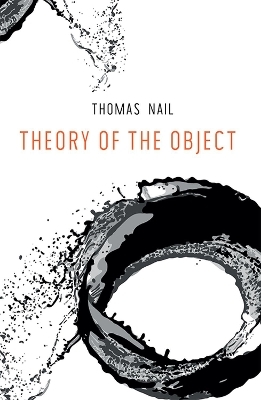
Theory of the Object
Edinburgh University Press (Verlag)
978-1-4744-8792-4 (ISBN)
"Throughout the history of science and technology, objects have been understood in many ways but rarely have they been understood to play an active role in the production of knowledge. This has led to largely anthropocentric theories and histories of science, which treat nature as passive objects viewed by independent observers. Thomas Nail approaches the theory of objects historically in order to tell a completely new story in which objects themselves are the true agents of scientific knowledge. They are processes, not things. It is the first history of science and technology, from prehistory to the present, to illuminate the agency, knowledge and mobility of objects."
"Nail's view of the object can be characterized as “change is the only constant" (to quote those who have gone before). Nail (Univ. of Denver) sets out to convince readers that reality is not a stable essentialist subject/object dichotomy but rather a materialist process of kinetic historical progression. (...) That said, Nail's writing style is generally approachable, so even readers not drawn to academic philosophy of science might find this an interesting read."
Thomas Nail is Distinguished Scholar and Professor of Philosophy at the University of Denver. He is the award-winning author of eight prestigious University Press books which cover a wide range of topics including migration, borders, technology, digital media, history, science, economics, contemporary politics and climate change. His current research focuses on the influence of mobility on society and the arts in the 21st century. His work has been translated into ten major languages and cited across more than 20 academic disciplines.His published books are Marx in Motion: A New Materialist Marxism (Oxford University Press, 2020), Lucretius II: An Ethics of Motion (Edinburgh University Press, 2020), Theory of the Image (Oxford University Press, 2019), Being and Motion (Oxford University Press, 2018), Lucretius I: An Ontology of Motion (Edinburgh University Press, 2018), Theory of the Border (Oxford University Press, 2016), The Figure of the Migrant (Stanford University Press, 2015) and Returning to Revolution: Deleuze, Guattari, and Zapatismo (Edinburgh University Press, 2012).He also writes for Aeon: Ideas and Culture, The Huffington Post, Quartz, Pacific Standard: The Science of Society, History News Network and Monthly Review.
Introduction: A World of Objects
Part I: The Kinetic Object
1. The Flow of Matter
2. The Fold of Number
3. The Field of Knowledge
Part II: A History of Objects
I. The Ordinal Object
4. The Centripetal Object
5. The Prehistoric Object
II. The Cardinal Object
6. The Centrifugal Object
7. The Ancient Object I
8. The Ancient Object II
III. The Intensive Object
9. The Tensional Object
10. The Medieval Object I
11. The Medieval Object II
IV. The Potential Object
12. The Elastic Object
13. The Modern Object I
14. The Modern Object II
Part III: The Contemporary Object
The Loop Object
15. The Pedetic Object
16. The Contemporary Object I: Quantum Theory
17. The Contemporary Object II: Category Theory
18. The Contemporary Object III: Chaos Theory
Conclusion
Index
| Erscheinungsdatum | 24.09.2021 |
|---|---|
| Zusatzinfo | 50 black and white illustrations |
| Verlagsort | Edinburgh |
| Sprache | englisch |
| Maße | 156 x 234 mm |
| Themenwelt | Geisteswissenschaften ► Philosophie ► Philosophie der Neuzeit |
| Naturwissenschaften | |
| ISBN-10 | 1-4744-8792-0 / 1474487920 |
| ISBN-13 | 978-1-4744-8792-4 / 9781474487924 |
| Zustand | Neuware |
| Informationen gemäß Produktsicherheitsverordnung (GPSR) | |
| Haben Sie eine Frage zum Produkt? |
aus dem Bereich