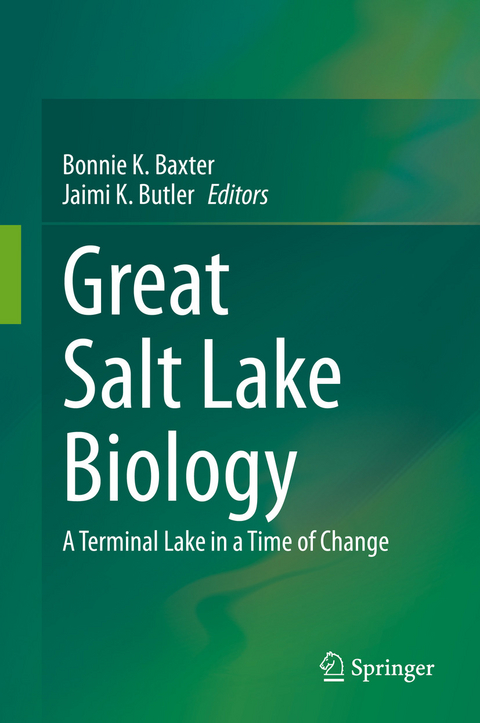
Great Salt Lake Biology (eBook)
527 Seiten
Springer International Publishing (Verlag)
978-3-030-40352-2 (ISBN)
Great Salt Lake is an enormous terminal lake in the western United States. It is a highly productive ecosystem, which has global significance for millions of migrating birds who rely on this critical feeding station on their journey through the American west. For the human population in the adjacent metropolitan area, this body of water provides a significant economic resource as industries, such as brine shrimp harvesting and mineral extraction, generate jobs and income for the state of Utah. In addition, the lake provides the local population with ecosystem services, especially the creation of mountain snowpack that generates water supply, and the prevention of dust that may impair air quality. As a result of climate change and water diversions for consumptive uses, terminal lakes are shrinking worldwide, and this edited volume is written in this urgent context.
This is the first book ever centered on Great Salt Lake biology. Current and novel data presented here paint a comprehensive picture, building on our past understanding and adding complexity. Together, the authors explore this saline lake from the microbial diversity to the invertebrates and the birds who eat them, along a dynamic salinity gradient with unique geochemistry. Some unusual perspectives are included, including the impact of tar seeps on the lake biology and why Great Salt Lake may help us search for life on Mars. Also, we consider the role of human perceptions and our effect on the biology of the lake. The editors made an effort to involve a diversity of experts on the Great Salt Lake system, but also to include unheard voices such as scientists at state agencies or non-profit advocacy organizations. This book is a timely discussion of a terminal lake that is significant, unique, and threatened.
| Erscheint lt. Verlag | 3.7.2020 |
|---|---|
| Zusatzinfo | X, 527 p. 160 illus., 140 illus. in color. |
| Sprache | englisch |
| Themenwelt | Naturwissenschaften ► Biologie ► Ökologie / Naturschutz |
| Schlagworte | Artemia • brine shrimp • great salt lake • Halophage • Hypersalinity • Invasive plants • Invertebrates • Lake ecosystem • Mercury bioaccumulation • Microbial diversity • Microbialites • Microbial Mat • Model invertebrates • Water loss |
| ISBN-10 | 3-030-40352-1 / 3030403521 |
| ISBN-13 | 978-3-030-40352-2 / 9783030403522 |
| Informationen gemäß Produktsicherheitsverordnung (GPSR) | |
| Haben Sie eine Frage zum Produkt? |
 PDF (Wasserzeichen)
DRM: Digitales Wasserzeichen
Dieses eBook enthält ein digitales Wasserzeichen und ist damit für Sie personalisiert. Bei einer missbräuchlichen Weitergabe des eBooks an Dritte ist eine Rückverfolgung an die Quelle möglich.
Dateiformat: PDF (Portable Document Format)
Mit einem festen Seitenlayout eignet sich die PDF besonders für Fachbücher mit Spalten, Tabellen und Abbildungen. Eine PDF kann auf fast allen Geräten angezeigt werden, ist aber für kleine Displays (Smartphone, eReader) nur eingeschränkt geeignet.
Systemvoraussetzungen:
PC/Mac: Mit einem PC oder Mac können Sie dieses eBook lesen. Sie benötigen dafür einen PDF-Viewer - z.B. den Adobe Reader oder Adobe Digital Editions.
eReader: Dieses eBook kann mit (fast) allen eBook-Readern gelesen werden. Mit dem amazon-Kindle ist es aber nicht kompatibel.
Smartphone/Tablet: Egal ob Apple oder Android, dieses eBook können Sie lesen. Sie benötigen dafür einen PDF-Viewer - z.B. die kostenlose Adobe Digital Editions-App.
Buying eBooks from abroad
For tax law reasons we can sell eBooks just within Germany and Switzerland. Regrettably we cannot fulfill eBook-orders from other countries.
aus dem Bereich