


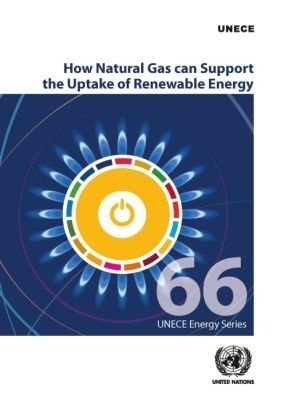
How Natural Gas Can Support the Uptake of Renewable Energy
Seiten
2020
United Nations (Verlag)
978-92-1-117229-4 (ISBN)
United Nations (Verlag)
978-92-1-117229-4 (ISBN)
- Titel z.Zt. nicht lieferbar
- Versandkostenfrei
- Auch auf Rechnung
- Artikel merken
There is a strong medium-to-long-term future for gas so long as it wholeheartedly embraces the energy transition and partners with renewables to produce carbon-free products, notably hydrogen, whilst embracing carbon capture and storage.
There is a strong medium-to-long-term future for gas so long as it wholeheartedly embraces the energy transition and partners with renewables to produce carbon-free products, notably hydrogen, whilst embracing carbon capture and storage (CCS). Gas has several key advantages. It is highly flexible and can be used for heating, cooling, cooking, waste disposal and transportation as well as feedstock for chemicals, fertilisers and pharmaceutical products. Moreover, throughout most of the UNECE area there are already extensive distribution networks that enable gas to be transferred both across borders and within member states. These network can be adapted to carry hydrogen either mixed in with natural gas or as self-contained systems. They can also be used to distribute CO2.
There is a strong medium-to-long-term future for gas so long as it wholeheartedly embraces the energy transition and partners with renewables to produce carbon-free products, notably hydrogen, whilst embracing carbon capture and storage (CCS). Gas has several key advantages. It is highly flexible and can be used for heating, cooling, cooking, waste disposal and transportation as well as feedstock for chemicals, fertilisers and pharmaceutical products. Moreover, throughout most of the UNECE area there are already extensive distribution networks that enable gas to be transferred both across borders and within member states. These network can be adapted to carry hydrogen either mixed in with natural gas or as self-contained systems. They can also be used to distribute CO2.
United Nations Publications is the official publisher for the UN and it produces over 400 titles each year. The range of subjects covered are as varied as the issues being tackled by the UN as it works for a better world for all. Since the first printing of the UN Charter, this publishing unit has been providing valued information to those in government, academia and business
| Erscheinungsdatum | 02.07.2020 |
|---|---|
| Reihe/Serie | ECE Energy Series |
| Verlagsort | New York |
| Sprache | englisch |
| Maße | 210 x 297 mm |
| Gewicht | 154 g |
| Themenwelt | Naturwissenschaften ► Biologie ► Ökologie / Naturschutz |
| Technik ► Bergbau | |
| Technik ► Elektrotechnik / Energietechnik | |
| Technik ► Umwelttechnik / Biotechnologie | |
| ISBN-10 | 92-1-117229-2 / 9211172292 |
| ISBN-13 | 978-92-1-117229-4 / 9789211172294 |
| Zustand | Neuware |
| Informationen gemäß Produktsicherheitsverordnung (GPSR) | |
| Haben Sie eine Frage zum Produkt? |
Mehr entdecken
aus dem Bereich


aus dem Bereich
Gewinnung - Aufbereitung - Speicherung - Verteilung
Buch | Softcover (2022)
Springer Vieweg (Verlag)
CHF 55,95
Methoden – Lösungen – Anwendungen
Buch | Hardcover (2025)
Hanser (Verlag)
CHF 69,95


