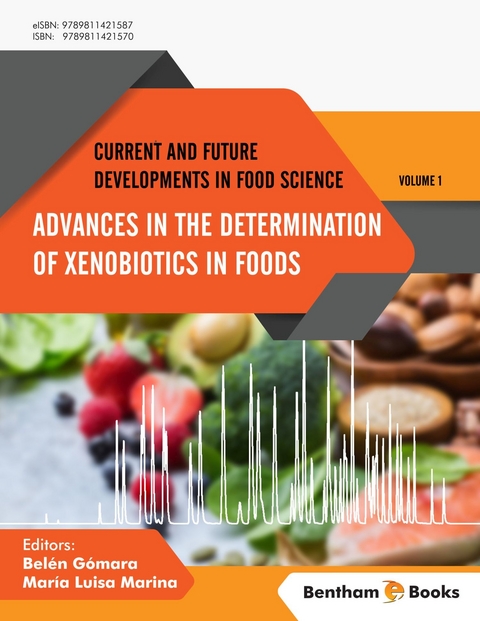
Advances in the Determination of Xenobiotics in Foods (eBook)
501 Seiten
Bentham Science Publishers (Verlag)
978-981-14-2158-7 (ISBN)
Determining the presence of different types of toxic compounds (or xenobiotics) in food requires precise analytical methodologies. Examples of these techniques include separation techniques coupled to mass spectrometry, Variations in methods used depend on the physicochemical properties of each xenobiotic being tested for.
Advances in the Determination of Xenobiotics in Foods explains recent developments in the field of xenobiotic determination in food. Readers are introduced to xenobiotic testing techniques through extensive reviews. Chapters also cover details about contaminants coming from food contact materials (such as plasticizers, food additives, polymer monomers/oligomers and non-intentionally added substances), substances used for food processing and sensing (nanoparticles), and residues of pesticides (that can also be present in the final food product). The book also includes information about specific xenobiotics that, due to their global distribution in the environment, are also likely to enter the food chain. Some of them are regulated (persistent organic pollutants and heavy metals) but there are many other types of contaminants (halogenated flame-retardants, perfluorinated compounds and micro- and nanoplastics) that must also be controlled. In addition, some xenobiotics could be present in the final food consumed because of food treatments (acrylamide, furan, heterocyclic aromatic amines, and glycidol esters). Finally, the concluding chapters of the book are devoted to the presence of natural contaminants such as mycotoxins and biogenic amines.
The combination of extensive information of analytical techniques for xenobiotics along with a categorical treatment of food contaminants makes this volume a handy reference for food science and technology students and technicians involved in food safety and processing management roles.
Determining the presence of different types of toxic compounds (or xenobiotics) in food requires precise analytical methodologies. Examples of these techniques include separation techniques coupled to mass spectrometry, Variations in methods used depend on the physicochemical properties of each xenobiotic being tested for.Advances in the Determination of Xenobiotics in Foods explains recent developments in the field of xenobiotic determination in food. Readers are introduced to xenobiotic testing techniques through extensive reviews. Chapters also cover details about contaminants coming from food contact materials (such as plasticizers, food additives, polymer monomers/oligomers and non-intentionally added substances), substances used for food processing and sensing (nanoparticles), and residues of pesticides (that can also be present in the final food product). The book also includes information about specific xenobiotics that, due to their global distribution in the environment, are also likely to enter the food chain. Some of them are regulated (persistent organic pollutants and heavy metals) but there are many other types of contaminants (halogenated flame-retardants, perfluorinated compounds and micro- and nanoplastics) that must also be controlled. In addition, some xenobiotics could be present in the final food consumed because of food treatments (acrylamide, furan, heterocyclic aromatic amines, and glycidol esters). Finally, the concluding chapters of the book are devoted to the presence of natural contaminants such as mycotoxins and biogenic amines.The combination of extensive information of analytical techniques for xenobiotics along with a categorical treatment of food contaminants makes this volume a handy reference for food science and technology students and technicians involved in food safety and processing management roles.
| Erscheint lt. Verlag | 4.10.2019 |
|---|---|
| Reihe/Serie | Current and Future Developments in Food Science | Current and Future Developments in Food Science |
| Sprache | englisch |
| Themenwelt | Naturwissenschaften ► Chemie ► Analytische Chemie |
| ISBN-10 | 981-14-2158-7 / 9811421587 |
| ISBN-13 | 978-981-14-2158-7 / 9789811421587 |
| Informationen gemäß Produktsicherheitsverordnung (GPSR) | |
| Haben Sie eine Frage zum Produkt? |
 EPUB (Ohne DRM)
Digital Rights Management: ohne DRM
Dieses eBook enthält kein DRM oder Kopierschutz. Eine Weitergabe an Dritte ist jedoch rechtlich nicht zulässig, weil Sie beim Kauf nur die Rechte an der persönlichen Nutzung erwerben.
Dateiformat: EPUB (Electronic Publication)
EPUB ist ein offener Standard für eBooks und eignet sich besonders zur Darstellung von Belletristik und Sachbüchern. Der Fließtext wird dynamisch an die Display- und Schriftgröße angepasst. Auch für mobile Lesegeräte ist EPUB daher gut geeignet.
Systemvoraussetzungen:
PC/Mac: Mit einem PC oder Mac können Sie dieses eBook lesen. Sie benötigen dafür die kostenlose Software Adobe Digital Editions.
eReader: Dieses eBook kann mit (fast) allen eBook-Readern gelesen werden. Mit dem amazon-Kindle ist es aber nicht kompatibel.
Smartphone/Tablet: Egal ob Apple oder Android, dieses eBook können Sie lesen. Sie benötigen dafür eine kostenlose App.
Geräteliste und zusätzliche Hinweise
Buying eBooks from abroad
For tax law reasons we can sell eBooks just within Germany and Switzerland. Regrettably we cannot fulfill eBook-orders from other countries.
aus dem Bereich