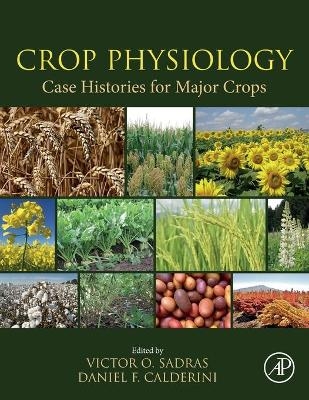
Crop Physiology Case Histories for Major Crops
Academic Press Inc (Verlag)
978-0-12-819194-1 (ISBN)
These physiological process are presented in a double context of challenges and solutions. The challenges to increase plant-based food, fodder, fiber and energy against the backdrop of population increase, climate change, dietary choices and declining public funding for research and development in agriculture are unprecedented and urgent. The proximal technological solutions to these challenges are genetic improvement and agronomy. Hence, the premise of the book is that crop physiology is most valuable when it engages meaningfully with breeding and agronomy.
With contributions from 92 leading scientists from around the world, each chapter deals with a crop: maize, rice, wheat, barley, sorghum and oat; quinoa; soybean, field pea, chickpea, peanut, common bean, lentil, lupin and faba bean; sunflower and canola; potato, cassava, sugar beet and sugarcane; and cotton.
Dr. Victor O. Sadras is a crop ecophysiologist with expertise in the adaptation of crops to environmental stresses, including water deficit, extreme temperatures, nutrient deficiency, soil physical and chemical constraints, pathogens, and insects. He has studied and modeled aspects of the water, carbon, and nitrogen economies of annual crops (wheat, field pea, chickpea, sunflower, maize, soybean, cotton) and perennial crops (grapevine and olive) in rain-fed and irrigated systems. Dr. Daniel F. Calderini has been a Full Professor at the Plant Production and Plant Protection Institute of Universidad Austral de Chile since 2002. He specializes in the physiology of crops and cereals. Dr. Calderini was honored with the People’s Republic of China Friendship Award. He is the coordinator of the ‘Sustainable Intensification of Extensive Crop Production’ network within the Ibero-American Program of Science and Technology for Development. Additionally, he has served as the head of the Graduate School and the Doctorate Program at the Faculty of Agricultural and Food Sciences. His physiological research has focused on pea, lupin, rapeseed, sunflower, quinoa, and temperate cereals.
1. Maize
2. Rice
3. Wheat
4. Barley
5. Sorghum
6. Oat
7. Quinoa
8. Soybean
9. Field Pea
10. Chickpea
11. Peanut
12. Common bean
13. Lentil
14. Lupin
15. Faba bean
16. Sunflower
17. Canola
18. Potato
19. Cassava
20. Sugar beet
21. Sugarcane
22. Cotton
| Erscheinungsdatum | 15.01.2021 |
|---|---|
| Verlagsort | San Diego |
| Sprache | englisch |
| Maße | 216 x 276 mm |
| Gewicht | 2080 g |
| Themenwelt | Naturwissenschaften ► Biologie ► Biochemie |
| Naturwissenschaften ► Biologie ► Botanik | |
| Weitere Fachgebiete ► Land- / Forstwirtschaft / Fischerei | |
| ISBN-10 | 0-12-819194-5 / 0128191945 |
| ISBN-13 | 978-0-12-819194-1 / 9780128191941 |
| Zustand | Neuware |
| Informationen gemäß Produktsicherheitsverordnung (GPSR) | |
| Haben Sie eine Frage zum Produkt? |
aus dem Bereich