


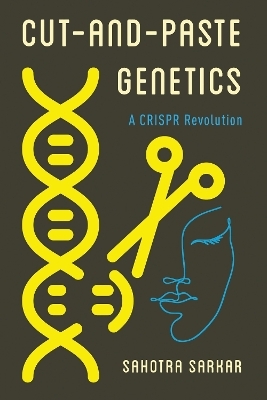
Cut-and-Paste Genetics
Rowman & Littlefield International (Verlag)
978-1-78661-437-7 (ISBN)
This book looks at these developements in the context of the history of previous social and scientific attempts at genetic editing, and explores the policy and ethical challenges they raise. It presents the case for altering the human germ-line (which contains and controls hereditary genetic information) to eliminate a large number of genetic diseases controlled by a single or few genes, while pointing out that gene therapy is likely to be ineffective for diseases with more complex causes. In parallel it explores the possibility of genetic enhancement in a set of case studies. But it also argues that, in general, genetic enhancement is ethically problematic and should be approached with caution.
Given the success of CRISPR/Cas9 gene editing, and the explosion of related techniques, in practice it would be virtually impossible to ban germ-line editing in our future. A more useful goal is to put regulation in place, with oversight that represents the interests of society. That, in turn, requires an informed public discussion of these issues, which is the intention of this book.
Sahotra Sarkar is professor in the Departments of Philosophy and Integrative Biology at the University of Texas, Austin. He has taught at Boston and McGill Universities and held fellowships at MIT and the Max Planck Institute. He grew up in Darjeeling, India and was educated at Columbia University and the University of Chicago. He is a prolific author, social activist, and environmentalist working at the intersection of biology and society primarily in the American Southwest and in Mexico. A specialist in the history and philosophy of science, he has particular interest in both the philosophy of biology and physics.
Preface
1.Breeding a Perfect Society
Beginnings: Davenport and eugenics in the United States * IQ and involuntary sterilization * Genetics against eugenics * Exporting sterilization * The Watson scandal * Davenport’s dreams today
2.Molecular Diseases, Elusive Treatments
The molecularization of biology * Molecular diseases * But no molecular medicine
*Dreams of editing genes * Followed by stunning failure * Recombinant DNA made no difference * Gene editing BC
3.What Good Was the Human Genome Project?
The sequence revealed * Common diseases and common variants * Medical irrelevance of the sequence * Critiques of the HGP, past and present * Evolution and architecture of the genome * Evolutionary contingency
4.The CRISPR Revolution
The CRISPR structure emerges * Its function is decoded * The mechanism of immunity * Onward to gene editing * The delivery problem * Ubiquitous CRISPR
5.Inevitable Eugenics?
Eugenics in the news * What is eugenics? * Defining eugenics * A working definition * Inescapable eugenics? * Matters of ethics
6.Eliminating Genetic Diseases
The long reach of Huntington’s disease * The He Jiankui affair * The ethics of human germ-line intervention * The limits of current science * Gene specificity and Lenin’s brain * A policy proposal * Proceed with caution * Liberal and moderate eugenics
7.Designer Baby Delusions
Why not genetic enhancement? * The normal and the enhanced * Liberal eugen- ics and genetic enhancement * Rationality of genetic enhancement * Planned human obsolescence * Where is the science? The case of intelligence * Genomics and IQ * What about physical traits * Genetic reductionism * Contextual developmental construction * What is perfection?
8.A CRISPR Future
Editing the human germ-line * Gene drives * The ethics of promoting extinction
*Biosecurity * CRISPR without the hype
| Erscheinungsdatum | 20.05.2020 |
|---|---|
| Zusatzinfo | 3 b/w illustrations; 1 table |
| Sprache | englisch |
| Maße | 162 x 238 mm |
| Gewicht | 449 g |
| Themenwelt | Geisteswissenschaften ► Geschichte ► Regional- / Ländergeschichte |
| Geisteswissenschaften ► Philosophie ► Allgemeines / Lexika | |
| Geisteswissenschaften ► Philosophie ► Ethik | |
| Naturwissenschaften ► Biologie ► Genetik / Molekularbiologie | |
| ISBN-10 | 1-78661-437-5 / 1786614375 |
| ISBN-13 | 978-1-78661-437-7 / 9781786614377 |
| Zustand | Neuware |
| Informationen gemäß Produktsicherheitsverordnung (GPSR) | |
| Haben Sie eine Frage zum Produkt? |
aus dem Bereich


