


When There Was No Aid (eBook)
256 Seiten
Cornell University Press (Verlag)
978-1-5017-4717-5 (ISBN)
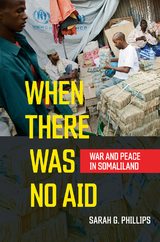
For all of the doubts raised about the effectiveness of international aid in advancing peace and development, there are few examples of developing countries that are even relatively untouched by it. Sarah G. Phillips's When There Was No Aid offers us one such example.
Using evidence from Somaliland's experience of peace-building, When There Was No Aid challenges two of the most engrained presumptions about violence and poverty in the global South. First, that intervention by actors in the global North is self-evidently useful in ending them, and second that the quality of a country's governance institutions (whether formal or informal) necessarily determines the level of peace and civil order that the country experiences.
Phillips explores how popular discourses about war, peace, and international intervention structure the conditions of possibility to such a degree that even the inability of institutions to provide reliable security can stabilize a prolonged period of peace. She argues that Somaliland's post-conflict peace is grounded less in the constraining power of its institutions than in a powerful discourse about the country's structural, temporal, and physical proximity to war. Through its sensitivity to the ease with which peace gives way to war, Phillips argues, this discourse has indirectly harnessed an apparent propensity to war as a source of order.
Sarah G. Phillips is Associate Professor in the Department of Government and International Relations at the University of Sydney. Follow her on X @DrSarahPhillips.
Introduction: What if We Don't Intervene?
1. The Imperative of Intervention
2. Somaliland's Relative Isolation
3. Self-Reliance and Elite Networks
4. Local Ownership and the Rules of the Game
5. War and Peace in the Independence Discourse
Conclusion: Why Aid Matters Less than We Think
| Erscheint lt. Verlag | 15.3.2020 |
|---|---|
| Zusatzinfo | 1 map |
| Verlagsort | Ithaca |
| Sprache | englisch |
| Maße | 150 x 150 mm |
| Themenwelt | Naturwissenschaften |
| Sozialwissenschaften ► Pädagogik | |
| Sozialwissenschaften ► Politik / Verwaltung ► Europäische / Internationale Politik | |
| Sozialwissenschaften ► Soziologie | |
| Schlagworte | Somaliland, International Development, Aid, Foreign Intervention, Conflict resolution |
| ISBN-10 | 1-5017-4717-7 / 1501747177 |
| ISBN-13 | 978-1-5017-4717-5 / 9781501747175 |
| Informationen gemäß Produktsicherheitsverordnung (GPSR) | |
| Haben Sie eine Frage zum Produkt? |
 EPUB (Adobe DRM)
Kopierschutz: Adobe-DRM
Adobe-DRM ist ein Kopierschutz, der das eBook vor Mißbrauch schützen soll. Dabei wird das eBook bereits beim Download auf Ihre persönliche Adobe-ID autorisiert. Lesen können Sie das eBook dann nur auf den Geräten, welche ebenfalls auf Ihre Adobe-ID registriert sind.
Details zum Adobe-DRM
Dateiformat: EPUB (Electronic Publication)
EPUB ist ein offener Standard für eBooks und eignet sich besonders zur Darstellung von Belletristik und Sachbüchern. Der Fließtext wird dynamisch an die Display- und Schriftgröße angepasst. Auch für mobile Lesegeräte ist EPUB daher gut geeignet.
Systemvoraussetzungen:
PC/Mac: Mit einem PC oder Mac können Sie dieses eBook lesen. Sie benötigen eine
eReader: Dieses eBook kann mit (fast) allen eBook-Readern gelesen werden. Mit dem amazon-Kindle ist es aber nicht kompatibel.
Smartphone/Tablet: Egal ob Apple oder Android, dieses eBook können Sie lesen. Sie benötigen eine
Geräteliste und zusätzliche Hinweise
Buying eBooks from abroad
For tax law reasons we can sell eBooks just within Germany and Switzerland. Regrettably we cannot fulfill eBook-orders from other countries.


