


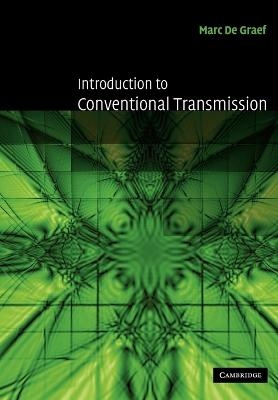
Introduction to Conventional Transmission Electron Microscopy
Seiten
2003
Cambridge University Press (Verlag)
978-0-521-62995-9 (ISBN)
Cambridge University Press (Verlag)
978-0-521-62995-9 (ISBN)
This graduate level 2003 textbook covers the fundamentals of conventional transmission electron microscopy (CTEM) as applied to crystalline solids. Emphasis is on the experimental and computational methods used to quantify and analyze CTEM observations. A supplementary website containing interactive modules and free Fortran source code accompanies the text.
This 2003 book covers the fundamentals of conventional transmission electron microscopy (CTEM) as applied to crystalline solids. Emphasis is on the experimental and computational methods used to quantify and analyze CTEM observations. A supplementary website containing interactive modules and free Fortran source code accompanies the text. The book starts with the basics of crystallography and quantum mechanics providing a sound mathematical footing for the rest of the text. The next section deals with the microscope itself, describing the various components in terms of the underlying theory. The second half of the book focuses on the dynamical theory of electron scattering in solids including its applications to perfect and defective crystals, electron diffraction and phase contrast techniques. Based on a lecture course given by the author in the Department of Materials Science and Engineering at Carnegie Mellon University, the book is ideal for graduate students as well as researchers new to the field.
This 2003 book covers the fundamentals of conventional transmission electron microscopy (CTEM) as applied to crystalline solids. Emphasis is on the experimental and computational methods used to quantify and analyze CTEM observations. A supplementary website containing interactive modules and free Fortran source code accompanies the text. The book starts with the basics of crystallography and quantum mechanics providing a sound mathematical footing for the rest of the text. The next section deals with the microscope itself, describing the various components in terms of the underlying theory. The second half of the book focuses on the dynamical theory of electron scattering in solids including its applications to perfect and defective crystals, electron diffraction and phase contrast techniques. Based on a lecture course given by the author in the Department of Materials Science and Engineering at Carnegie Mellon University, the book is ideal for graduate students as well as researchers new to the field.
Professor of Materials Science and Engineering at Carnegie Mellon University.
1. Basic crystallography; 2. Basic quantum mechanics; 3. The transmission electron microscope; 4. Getting started; 5. Dynamical electron scattering in perfect crystals; 6. Two-beam theory in defect-free crystals; 7. Systematic row and zone axis orientations; 8. Defects in crystals; 9. Electron diffraction patterns; 10. Phase contrast microscopy; Appendices.
| Erscheint lt. Verlag | 27.3.2003 |
|---|---|
| Zusatzinfo | Worked examples or Exercises; 25 Tables, unspecified; 108 Halftones, unspecified; 214 Line drawings, unspecified |
| Verlagsort | Cambridge |
| Sprache | englisch |
| Maße | 170 x 244 mm |
| Gewicht | 1160 g |
| Themenwelt | Naturwissenschaften ► Chemie ► Physikalische Chemie |
| Naturwissenschaften ► Physik / Astronomie ► Festkörperphysik | |
| Technik ► Maschinenbau | |
| ISBN-10 | 0-521-62995-0 / 0521629950 |
| ISBN-13 | 978-0-521-62995-9 / 9780521629959 |
| Zustand | Neuware |
| Informationen gemäß Produktsicherheitsverordnung (GPSR) | |
| Haben Sie eine Frage zum Produkt? |
Mehr entdecken
aus dem Bereich

aus dem Bereich
Quantenmechanik | Spektroskopie | Statistische Thermodynamik
Buch | Softcover (2024)
De Gruyter (Verlag)
CHF 83,90
200 Aufgaben zum sicheren Umgang mit Quellen ionisierender Strahlung
Buch | Hardcover (2023)
Hanser, Carl (Verlag)
CHF 48,95


