Handbook of Vascular Motion (eBook)
410 Seiten
Elsevier Science (Verlag)
978-0-12-815714-5 (ISBN)
Dr. Christopher Cheng has over 20 years of experience in academic research and the medical device industry. His academic research has focused on hemodynamics and vascular structure mechanics, with an emphasis on disease research and medical device interactions with the body. He has authored over 80 journal, conference, and book chapter publications. In his industry experience, Dr. Cheng has worked at small and large medical device companies, with experience spanning design, manufacturing, preclinical testing, clinical trials, and marketing. Currently, Dr. Cheng is CEO of Koli, Inc., an early-stage medical device company developing a catheter-based solution for gallstone disease. Dr. Cheng is also an Adjunct Professor in the Division of Vascular Surgery at Stanford, where he runs the Vascular Intervention Biomechanics & Engineering (VIBE) lab. Dr. Cheng earned his undergraduate degree in Biomedical Engineering and Electrical & Computer Engineering at Duke University. He then earned Master's and Ph.D. degrees in Biomechanics at Stanford University.
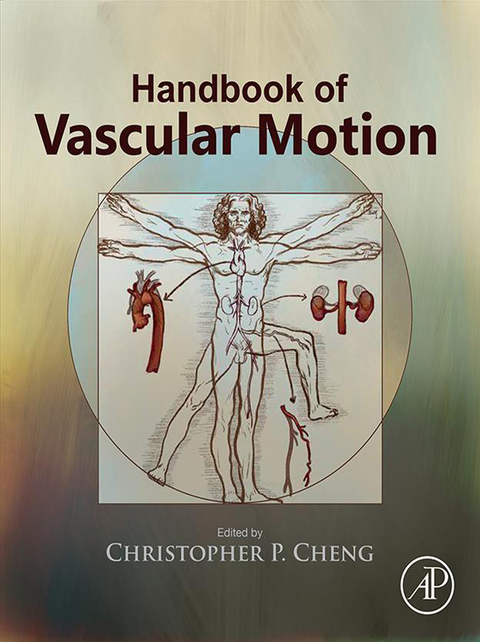
Handbook of Vascular Motion provides a comprehensive review of the strategies and methods to quantify vascular motion and deformations relevant for cardiovascular device design and mechanical durability evaluation. It also explains the current state of knowledge of vascular beds that are particularly important for the medical device industry. Finally, it explores the application of vascular motion to computational simulations, benchtop testing and fatigue analysis, as well as further implications on clinical outcomes, product development and business. - PROSE Book Award Nominee in the "e;Single Volume Reference Book"e; category- Describes methods to quantify vascular motion and deformations including choosing what data to collect, relevant medical imaging, image processing, geometric modeling, and deformation quantification techniques- Includes deformations for vascular beds of particular importance in medical devices including the coronary arteries and heart, arteries of the head and neck, thoracic aorta and arch branches, abdominal aorta and visceral branches, lower extremity arteries, inferior vena cava, and lower extremity veins- Explains how to convert raw deformations into boundary conditions suitable for durability evaluation, provides examples of using this information for computational simulations, benchtop testing, and fatigue analysis, and illustrates examples of how vascular motion affect clinical outcomes, product development, and business
| Erscheint lt. Verlag | 15.6.2019 |
|---|---|
| Sprache | englisch |
| Themenwelt | Medizinische Fachgebiete ► Innere Medizin ► Kardiologie / Angiologie |
| Medizin / Pharmazie ► Physiotherapie / Ergotherapie ► Orthopädie | |
| Naturwissenschaften ► Biologie | |
| Technik ► Medizintechnik | |
| Technik ► Umwelttechnik / Biotechnologie | |
| ISBN-10 | 0-12-815714-3 / 0128157143 |
| ISBN-13 | 978-0-12-815714-5 / 9780128157145 |
| Informationen gemäß Produktsicherheitsverordnung (GPSR) | |
| Haben Sie eine Frage zum Produkt? |
 EPUB (Adobe DRM)
Kopierschutz: Adobe-DRM
Adobe-DRM ist ein Kopierschutz, der das eBook vor Mißbrauch schützen soll. Dabei wird das eBook bereits beim Download auf Ihre persönliche Adobe-ID autorisiert. Lesen können Sie das eBook dann nur auf den Geräten, welche ebenfalls auf Ihre Adobe-ID registriert sind.
Details zum Adobe-DRM
Dateiformat: EPUB (Electronic Publication)
EPUB ist ein offener Standard für eBooks und eignet sich besonders zur Darstellung von Belletristik und Sachbüchern. Der Fließtext wird dynamisch an die Display- und Schriftgröße angepasst. Auch für mobile Lesegeräte ist EPUB daher gut geeignet.
Systemvoraussetzungen:
PC/Mac: Mit einem PC oder Mac können Sie dieses eBook lesen. Sie benötigen eine
eReader: Dieses eBook kann mit (fast) allen eBook-Readern gelesen werden. Mit dem amazon-Kindle ist es aber nicht kompatibel.
Smartphone/Tablet: Egal ob Apple oder Android, dieses eBook können Sie lesen. Sie benötigen eine
Geräteliste und zusätzliche Hinweise
Buying eBooks from abroad
For tax law reasons we can sell eBooks just within Germany and Switzerland. Regrettably we cannot fulfill eBook-orders from other countries.
aus dem Bereich