


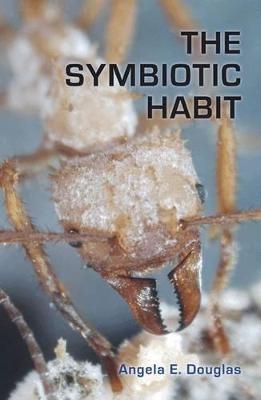
The Symbiotic Habit
Seiten
2010
Princeton University Press (Verlag)
978-0-691-11341-8 (ISBN)
Princeton University Press (Verlag)
978-0-691-11341-8 (ISBN)
- Titel ist leider vergriffen;
keine Neuauflage - Artikel merken
Symbiosis is the foundation for major evolutionary events such as the emergence of eukaryotes and plant eating among vertebrates, and is also a crucial factor in shaping many ecological communities. This title provides an introduction to symbiosis, describing how symbioses are established, function, and persist in evolutionary and ecological time.
Throughout the natural world, organisms have responded to predators, inadequate resources, or inclement conditions by forming ongoing mutually beneficial partnerships--or symbioses--with different species. Symbiosis is the foundation for major evolutionary events, such as the emergence of eukaryotes and plant eating among vertebrates, and is also a crucial factor in shaping many ecological communities. The Symbiotic Habit provides an accessible and authoritative introduction to symbiosis, describing how symbioses are established, function, and persist in evolutionary and ecological time. Angela Douglas explains the evolutionary origins and development of symbiosis, and illustrates the principles of symbiosis using a variety of examples of symbiotic relationships as well as nonsymbiotic ones, such as parasitic or fleeting mutualistic associations. Although the reciprocal exchange of benefit is the key feature of symbioses, the benefits are often costly to provide, causing conflict among the partners.
Douglas shows how these conflicts can be managed by a single controlling organism that may selectively reward cooperative partners, control partner transmission, and employ recognition mechanisms that discriminate between beneficial and potentially harmful or ineffective partners. The Symbiotic Habit reveals the broad uniformity of symbiotic process across many different symbioses among organisms with diverse evolutionary histories, and demonstrates how symbioses can be used to manage ecosystems, enhance food production, and promote human health.
Throughout the natural world, organisms have responded to predators, inadequate resources, or inclement conditions by forming ongoing mutually beneficial partnerships--or symbioses--with different species. Symbiosis is the foundation for major evolutionary events, such as the emergence of eukaryotes and plant eating among vertebrates, and is also a crucial factor in shaping many ecological communities. The Symbiotic Habit provides an accessible and authoritative introduction to symbiosis, describing how symbioses are established, function, and persist in evolutionary and ecological time. Angela Douglas explains the evolutionary origins and development of symbiosis, and illustrates the principles of symbiosis using a variety of examples of symbiotic relationships as well as nonsymbiotic ones, such as parasitic or fleeting mutualistic associations. Although the reciprocal exchange of benefit is the key feature of symbioses, the benefits are often costly to provide, causing conflict among the partners.
Douglas shows how these conflicts can be managed by a single controlling organism that may selectively reward cooperative partners, control partner transmission, and employ recognition mechanisms that discriminate between beneficial and potentially harmful or ineffective partners. The Symbiotic Habit reveals the broad uniformity of symbiotic process across many different symbioses among organisms with diverse evolutionary histories, and demonstrates how symbioses can be used to manage ecosystems, enhance food production, and promote human health.
Angela E. Douglas is the Daljit S. and Elaine Sarkaria Professor of Insect Physiology and Toxicology at Cornell University. She is the author of "Symbiotic Interactions" and the coauthor of "The Biology of Symbiosis".
Preface vii Chapter 1: The Significance of Symbiosis 1 Chapter 2: Evolutionary Origins and Fates of Organisms in Symbiosis 24 Chapter 3: Conflict and Conflict Resolution 56 Chapter 4: Choosing and Chosen: Establishment and Persistence of Symbioses 91 Chapter 5: The Success of Symbiosis 125 Chapter 6: Perspectives 164 References 171 Index 193
| Erscheint lt. Verlag | 14.2.2010 |
|---|---|
| Zusatzinfo | 25 halftones. 16 line illus. 7 tables. |
| Verlagsort | New Jersey |
| Sprache | englisch |
| Maße | 152 x 235 mm |
| Gewicht | 425 g |
| Themenwelt | Naturwissenschaften ► Geowissenschaften ► Geografie / Kartografie |
| ISBN-10 | 0-691-11341-6 / 0691113416 |
| ISBN-13 | 978-0-691-11341-8 / 9780691113418 |
| Zustand | Neuware |
| Informationen gemäß Produktsicherheitsverordnung (GPSR) | |
| Haben Sie eine Frage zum Produkt? |
Mehr entdecken
aus dem Bereich

aus dem Bereich
Buch | Hardcover (2024)
Schweizerbart'sche, E. (Verlag)
CHF 33,55
über eine faszinierende Welt zwischen Wasser und Land und warum sie …
Buch | Hardcover (2023)
dtv (Verlag)
CHF 33,55


