Biological Field Emission Scanning Electron Microscopy (eBook)
John Wiley & Sons (Verlag)
978-1-118-66326-4 (ISBN)
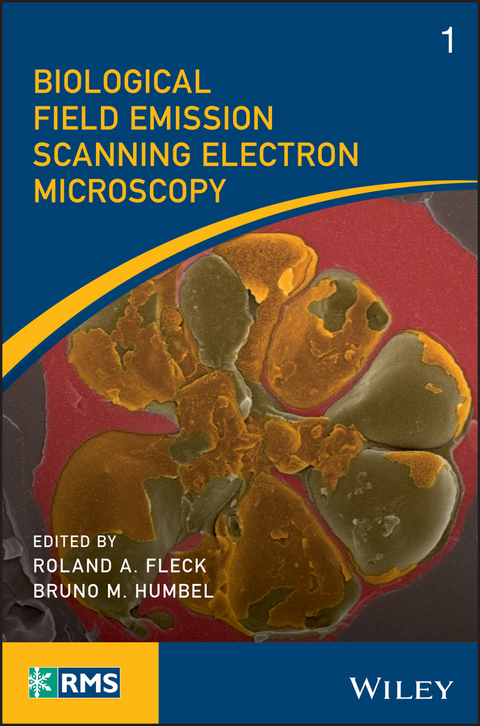
The go-to resource for microscopists on biological applications of field emission gun scanning electron microscopy (FEGSEM)
The evolution of scanning electron microscopy technologies and capability over the past few years has revolutionized the biological imaging capabilities of the microscope-giving it the capability to examine surface structures of cellular membranes to reveal the organization of individual proteins across a membrane bilayer and the arrangement of cell cytoskeleton at a nm scale. Most notable are their improvements for field emission scanning electron microscopy (FEGSEM), which when combined with cryo-preparation techniques, has provided insight into a wide range of biological questions including the functionality of bacteria and viruses. This full-colour, must-have book for microscopists traces the development of the biological field emission scanning electron microscopy (FEGSEM) and highlights its current value in biological research as well as its future worth.
Biological Field Emission Scanning Electron Microscopy highlights the present capability of the technique and informs the wider biological science community of its application in basic biological research. Starting with the theory and history of FEGSEM, the book offers chapters covering: operation (strengths and weakness, sample selection, handling, limitations, and preparation); Commercial developments and principals from the major FEGSEM manufacturers (Thermo Scientific, JEOL, HITACHI, ZEISS, Tescan); technical developments essential to bioFEGSEM; cryobio FEGSEM; cryo-FIB; FEGSEM digital-tomography; array tomography; public health research; mammalian cells and tissues; digital challenges (image collection, storage, and automated data analysis); and more.
- Examines the creation of the biological field emission gun scanning electron microscopy (FEGSEM) and discusses its benefits to the biological research community and future value
- Provides insight into the design and development philosophy behind current instrument manufacturers
- Covers sample handling, applications, and key supporting techniques
- Focuses on the biological applications of field emission gun scanning electron microscopy (FEGSEM), covering both plant and animal research
- Presented in full colour
An important part of the Wiley-Royal Microscopical Series, Biological Field Emission Scanning Electron Microscopy is an ideal general resource for experienced academic and industrial users of electron microscopy-specifically, those with a need to understand the application, limitations, and strengths of FEGSEM.
ROLAND A. FLECK, PHD, FRCPath, FRMS, is a Professor in Ultrastructural Imaging and Director of the Centre for Ultrastructural Imaging at King's College London. Having specialised in basic research into cellular injury at low temperatures and during cryo-preservation regimes he has developed specialist knowledge of freeze fracture/freeze etch preparation of tissues and wider cryo-microscopic techniques. As director of the Centre for Ultrastructural Imaging he supports advanced three dimensional studies of cells and tissues by both conventional room temperature and cryo electron microscopy. He is a visiting Professor of the Faculty of Health and Medical Sciences, University of Copenhagen and Professor of the UNESCO Chair in Cryobiology, National Academy of Sciences of Ukraine, Institute for Problems of Cryobiology, Kharkiv, Ukraine.
BRUNO M. HUMBEL, Dr. sc. nat. ETH, is head of the Imaging Section at the Okinawa Institute of Science and Technology, Onna son, Okinawa, Japan. He is awarded a research professorship at Juntendo University, Tokyo, Japan. He got his PhD at the Federal Institute of Technology, ETH, Zurich, Switzerland, with Prof. Hans Moor and Dr. Martin Müller, both pioneers in cryo-electron microscopy (high-pressure freezing, freeze-fracturing, freeze-substitution and low-temperature embedding, cryo-SEM, cryo-sectioning). His research focuses on sample preparation for optimal, life-like imaging of biological objects in the electron microscope. The main interests are preparation methods based on cryo-fixation applied in Cell Biology. From here, hybrid follow-up methods like freeze-substitution or freeze-fracturing are used. He is also involved in immunolabelling technology, e.g., ultra-small gold particles and has been working on techniques for correlative microscopy and volume microscopy for a couple of years. He teaches cryo-techniques and immunolabelling and correlative microscopy in international workshops and has professional affiliations with Zhejiang University, Hangzhou, People's Republic of China as a distinguished professor and co-director of the Center of Cryo-Electron Microscopy and with the Federal University of Minas Gerais, Belo Horizonte, Brazil, as a FAPEMIG visiting professor at the Centro de Microscopia da UFMG.
The go to resource for microscopists on biological applications of field emission gun scanning electron microscopy (FEGSEM) The evolution of scanning electron microscopy technologies and capability over the past few years has revolutionized the biological imaging capabilities of the microscope giving it the capability to examine surface structures of cellular membranes to reveal the organization of individual proteins across a membrane bilayer and the arrangement of cell cytoskeleton at a nm scale. Most notable are their improvements for field emission scanning electron microscopy (FEGSEM), which when combined with cryo-preparation techniques, has provided insight into a wide range of biological questions including the functionality of bacteria and viruses. This full-colour, must-have book for microscopists traces the development of the biological field emission scanning electron microscopy (FEGSEM) and highlights its current value in biological research as well as its future worth. Biological Field Emission Scanning Electron Microscopy highlights the present capability of the technique and informs the wider biological science community of its application in basic biological research. Starting with the theory and history of FEGSEM, the book offers chapters covering: operation (strengths and weakness, sample selection, handling, limitations, and preparation); Commercial developments and principals from the major FEGSEM manufacturers (Thermo Scientific, JEOL, HITACHI, ZEISS, Tescan); technical developments essential to bioFEGSEM; cryobio FEGSEM; cryo-FIB; FEGSEM digital-tomography; array tomography; public health research; mammalian cells and tissues; digital challenges (image collection, storage, and automated data analysis); and more. Examines the creation of the biological field emission gun scanning electron microscopy (FEGSEM) and discusses its benefits to the biological research community and future value Provides insight into the design and development philosophy behind current instrument manufacturers Covers sample handling, applications, and key supporting techniques Focuses on the biological applications of field emission gun scanning electron microscopy (FEGSEM), covering both plant and animal research Presented in full colour An important part of the Wiley-Royal Microscopical Series, Biological Field Emission Scanning Electron Microscopy is an ideal general resource for experienced academic and industrial users of electron microscopy specifically, those with a need to understand the application, limitations, and strengths of FEGSEM.
ROLAND A. FLECK, PHD, FRCPath, FRMS, is a Professor in Ultrastructural Imaging and Director of the Centre for Ultrastructural Imaging at King's College London. Having specialised in basic research into cellular injury at low temperatures and during cryo-preservation regimes he has developed specialist knowledge of freeze fracture/freeze etch preparation of tissues and wider cryo-microscopic techniques. As director of the Centre for Ultrastructural Imaging he supports advanced three dimensional studies of cells and tissues by both conventional room temperature and cryo electron microscopy. He is a visiting Professor of the Faculty of Health and Medical Sciences, University of Copenhagen and Professor of the UNESCO Chair in Cryobiology, National Academy of Sciences of Ukraine, Institute for Problems of Cryobiology, Kharkiv, Ukraine. BRUNO M. HUMBEL, Dr. sc. nat. ETH, is head of the Imaging Section at the Okinawa Institute of Science and Technology, Onna son, Okinawa, Japan. He is awarded a research professorship at Juntendo University, Tokyo, Japan. He got his PhD at the Federal Institute of Technology, ETH, Zurich, Switzerland, with Prof. Hans Moor and Dr. Martin Müller, both pioneers in cryo-electron microscopy (high-pressure freezing, freeze-fracturing, freeze-substitution and low-temperature embedding, cryo-SEM, cryo-sectioning). His research focuses on sample preparation for optimal, life-like imaging of biological objects in the electron microscope. The main interests are preparation methods based on cryo-fixation applied in Cell Biology. From here, hybrid follow-up methods like freeze-substitution or freeze-fracturing are used. He is also involved in immunolabelling technology, e.g., ultra-small gold particles and has been working on techniques for correlative microscopy and volume microscopy for a couple of years. He teaches cryo-techniques and immunolabelling and correlative microscopy in international workshops and has professional affiliations with Zhejiang University, Hangzhou, People's Republic of China as a distinguished professor and co-director of the Center of Cryo-Electron Microscopy and with the Federal University of Minas Gerais, Belo Horizonte, Brazil, as a FAPEMIG visiting professor at the Centro de Microscopia da UFMG.
Since the first commercial SEM (scanning electron microscope) was produced by Cambridge Instruments in 1965, the resolution,image contrast, and operability have improved dramatically which have turned field emission SEM into an increasingly valuable tool in the life science community. The challenge of life science microscopy is to provide the structural information for the correlation of structure and function in complex biological systems. For this reason, this two-volume edition comes as a welcome addition to the biologist's library, since they encompass all the information needed to approach life science FEG SEM imaging challenges, including detailed descriptions of the instrumentation and analytical techniques currently available in the field.
There are many features of this edition that make it a useful resource for both the beginner and more advanced microscopist. First, the two volumes are composed of 31 self-contained chapters, each written by leading authorities on these subjects. Secondly, the chapters are richly illustrated and most chapters are complemented with a comprehensive, valuable, and up-to-date list of references. Accordingly, the user who seeks to purchase new equipment or select the appropriate technique will find useful information in both volumes.
In the initial nine chapters of vol. 1, the reader is given a comprehensive historical review and introduction to the possibilities of the current technology--choice of microscopy method and specimen preparation as well as cryo and room temperature options--edited by representatives from the major companies in the field. The three last chapters of vol. 1 are dedicated to a review of specimen preparation methods--chemical fixation and cryo methods--which are a must-read for any scientist in this field.
In vol. 2 in the first five chapters, the reader is introduced to more special applications and results of the techniques, spanning from pathology and infectious diseases, plant cell wall and nuclear envelope, yeast cell to food research.
The three following chapters focus on cryo-FEGSEM in biology, preparation protocols of vitrified cells for cryo-FIB microscopy, and ESEM (environmental scanning electron microscopy) including many valuable tips and tricks. Opportunities for "Life in 3D" research are described in great detail with chapters on Correlative Array Tomography and the Automatic Tape Collection Microtome followed by chapters on FIB-SEM for Biomaterials, FIB-SEM tomography, and 3D FEGSEM as a tool for structural biology. Vol. 2 is concluded with three chapters on image post-processing and resource management, which are relevant to all scientists--not just FEG SEM microscopists.
In conclusion, I highly recommend Biological Field Emission Scanning Electron Microscopy to anybody who wishes to implement and/or improve an available technology or method. This two-volume edition allows the reader to contemplate how to use existing equipment with some minor adjustments or simple application of sample preparation and analytical tools. Furthermore, this book provides a comprehensive analysis of the latest imaging technologies available in the field and should therefore be invaluable to any researcher who wishes to find a discussion of all these techniques and applications under one umbrella.
--Microscopy and Microanalysis (2020)
Klaus Qvortrup, Faculty of Health Sciences, University of Copenhagen, The Panum Institute, Denmark
1
Scanning Electron Microscopy: Theory, History and Development of the Field Emission Scanning Electron Microscope
David C. Joy
232 Science and Engineering Research Facility, Department of Materials Science and Engineering, University of Tennessee, Knoxville, TN, USA
1.1 The Scanning Electron Microscope
Since its initial development (Everhart and Thornley, 1958) the scanning electron microscope (SEM) has earned a reputation for being the most widely used, high performance, imaging technology that is available for applications ranging from imaging, fabrication, patterning, and chemical analysis, and for materials of all types and applications. It is estimated that 150 000 or so such instruments are now currently in use worldwide, varying in performance and complexity from simple desk‐top systems to state‐of‐the‐art field emission gun systems that can now cost in excess of $5 million.
The basic principle of the scanning electron microscope is simple. An incident electron beam is brought to a focus that typically varies in size from a fraction of a centimeter in diameter down to a spot that can be smaller by a factor of many thousands of times, and with an energy varying from 100 eV or less to a maximum of 30 keV or more. This beam spot is typically then scanned (Figure 1.1) in a linear “raster” pattern across the region of interest, although other patterns – such as a radial beam – are sometimes employed for special purposes. Typically the final deposited pattern will contain of the order of 1000 × 1000 or more individual imaging points.
Figure 1.1 The SEM scan raster.
The incident beam electrons can interact with the sample atoms through either elastic or inelastic scattering. Elastic scattering is where the incident electrons are deflected with no loss of energy. Inelastic scattering involves a loss of energy, often by ionizing the sample atoms. The incident electrons will scatter (both elastically and inelastically) many times in a region of the sample known as the interaction volume. The size of the interaction volume will depend on the incident energy and the nature of the sample, but can be of the order of a micrometer in diameter. A number of different types of signal generated by the beam–sample interaction can be detected. The intensity of the signal detected can be plotted as a function of probe position to form an image. Two important signals are secondary electrons (SEs) and back‐scattered electrons (BSEs). Secondary electrons are electrons from the sample atoms that are released through ionization. They are relatively low in energy <∼25 eV and tend to only escape from the top few tens of nanometers of the surface. They provide strong topographical imaging of surfaces. Back‐scattered electrons are incident electrons that have been multiply scattered and emerge again from the surface. The strength of the scattering that can return the electrons to the surface depends strongly on atomic number, Z, and so BSE imaging gives compositional contrast. Another common signal detected is X‐rays from the decay of the ionized atoms. The energy of the X‐ray photon emitted is characteristic of the element ionized, and so energy‐dispersive X‐ray (EDX) spectroscopy allows mapping of element species.
Most modern SEMs will likely have, and make use of, several types of detector so as to optimally detect, capture, collect, and display other analytical and imaging modes as desired.
In operation the electron source must be carefully set up and optimized so as to generate the smallest spot size for the electrons while still ensuring that the beam current reaching the specimen is adequately stable for periods of many hours without the need for any further operator interactions. The overall measure of imaging performance for the electron source is determined by its brightness β, which is defined as
where d is the diameter of the spot size of the beam at the target, I is the incident beam current, and α is the solid angle subtended by the illumination at the specimen.
For an electron beam source of some specified energy the beam brightness is said to be “conserved”, which means that varying the beam current – as, for example, by varying the beam spot size or the convergence angle of the beam – will always result in compensating changes in the other parameters in the system so that the magnitude of β in the equation remains constant. As a result, the intensity of the incident beam current I varies as d 2 α 2 and if either the beam spot size d or the beam convergence angle α are reduced, then the beam current will decrease, which may ultimately result in the beam becoming lost in the background noise of the instrument. The imaging performance of an SEM is very important and therefore is always very dependent on optimum alignment.
1.2 The Thermionic GUN
For the first 25 years or so of the SEM era the only available sources of the energetic electrons required for microscopy were the so‐called thermionic (“hot beam”) emitters mentioned above. Even today so‐called “table‐top” SEM instruments remain in widespread use because of their low cost, good resolution, and operating convenience.
In operation the required electron beam current is generated by heating a tungsten wire filament. This so‐called “thermionic emitter” is usually fabricated from high quality tungsten wire that has been bent into a “V” shape and is maintained at a temperature of about 2700 K by means of a separate power supply that heats the tip region. The “V” shape noted above is maintained at some negative voltage typically from about ∼1 keV – 30 keV with reference to ground potential. The corresponding incident beam currents typically can vary from 10−6 down to 10−12 amps or so.
To optimize the yield of the emitted beam current that is generated a “grid cap”, or a “Wehnelt” cylinder – with a circular aperture centered on the tip of the emitted beam current– is employed. The cap is maintained in position by a potential source that is set to about 50 volts or greater, so that the emitted beam from the source can be brought to a focused crossover at a point chosen some distance beyond the column grid cap. The generated electron beam can then be accelerated down the column and on to the specimen. For a given beam energy the intensity of the imaging incident beam will be restricted by, and will be highly dependent upon, the emission performance of the gun, so advanced electron microscopes in particular always require carefully optimized beam sources and hardware.
In typical current SEMs equipped with such a thermionic gun the smallest usable beam spot size will be of the order of a few nanometers, and can provide a beam current of between 10 and 1000 picoamps. To achieve an acceptable signal‐to‐noise ratio in the chosen area of the image range typically requires exposure times of between 30 and 100 seconds depending on the performance of the gun. Higher performance gun sources, discussed later, can reduce the exposure time required by several orders of magnitude, but the ultimate resolution of an SEM with such a thermal emitter is limited both by the need to maintain an adequate incident beam current and by the inherent energy spread of the emitting source. Despite these limitations, thermionic emitters are still in widespread use as they are well suited for imaging at magnifications below 50 k×, although they can only offer relatively poor imaging resolution because the low brightness of the source sets a minimum limit to the useful spot size and the high temperature of the emitting tip tends to broaden the energy spread of the electron beam.
Some further enhancement in imaging performance can by achieved by employing “pointed filaments”. As their name implies, in these devices the emitter tip region of the “V” shaped filament is sharpened so as to further increase the field present at the top of the tip. This then results both in an improvement of the electron yield and in a reduction in the apparent source size of the emitter. However, the improvement in performance so achieved is not much better than modest, and the lifetime of the emitter is reduced by the modifications that must be made to the tip. Other sources of even higher performance are therefore still required.
1.3 The Lanthanum Hexaboride (“LaB6”) Source
This was first described by Lafferty (Lafferty et al. 1951) and later on was further developed and optimized by Broers (Broers et al. 1960) at IBM in the late 1960s. A LaB6 source can provide significantly better performance than the conventional tungsten emitter described earlier because the LaB6 has a much lower work function (temperature). The resultant performance enhancement is of importance because for the typical “hairpin” beam sources discussed above each 10% reduction in the work function of the source will increase the emission current density J by a factor of about 1.5 times. As a result of this a LaB6 emitter operating at 1500 K can generate a significantly higher brightness image than that generated by a conventional tungsten thermionic source operating at 2700 K. In addition, the sharply pointed tip geometry of the LaB6 emitter...
| Erscheint lt. Verlag | 31.1.2019 |
|---|---|
| Reihe/Serie | RMS - Royal Microscopical Society |
| RMS - Royal Microscopical Society | RMS - Royal Microscopical Society |
| Sprache | englisch |
| Themenwelt | Naturwissenschaften ► Biologie |
| Naturwissenschaften ► Chemie | |
| Schlagworte | biochemistry • Bio-Imaging • biological imaging • Biomaterial • Biomaterialien • biomaterials • biomedical engineering • Biomedizintechnik • Biowissenschaften • Cell & Molecular Biology • Cell Biology • cell biology microscopes • Chemie • Chemistry • correlative microscopy • cryo stages • electron microscopes • electron microscopy • FIB/SEM • field emission gun scanning electron microscopy (FEGSEM) • field emission scanning electron microscopy (FE-SEM) • Life Sciences • microscopes • Microscopy • Mikroskopie • Molecular Biology • preparation methods for electron microscopy • scanning electron microscopes • transmission electron microscopes • Wiley-Royal Microscopical Series • Zell- u. Molekularbiologie |
| ISBN-10 | 1-118-66326-8 / 1118663268 |
| ISBN-13 | 978-1-118-66326-4 / 9781118663264 |
| Informationen gemäß Produktsicherheitsverordnung (GPSR) | |
| Haben Sie eine Frage zum Produkt? |
 EPUB (Adobe DRM)
Kopierschutz: Adobe-DRM
Adobe-DRM ist ein Kopierschutz, der das eBook vor Mißbrauch schützen soll. Dabei wird das eBook bereits beim Download auf Ihre persönliche Adobe-ID autorisiert. Lesen können Sie das eBook dann nur auf den Geräten, welche ebenfalls auf Ihre Adobe-ID registriert sind.
Details zum Adobe-DRM
Dateiformat: EPUB (Electronic Publication)
EPUB ist ein offener Standard für eBooks und eignet sich besonders zur Darstellung von Belletristik und Sachbüchern. Der Fließtext wird dynamisch an die Display- und Schriftgröße angepasst. Auch für mobile Lesegeräte ist EPUB daher gut geeignet.
Systemvoraussetzungen:
PC/Mac: Mit einem PC oder Mac können Sie dieses eBook lesen. Sie benötigen eine
eReader: Dieses eBook kann mit (fast) allen eBook-Readern gelesen werden. Mit dem amazon-Kindle ist es aber nicht kompatibel.
Smartphone/Tablet: Egal ob Apple oder Android, dieses eBook können Sie lesen. Sie benötigen eine
Geräteliste und zusätzliche Hinweise
Buying eBooks from abroad
For tax law reasons we can sell eBooks just within Germany and Switzerland. Regrettably we cannot fulfill eBook-orders from other countries.
aus dem Bereich