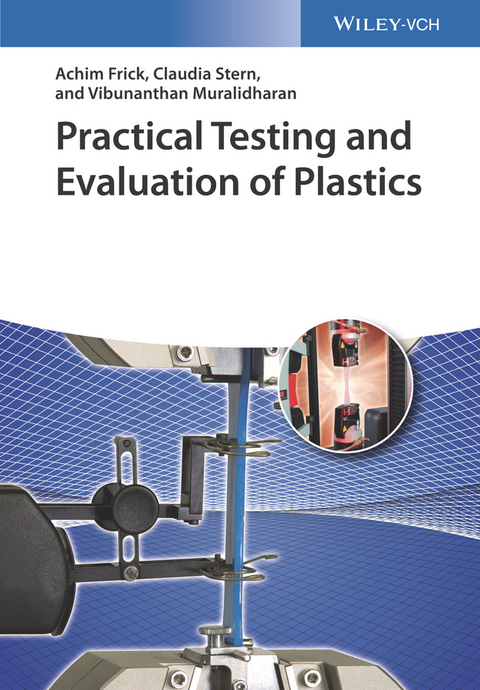
Practical Testing and Evaluation of Plastics (eBook)
Wiley-VCH Verlag GmbH & Co. KGaA
978-3-527-66733-8 (ISBN)
Written by experienced academics and industrial researchers and developers who know the problems of plastics engineers in their daily work - and the solutions - inside out, this book offers first-hand practical knowledge and intensive discussion. The book is aimed at industry, scientists and students involved in plastics and plastic engineering and aims to help them gain the necessary understanding of polymer materials and knowledge of practical testing and evaluation of plastics.
- Bedeutsam für die Industrie: Die Hersteller von Polymeren und Kunststoffen verzeichnen jährliche Wachstumsraten (ca. 5 % jährlich) und benötigen Informationen aus den Bereichen Charakterisierung und Qualitätssicherung.
- Bedarfsgerecht: Dieses Fachbuch wurde von erfahrenden Wissenschaftlern, Forschern und Entwicklern aus der Industrie geschrieben, die die alltäglichen Probleme von Kunststoffingenieuren genau kennen und Lösungen parat haben.
- Für Chemiker und Materialwissenschaftler aus der Industrie: Praxisorientiertes Wissen aus erster Hand und ausführliche Erläuterungen machen dieses Buch für Entwickler und Forscher aus der Industrie und dem Hochschulbereich zu einem nützlichen Nachschlagewerk.
- Informationen, die schwer zugänglich sind und Erkenntnisse aus der jüngsten Zeit: Dieses Fachbuch vereint Informationen, die in der Regel in der Primärliteratur an vielen Stellen auftauchen.
Achim Frick has obtained his academic degrees (MSc, PhD) from the University of Stuttgart, Germany. He spent several years in industry before taking up his present professorship at Aalen University. Professor Frick is Head of the Institute of Polymer Science and Processing (iPSP) and has authored more than eighty scientific papers and three book publications. Being also Head of the Polymer Engineering Transfer Center PETZ, he has served national and international industries with more than 400 material science reports. Since more than ten years he is also offering training courses to industry in polymer engineering subjects. Claudia Stern has obtained her PhD from University of Twente, The Netherlands. Before taking up her present position as technical director at Intercable GmbH, Italy, she spent about 12 years in industry. Starting from being a senior scientist in Research & Development in the field of polymer engineering, she successfully builts up a new innovative business unit at ElringKlinger Kunststofftechnik GmbH, which she led for several years and thus became general manager at Schlemmer Group. She has authored several scientific publications and three books. Vibunanthan Muralidharan obtained his Master of Science (M. Sc.) in Polymer Technology at the University of Aalen, Germany, after completing his Bachelor of Engineering (B. Eng.) in Mechanical Engineering in Chennai, India. He then went on to do research work in the field of polymer and rubber materials with a specialization on the dynamic behaviour of rubber materials, under the supervision of Prof. Dr.-Ing. Achim Frick for an extensive period of time. He presently holds the position of Testing and Process Optimization Engineer at Vorwerk Autotec GmbH in Wuppertal, Germany, where he is responsible for the testing and evaluation of various elastomer bushings and damping elements for automobiles.
1 Introduction to Plastics 1
1.1 Plastics 1
1.2 Structure and Behaviour of Plastics 5
1.3 Melting Polymers 12
1.4 Mechanical Behaviour of Polymers 15
1.5 Uniaxial Stress-Strain Behaviour 28
1.6 Resins 37
1.7 Material Selection 39
1.8 Processing of Polymers 40
2 Polymer Testing 45
2.1 Introduction 45
2.2 Objective of Polymer Testing 45
2.3 Sample Preparation and Test Procedure 48
2.4 Sample Extraction/Sampling 49
2.5 Types of Samples 50
2.6 Test Implementation/Operation/Accomplishment 51
2.7 Description of Test Results/Test Report 51
3 Identification of Polymers 53
3.1 Introduction 53
3.2 Density Measurement 53
3.3 Infrared Spectroscopy 58
4 Rheological Testing 65
4.1 Introduction 65
4.2 Rheometry 70
4.3 Viscometry 77
5 Mechanical Testing 87
5.1 Introduction 87
5.2 Quasi-Static Loading 88
5.3 Impact Loading 113
5.4 Long-Term Static Loading 120
5.5 Long-Term Dynamic Loading - Fatigue 126
6 Tribological Testing 133
6.1 Introduction 133
6.2 Sliding Behaviour 134
6.3 Friction Coe¿cient 135
6.4 Wear 136
7 Thermal Testing 139
7.1 Introduction 139
7.2 Tests Under Thermal Loading 141
7.3 Thermal Ageing Behaviour 144
7.4 Differential Scanning Calorimetry (DSC) 144
7.5 Dynamic Mechanical Analysis (DMA) 152
7.6 Thermogravimetric Analysis (TGA) 158
7.7 Thermomechanical Analysis (TMA) - Dilatometry 161
7.8 Calcination Test 164
7.9 Thermal Dimensional Stability 166
7.10 Heat De¿ection Temperature 169
8 Chemical Testing 173
8.1 Introduction 173
8.2 Chemical Resistance Investigation 173
8.3 Environmental Stress Cracking Resistance (ESCR) Investigation 174
9 Physical Testing 181
9.1 Introduction 181
9.2 Determination of Mass 181
9.3 Determination of Water Absorption 182
10 Geometrical Inspection 187
10.1 Introduction 187
10.2 Sizes and Tolerances 187
10.3 Processing and Post-processing Shrinkage 195
10.4 Warpage 197
11 Optical Testing Methods 199
11.1 Introduction 199
11.2 Visual Inspection 199
11.3 Light Microscope (LM) 201
11.4 Digital Microscope (DM) 207
11.5 Scanning Electron Beam Microscope (SEM) 208
11.6 Polarized Light Inspection 212
1 Introduction to Plastics 1
1.1 Plastics 1
1.2 Structure and Behaviour of Plastics 5
1.3 Melting Polymers 12
1.4 Mechanical Behaviour of Polymers 15
1.5 Uniaxial Stress-Strain Behaviour 28
1.6 Resins 37
1.7 Material Selection 39
1.8 Processing of Polymers 40
2 Polymer Testing 45
2.1 Introduction 45
2.2 Objective of Polymer Testing 45
2.3 Sample Preparation and Test Procedure 48
2.4 Sample Extraction/Sampling 49
2.5 Types of Samples 50
2.6 Test Implementation/Operation/Accomplishment 51
2.7 Description of Test Results/Test Report 51
3 Identi¿cation of Polymers 53
3.1 Introduction 53
3.2 Density Measurement 53
3.3 Infrared Spectroscopy 58
4 Rheological Testing 65
4.1 Introduction 65
4.2 Rheometry 70
4.3 Viscometry 77
5 Mechanical Testing 87
5.1 Introduction 87
5.2 Quasi-Static Loading 88
5.3 Impact Loading 113
5.4 Long-Term Static Loading 120
5.5 Long-Term Dynamic Loading - Fatigue 126
6 Tribological Testing 133
6.1 Introduction 133
6.2 Sliding Behaviour 134
6.3 Friction Coe¿cient 135
6.4 Wear 136
7 Thermal Testing 139
7.1 Introduction 139
7.2 Tests Under Thermal Loading 141
7.3 Thermal Ageing Behaviour 144
7.4 Di¿erential Scanning Calorimetry (DSC) 144
7.5 Dynamic Mechanical Analysis (DMA) 152
7.6 Thermogravimetric Analysis (TGA) 158
7.7 Thermomechanical Analysis (TMA) - Dilatometry 161
7.8 Calcination Test 164
7.9 Thermal Dimensional Stability 166
7.10 Heat De¿ection Temperature 169
8 Chemical Testing 173
8.1 Introduction 173
8.2 Chemical Resistance Investigation 173
8.3 Environmental Stress Cracking Resistance (ESCR) Investigation 174
9 Physical Testing 181
9.1 Introduction 181
9.2 Determination of Mass 181
9.3 Determination of Water Absorption 182
10 Geometrical Inspection 187
10.1 Introduction 187
10.2 Sizes and Tolerances 187
10.3 Processing and Post-processing Shrinkage 195
10.4 Warpage 197
11 Optical Testing Methods 199
11.1 Introduction 199
11.2 Visual Inspection 199
11.3 Light Microscope (LM) 201
11.4 Digital Microscope (DM) 207
11.5 Scanning Electron Beam Microscope (SEM) 208
11.6 Polarized Light Inspection 212
| Erscheint lt. Verlag | 20.11.2018 |
|---|---|
| Sprache | englisch |
| Themenwelt | Naturwissenschaften ► Chemie |
| Schlagworte | Achim Frick • Chemie • Chemistry • Claudia Stern • Industrial Chemistry • internal stresses • Kunststoff • Maschinenbau • materials characterization • Materials Science • Materialwissenschaften • mechanical engineering • Melting Polymers • orientation • Polymer processing • Polymer Science & Technology • Polymerverarbeitung • Polymerwissenschaft u. -technologie • Practical Evaluation and Testing of Plastics • Processing of polymers • quality control • Ricardo J. Zednik • Technische u. Industrielle Chemie • Typical Flaws • Warpage • Werkstoffprüfung |
| ISBN-10 | 3-527-66733-4 / 3527667334 |
| ISBN-13 | 978-3-527-66733-8 / 9783527667338 |
| Informationen gemäß Produktsicherheitsverordnung (GPSR) | |
| Haben Sie eine Frage zum Produkt? |
 EPUB (Adobe DRM)
Kopierschutz: Adobe-DRM
Adobe-DRM ist ein Kopierschutz, der das eBook vor Mißbrauch schützen soll. Dabei wird das eBook bereits beim Download auf Ihre persönliche Adobe-ID autorisiert. Lesen können Sie das eBook dann nur auf den Geräten, welche ebenfalls auf Ihre Adobe-ID registriert sind.
Details zum Adobe-DRM
Dateiformat: EPUB (Electronic Publication)
EPUB ist ein offener Standard für eBooks und eignet sich besonders zur Darstellung von Belletristik und Sachbüchern. Der Fließtext wird dynamisch an die Display- und Schriftgröße angepasst. Auch für mobile Lesegeräte ist EPUB daher gut geeignet.
Systemvoraussetzungen:
PC/Mac: Mit einem PC oder Mac können Sie dieses eBook lesen. Sie benötigen eine
eReader: Dieses eBook kann mit (fast) allen eBook-Readern gelesen werden. Mit dem amazon-Kindle ist es aber nicht kompatibel.
Smartphone/Tablet: Egal ob Apple oder Android, dieses eBook können Sie lesen. Sie benötigen eine
Geräteliste und zusätzliche Hinweise
Buying eBooks from abroad
For tax law reasons we can sell eBooks just within Germany and Switzerland. Regrettably we cannot fulfill eBook-orders from other countries.
aus dem Bereich