


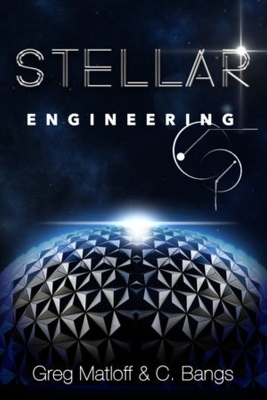
Stellar Engineering
Seiten
2019
Curtis Press (Verlag)
978-0-9934002-4-7 (ISBN)
Curtis Press (Verlag)
978-0-9934002-4-7 (ISBN)
- Titel nicht im Sortiment
- Artikel merken
Humans, mere newcomers in the vast galaxy, are already envisioning colossal space megastructures. Intriguing Kepler data—especially the mysterious dips in Tabby's Star—sparks debate about Stapledon/Dyson Spheres created by advanced civilizations, raising questions about potential alien habitats in our cosmic neighborhood.
In terms of the scale of the galaxy, both in space and time, we humans are new comers. Though we are newly on the scene, we are already thinking about how to create large structures in space.
Recently, analysis of data from one of the stars in the Kepler data set has led to speculation regarding huge artificial structures (called Stapledon/Dyson Spheres) constructed by advanced extraterrestrial civilizations. The NASA Kepler space observatory has been observing light curves of about 100,000 stars in the constellations of Cygnus and Lyre.
One star, popularly dubbed "Tabby's Star" after the first name of the astronomer leading one of the data reduction teams, shows intriguing periodic dips in its luminosity.
Stellar Engineering starts by considering terrestrial organisms and early humans, who have constructed, on their scale, megastructures, and continues with a history of the development of the stellar engineering concept. Kepler data on Tabby's Star is reviewed as is observational data on other possible Stapledon/Dyson Sphere candidates.
The possible applications of such enormous constructs are discussed, as well as the intriguing speculation that we might live in a Stapledon/Dyson swarm of alien space habitats within our Solar System's Kuiper Belt.
In terms of the scale of the galaxy, both in space and time, we humans are new comers. Though we are newly on the scene, we are already thinking about how to create large structures in space.
Recently, analysis of data from one of the stars in the Kepler data set has led to speculation regarding huge artificial structures (called Stapledon/Dyson Spheres) constructed by advanced extraterrestrial civilizations. The NASA Kepler space observatory has been observing light curves of about 100,000 stars in the constellations of Cygnus and Lyre.
One star, popularly dubbed "Tabby's Star" after the first name of the astronomer leading one of the data reduction teams, shows intriguing periodic dips in its luminosity.
Stellar Engineering starts by considering terrestrial organisms and early humans, who have constructed, on their scale, megastructures, and continues with a history of the development of the stellar engineering concept. Kepler data on Tabby's Star is reviewed as is observational data on other possible Stapledon/Dyson Sphere candidates.
The possible applications of such enormous constructs are discussed, as well as the intriguing speculation that we might live in a Stapledon/Dyson swarm of alien space habitats within our Solar System's Kuiper Belt.
| Erscheinungsdatum | 02.04.2019 |
|---|---|
| Illustrationen | C. Bangs |
| Sprache | englisch |
| Maße | 156 x 234 mm |
| Gewicht | 400 g |
| Themenwelt | Sachbuch/Ratgeber ► Natur / Technik ► Weltraum / Astronomie |
| Naturwissenschaften ► Physik / Astronomie ► Astronomie / Astrophysik | |
| ISBN-10 | 0-9934002-4-8 / 0993400248 |
| ISBN-13 | 978-0-9934002-4-7 / 9780993400247 |
| Zustand | Neuware |
| Informationen gemäß Produktsicherheitsverordnung (GPSR) | |
| Haben Sie eine Frage zum Produkt? |
Mehr entdecken
aus dem Bereich


aus dem Bereich
das aktuelle Raumfahrt-Jahrbuch mit allen Starts
Buch | Softcover (2025)
Verein zur Förderung der Raumfahrt (Verlag)
CHF 27,85
die Suche nach der Urkraft des Universums
Buch | Hardcover (2023)
Klett-Cotta (Verlag)
CHF 34,95


