Quick Cattle and Dying Wishes (eBook)
264 Seiten
Cornell University Press (Verlag)
978-1-5017-1509-9 (ISBN)
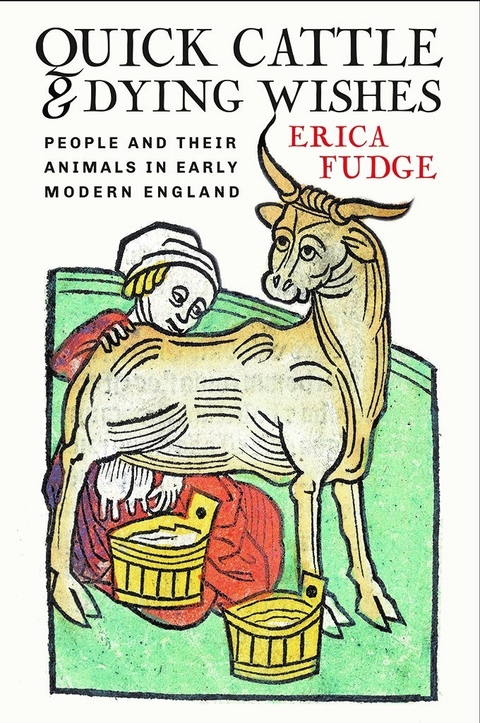
What was the life of a cow in early modern England like? What would it be like to milk that same cow, day-in, day-out, for over a decade? How did people feel about and toward the animals that they worked with, tended, and often killed? With these questions, Erica Fudge begins her investigation into a lost aspect of early modern life: the importance of the day-to-day relationships between humans and the animals with whom they worked. Such animals are and always have been, Fudge reminds us, more than simply stock; they are sentient beings with whom one must negotiate. It is the nature, meaning, and value of these negotiations that this study attempts to recover.
By focusing on interactions between people and their livestock, Quick Cattle and Dying Wishes restores animals to the central place they once had in the domestic worlds of early modern England. In addition, the book uses human relationships with animals—as revealed through agricultural manuals, literary sources, and a unique dataset of over four thousand wills—to rethink what quick cattle meant to a predominantly rural population and how relationships with them changed as more and more people moved to the city. Offering a fuller understanding of both human and animal life in this period, Fudge innovatively expands the scope of early modern studies and how we think about the role that animals played in past cultures more broadly.
Erica Fudge is Professor of English Studies at the University of Strathclyde and Director of the British Animal Studies Network. She is the author of Brutal Reasoning and Perceiving Animals and editor of Renaissance Beasts.
Preface: Looking for Animals in Early Modern England: A Note on the Evidence
Acknowledgments
Introduction: Goldelocks and the Three Bequests
1. Counting Chickens in Early Modern Essex: Writing Animals into Early Modern Wills
2. The Fuller Will and the Agricultural Worlds of People and Animals
3. Named Partners and Other Rugs: Animals as Co-Workers in Early Modern England
4. Other Worldly Matter: The Immaterial Value of Quick Cattle
5. Less than Kind: The Transient Animals of Early Modern London
Afterword: Bovine Nostalgia
Bibliography of Primary Sources
Index
| Erscheint lt. Verlag | 15.9.2018 |
|---|---|
| Verlagsort | Ithaca |
| Sprache | englisch |
| Maße | 150 x 150 mm |
| Themenwelt | Geschichte ► Allgemeine Geschichte ► Neuzeit (bis 1918) |
| Naturwissenschaften ► Biologie ► Zoologie | |
| Schlagworte | living and working with animals, early modern life, negotiated interaction with livestock, impact of urbanization on human-animal relations, immaterial meaning of the natural world |
| ISBN-10 | 1-5017-1509-7 / 1501715097 |
| ISBN-13 | 978-1-5017-1509-9 / 9781501715099 |
| Informationen gemäß Produktsicherheitsverordnung (GPSR) | |
| Haben Sie eine Frage zum Produkt? |
 EPUB (Adobe DRM)
Kopierschutz: Adobe-DRM
Adobe-DRM ist ein Kopierschutz, der das eBook vor Mißbrauch schützen soll. Dabei wird das eBook bereits beim Download auf Ihre persönliche Adobe-ID autorisiert. Lesen können Sie das eBook dann nur auf den Geräten, welche ebenfalls auf Ihre Adobe-ID registriert sind.
Details zum Adobe-DRM
Dateiformat: EPUB (Electronic Publication)
EPUB ist ein offener Standard für eBooks und eignet sich besonders zur Darstellung von Belletristik und Sachbüchern. Der Fließtext wird dynamisch an die Display- und Schriftgröße angepasst. Auch für mobile Lesegeräte ist EPUB daher gut geeignet.
Systemvoraussetzungen:
PC/Mac: Mit einem PC oder Mac können Sie dieses eBook lesen. Sie benötigen eine
eReader: Dieses eBook kann mit (fast) allen eBook-Readern gelesen werden. Mit dem amazon-Kindle ist es aber nicht kompatibel.
Smartphone/Tablet: Egal ob Apple oder Android, dieses eBook können Sie lesen. Sie benötigen eine
Geräteliste und zusätzliche Hinweise
Buying eBooks from abroad
For tax law reasons we can sell eBooks just within Germany and Switzerland. Regrettably we cannot fulfill eBook-orders from other countries.
aus dem Bereich