


Laboratories of Faith (eBook)
312 Seiten
Cornell University Press (Verlag)
978-0-8014-6171-2 (ISBN)

An evocative history of alternative religious practices in France in the second half of the nineteenth and beginning of the twentieth centuries that tells the interconnected stories of three movements: Mesmerism, Spiritism, and Occultism.
At a fascinating moment in French intellectual history, an interest in matters occult was not equivalent to a rejection of scientific thought; participants in séances and magic rituals were seekers after experimental data as well as spiritual truth. A young astronomy student wrote of his quest: "I am not in the presence or under the influence of any evil spirit: I study Spiritism as I study mathematics." He did not see himself as an ecstatic visionary but rather as a sober observer. For him, the darkened room of occult practice was as much laboratory as church.
In an evocative history of alternative religious practices in France in the second half of the nineteenth and beginning of the twentieth centuries, John Warne Monroe tells the interconnected stories of three movements—Mesmerism, Spiritism, and Occultism. Adherents of these groups, Monroe reveals, attempted to "modernize" faith by providing empirical support for metaphysical concepts. Instead of trusting theological speculation about the nature of the soul, these believers attempted to gather tangible evidence through Mesmeric experiments, séances, and ceremonial magic. While few French people were active Mesmerists, Spiritists, or Occultists, large segments of the educated general public were familiar with these movements and often regarded them as fascinating expressions of the "modern condition," a notable contrast to the Catholicism and secular materialism that prevailed in their culture.
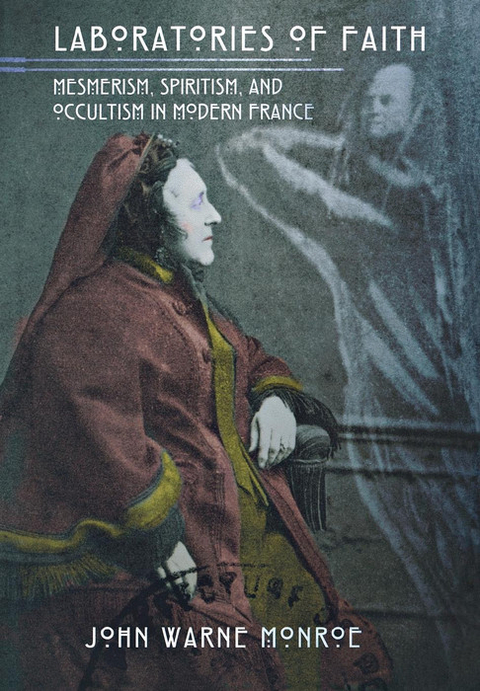
Featuring eerie spirit photographs, amusing Daumier lithographs, and a posthumous autograph from Voltaire, as well as extensive documentary evidence, Laboratories of Faith gives readers a sense of what being in a séance or a secret-society ritual might actually have felt like and why these feelings attracted participants. While they never achieved the transformation of human consciousness for which they strove, these thinkers and believers nevertheless pioneered a way of "being religious" that has become an enduring part of the Western cultural vocabulary.
At a fascinating moment in French intellectual history, an interest in matters occult was not equivalent to a rejection of scientific thought; participants in séances and magic rituals were seekers after experimental data as well as spiritual truth. A young astronomy student wrote of his quest: "I am not in the presence or under the influence of any evil spirit: I study Spiritism as I study mathematics." He did not see himself as an ecstatic visionary but rather as a sober observer. For him, the darkened room of occult practice was as much laboratory as church.
In an evocative history of alternative religious practices in France in the second half of the nineteenth and beginning of the twentieth centuries, John Warne Monroe tells the interconnected stories of three movements—Mesmerism, Spiritism, and Occultism. Adherents of these groups, Monroe reveals, attempted to "modernize" faith by providing empirical support for metaphysical concepts. Instead of trusting theological speculation about the nature of the soul, these believers attempted to gather tangible evidence through Mesmeric experiments, séances, and ceremonial magic.
While few French people were active Mesmerists, Spiritists, or Occultists, large segments of the educated general public were familiar with these movements and often regarded them as fascinating expressions of the "modern condition," a notable contrast to the Catholicism and secular materialism that prevailed in their culture. Featuring eerie spirit photographs, amusing Daumier lithographs, and a posthumous autograph from Voltaire, as well as extensive documentary evidence, Laboratories of Faith gives readers a sense of what being in a séance or a secret-society ritual might actually have felt like and why these feelings attracted participants. While they never achieved the transformation of human consciousness for which they strove, these thinkers and believers nevertheless pioneered a way of "being religious" that has become an enduring part of the Western cultural vocabulary.
John Warne Monroe is Assistant Professor of History at Iowa State University. He is the winner of Yale University's Theron Rockwell Field Prize.
| Erscheint lt. Verlag | 5.7.2018 |
|---|---|
| Verlagsort | Ithaca |
| Sprache | englisch |
| Maße | 160 x 160 mm |
| Gewicht | 28 g |
| Themenwelt | Sachbuch/Ratgeber ► Gesundheit / Leben / Psychologie ► Esoterik / Spiritualität |
| Geisteswissenschaften ► Geschichte ► Regional- / Ländergeschichte | |
| Geschichte ► Teilgebiete der Geschichte ► Religionsgeschichte | |
| Geisteswissenschaften ► Religion / Theologie ► Weitere Religionen | |
| Naturwissenschaften | |
| Schlagworte | African Art, Primitive Art/Tribal Art, Paris, Modernism, Empire/Colonialism, Black Diaspora |
| ISBN-10 | 0-8014-6171-5 / 0801461715 |
| ISBN-13 | 978-0-8014-6171-2 / 9780801461712 |
| Informationen gemäß Produktsicherheitsverordnung (GPSR) | |
| Haben Sie eine Frage zum Produkt? |
 PDF (Adobe DRM)
Kopierschutz: Adobe-DRM
Adobe-DRM ist ein Kopierschutz, der das eBook vor Mißbrauch schützen soll. Dabei wird das eBook bereits beim Download auf Ihre persönliche Adobe-ID autorisiert. Lesen können Sie das eBook dann nur auf den Geräten, welche ebenfalls auf Ihre Adobe-ID registriert sind.
Details zum Adobe-DRM
Dateiformat: PDF (Portable Document Format)
Mit einem festen Seitenlayout eignet sich die PDF besonders für Fachbücher mit Spalten, Tabellen und Abbildungen. Eine PDF kann auf fast allen Geräten angezeigt werden, ist aber für kleine Displays (Smartphone, eReader) nur eingeschränkt geeignet.
Systemvoraussetzungen:
PC/Mac: Mit einem PC oder Mac können Sie dieses eBook lesen. Sie benötigen eine
eReader: Dieses eBook kann mit (fast) allen eBook-Readern gelesen werden. Mit dem amazon-Kindle ist es aber nicht kompatibel.
Smartphone/Tablet: Egal ob Apple oder Android, dieses eBook können Sie lesen. Sie benötigen eine
Geräteliste und zusätzliche Hinweise
Buying eBooks from abroad
For tax law reasons we can sell eBooks just within Germany and Switzerland. Regrettably we cannot fulfill eBook-orders from other countries.


