
State Building and Late Development (eBook)
256 Seiten
Cornell University Press (Verlag)
978-1-5017-1733-8 (ISBN)
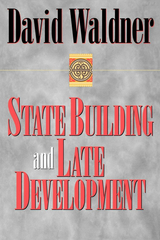
Why does state building sometimes promote economic growth and in other cases impede it? Through an analysis of political and economic development in four countries—Turkey, Syria, Korea, and Taiwan—this book explores the origins of political-economic...
Why does state building sometimes promote economic growth and in other cases impede it? Through an analysis of political and economic development in four countries-Turkey, Syria, Korea, and Taiwan-this book explores the origins of political-economic institutions and the mechanisms connecting them to economic outcomes. David Waldner extends our understanding of the political underpinnings of economic development by examining the origins of political coalitions on which states and their institutions depend. He first provides a political model of institutional change to analyze how elites build either cross-class or narrow coalitions, and he examines how these arrangements shape specific institutions: state-society relations, the nature of bureaucracy, fiscal structures, and patterns of economic intervention. He then links these institutions to economic outcomes through a bargaining model to explain why countries such as Korea and Taiwan have more effectively overcome the collective dilemmas that plague economic development than have others such as Turkey and Syria. The latter countries, he shows, lack institutional solutions to the problems that surround productivity growth. The first book to compare political and economic development in these two regions, State Building and Late Development draws on, and contributes to, arguments from political sociology and political economy. Based on a rigorous research design, the work offers both a finely drawn comparison of development and a compellingly argued analysis of the character and consequences of precocious Keynesianism, the implementation of Keynesian demand-stimulus policies in largely pre-industrial economies.
David Waldner is Assistant Professor in the Department of Government and Foreign Affairs at the University of Virginia.
| Erscheint lt. Verlag | 31.5.2018 |
|---|---|
| Verlagsort | Ithaca |
| Sprache | englisch |
| Maße | 160 x 160 mm |
| Themenwelt | Sachbuch/Ratgeber ► Beruf / Finanzen / Recht / Wirtschaft ► Wirtschaft |
| Naturwissenschaften | |
| Sozialwissenschaften ► Politik / Verwaltung ► Staat / Verwaltung | |
| Sozialwissenschaften ► Soziologie ► Spezielle Soziologien | |
| Wirtschaft ► Volkswirtschaftslehre ► Wirtschaftspolitik | |
| ISBN-10 | 1-5017-1733-2 / 1501717332 |
| ISBN-13 | 978-1-5017-1733-8 / 9781501717338 |
| Informationen gemäß Produktsicherheitsverordnung (GPSR) | |
| Haben Sie eine Frage zum Produkt? |
 PDF (Adobe DRM)
Kopierschutz: Adobe-DRM
Adobe-DRM ist ein Kopierschutz, der das eBook vor Mißbrauch schützen soll. Dabei wird das eBook bereits beim Download auf Ihre persönliche Adobe-ID autorisiert. Lesen können Sie das eBook dann nur auf den Geräten, welche ebenfalls auf Ihre Adobe-ID registriert sind.
Details zum Adobe-DRM
Dateiformat: PDF (Portable Document Format)
Mit einem festen Seitenlayout eignet sich die PDF besonders für Fachbücher mit Spalten, Tabellen und Abbildungen. Eine PDF kann auf fast allen Geräten angezeigt werden, ist aber für kleine Displays (Smartphone, eReader) nur eingeschränkt geeignet.
Systemvoraussetzungen:
PC/Mac: Mit einem PC oder Mac können Sie dieses eBook lesen. Sie benötigen eine
eReader: Dieses eBook kann mit (fast) allen eBook-Readern gelesen werden. Mit dem amazon-Kindle ist es aber nicht kompatibel.
Smartphone/Tablet: Egal ob Apple oder Android, dieses eBook können Sie lesen. Sie benötigen eine
Geräteliste und zusätzliche Hinweise
Buying eBooks from abroad
For tax law reasons we can sell eBooks just within Germany and Switzerland. Regrettably we cannot fulfill eBook-orders from other countries.
aus dem Bereich