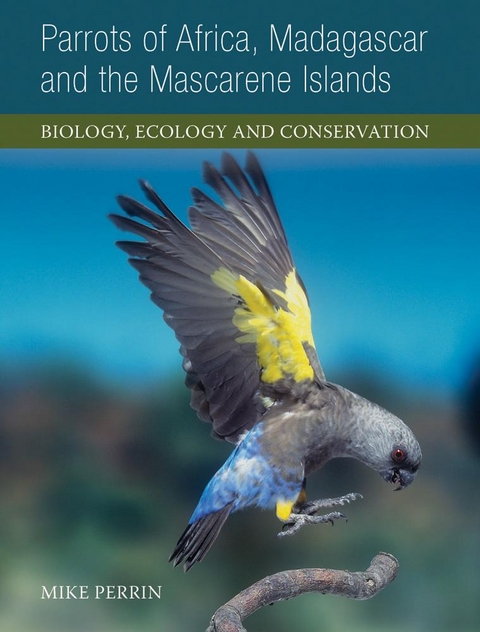
Parrots of Africa, Madagascar and the Mascarene Islands (eBook)
638 Seiten
Wits University Press (Verlag)
978-1-86814-591-1 (ISBN)
Parrots' colour and charisma, coupled with the fact that they mimic human speech, make them fascinating to many people. They are ancient birds with unique bill and foot structures that enable them to forage on fruits in the canopy of forest trees as well as on seeds in grasslands. Because they depend on fruits and seeds all year round, most species are confined to the tropics or sub-tropics, where the world's biodiversity is at its greatest. There are over three hundred species of parrots, of which more than one hundred are recognised as rare, endangered, vulnerable or threatened with extinction. Parrots are largely distributed in tropical areas of developing countries where economies are weak and uncertain, and where there is great dependence on the exploitation of natural resources, particularly hard wood evergreen forests, which are preferred parrot habitats. Unfortunately, high levels of corruption are common to these regions, with much illegal trade in animals and little or no law enforcement. Collectors of parrots in the first world pay huge sums for rare parrots. However, research, education and conservation actions are greatly reducing illegal trade in African parrots. This book provides complete coverage of all aspects of the biology of extant African, Malagasy and Mascarene parrots, and reviews our knowledge of extinct and fossil parrots from the region. Particular themes include the behavioural and ecological characteristics of parrots, their species characteristics and conservation biology. Current concepts in avian and conservation biology are also discussed. Parrots of Africa, Madagascar and the Mascarene Islands is aimed at ornithologists, conservation biologists, avian ecologists, academics, bird watchers and parrot fans alike. It is well illustrated, with high quality original photographs, and includes distribution maps, figures and tables.
Chapter 1. Introduction
What is a parrot?
Plumage
Social behaviour
Habits
Activity
Roosting
Movements
Habitat
The parrots of Africa
Phylogeny, systematics and taxonomy of parrots
Chapter 2. Conservation biology
Ignorance about the survival of Africa’s parrots
Risk of extinction
Status and conservation. an introduction
Deforestation. a crucial issue
Effect of nest poaching on the viability of populations of wild parrots
Poaching, habitat destruction and conservation strategies
Trade figures for African parrots
Conservation status in detail
Conservation through education
Chapter 3. Systematics
Evolutionary history (phylogeny)
Not the missing link
The fossil history of parrots
The extinct parrots of the Mascarene Islands
Systematics and evolution of the genus Agapornis
Molecular systematics of some African parrots
Chapter 4. Biogeography and niche separation
Avian community structures in Africa
Zoogeography
Ecological separation of African parrots and lovebirds
Why is the parrot family so rich in species?
Chapter 5. Intelligence, communication and behaviour
Intelligence
Vocal communication
Behaviour
Chapter 6. Breeding biology
Flocking
Helpers
Cooperative breeding
Clutch size and asynchronous hatching
Competition for nest cavities by lovebirds
Nesting biology of the Black-cheeked Lovebird
Chapter 7. Diet and metabolism
Food and feeding
Metabolism
Chapter 8. Case study – the Cape Parrot
Needs and actions
Distribution and origin
Study sites
Numbers
Activity and abundance
Feeding biology
Breeding biology
Vocalisations
Behaviour
Conservation
Taxonomic status
Chapter 9. Trade in African Parrots
Sustainable harvesting
Modelling markets for African parrots
Trade in African Grey Parrots
Trade in Fischer’s Lovebirds
Trade in Madagascan parrots
Chapter 10. African Parrot conservation
Parrots and humans
The IUCN Parrot Action Plan
Applying the plan to Africa
CITES and parrots in international trade
The Parrot Species of Africa
Keys to the genera and species of parrots of Africa and adjace-nt islands
IUCN categories
Chapter 11. Long-tailed and fossil Parrots
Order Psittaciformes (Parrots)
Family Psittacidae (African and South American parrots)
Subfamily Psittacinae (African parrots)
Family Psittrichasidae
Subfamily Coracopseinae
Family Psittaculidae
Subfamily Psittaculinae
Chapter 12. True Parrots
Order Psittaciformes (Parrots)
Family Psittacidae (African and South American parrots)
Subfamily Psittacinae (African parrots)
Chapter 13. Lovebirds
Order Psittaciformes (Parrots)
Family Psittaculidae (Parrots, cockatoos, lories and lorikeets)
Subfamily Agapornithidae (Lovebirds, hanging parrots and ‘mountain parakeets’)
Chapter 14. Field techniques in Parrot research
Field marks and field guides
Recording bird song in the field
Keeping field notes
Ringing wild parrots
Measuring and weighing birds
Field censusing
Species lists
Common and scientific names of birds
Common and scientific names of parrots
Common and scientific names of vertebrates other than birds
Scientific names of invertebrates
Common and scientific names of plants
| Erscheint lt. Verlag | 1.12.2012 |
|---|---|
| Verlagsort | Johannesburg |
| Sprache | englisch |
| Themenwelt | Sachbuch/Ratgeber ► Natur / Technik |
| Naturwissenschaften ► Biologie ► Ökologie / Naturschutz | |
| Naturwissenschaften ► Biologie ► Zoologie | |
| ISBN-10 | 1-86814-591-3 / 1868145913 |
| ISBN-13 | 978-1-86814-591-1 / 9781868145911 |
| Informationen gemäß Produktsicherheitsverordnung (GPSR) | |
| Haben Sie eine Frage zum Produkt? |
 PDF (Adobe DRM)
Kopierschutz: Adobe-DRM
Adobe-DRM ist ein Kopierschutz, der das eBook vor Mißbrauch schützen soll. Dabei wird das eBook bereits beim Download auf Ihre persönliche Adobe-ID autorisiert. Lesen können Sie das eBook dann nur auf den Geräten, welche ebenfalls auf Ihre Adobe-ID registriert sind.
Details zum Adobe-DRM
Dateiformat: PDF (Portable Document Format)
Mit einem festen Seitenlayout eignet sich die PDF besonders für Fachbücher mit Spalten, Tabellen und Abbildungen. Eine PDF kann auf fast allen Geräten angezeigt werden, ist aber für kleine Displays (Smartphone, eReader) nur eingeschränkt geeignet.
Systemvoraussetzungen:
PC/Mac: Mit einem PC oder Mac können Sie dieses eBook lesen. Sie benötigen eine
eReader: Dieses eBook kann mit (fast) allen eBook-Readern gelesen werden. Mit dem amazon-Kindle ist es aber nicht kompatibel.
Smartphone/Tablet: Egal ob Apple oder Android, dieses eBook können Sie lesen. Sie benötigen eine
Geräteliste und zusätzliche Hinweise
Buying eBooks from abroad
For tax law reasons we can sell eBooks just within Germany and Switzerland. Regrettably we cannot fulfill eBook-orders from other countries.
aus dem Bereich