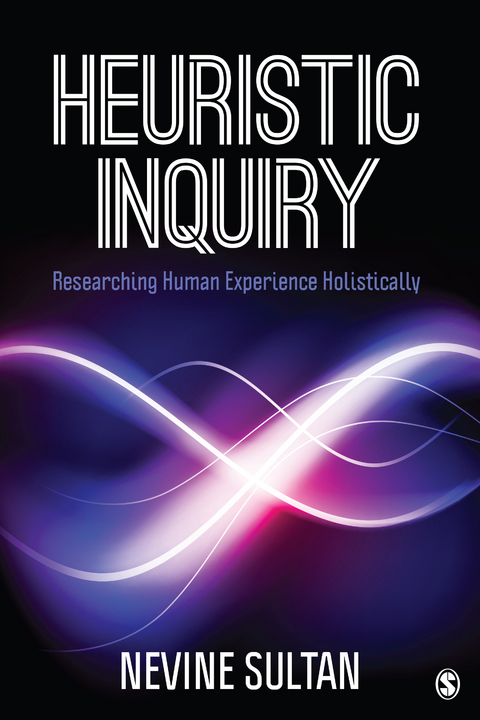
Heuristic Inquiry (eBook)
320 Seiten
Sage Publications, Inc (Verlag)
978-1-5063-5550-4 (ISBN)
Preface
Acknowledgments
About the Author
Chapter 1: What Is Heuristic Inquiry, Anyway?
A Brief Recent History
The Purpose of Heuristic Inquiry
Essential Feature
• Exercise 1.1. Sensing Into and Expressing a Rough Understanding of Heuristic Inquiry
Processes and Phases
Limitations of Heuristic Inquiry
Closing Reflections
Chapter 2: Locating Heuristic Inquiry Within Contemporary Qualitative Research
Relationship to Phenomenology
Bricolaging with Similar Qualitative Approaches
Grounded Theory
Essential and Distinguishing Features
Bricolaging Grounded Theory With Heuristic Inquiry
Narrative Research
Essential and Distinguishing Features
Bricolaging Narrative Research With Heuristic Inquiry
Feminist Research
Essential and Distinguishing Features
Bricolaging Feminist Research With Heuristic Inquiry
Closing Reflections
• Exercise 2.1. Exploring the Labyrinth
Chapter 3: Philosophical and Theoretical Foundations of Heuristic Inquiry
Why Do We Learn About Theory?
Heuristic Inquiry as an Empirical Process
• Exercise 3.1. Exploring the Subjectivity8Objectivity Continuum
Heuristic Inquiry as Qualitative Research
Heuristic Inquiry as Social Constructivism
Ontological Assumptions
Epistemological Assumptions
Axiological Assumptions
Methodological Assumptions
Rhetorical Assumptions
Heuristic Inquiry as “Phenomenologically Aligned”
Philosophers Whose Work Inspired Heuristic Inquiry
Edmund Husserl
Martin Buber
Carl Rogers
Abraham Maslow
Michael Polanyi
Eugene Gendlin
Maurice Merleau-Ponty
Closing Reflections
• Exercise 3.2. Exploring Other Ways of Being and of Knowing
Chapter 4: Heuristic Processes and Phases
The Seven Processes of Heuristic Inquiry
Identifying With the Focus of Inquiry
• Exercise 4.1. An Empty Chair Experiment to Facilitate Identifying With the Focus of Inquiry
Self-Dialogue
Tacit Knowing
Intuition
Indwelling
Focusing
The Internal Frame of Reference
• Exercise 4.2. Six-Step Focusing Exercise to Clear an Inner Space
The Six Phases of Heuristic Inquiry
Initial Engagement
Immersion
Incubation
Illumination
Explication
Creative Synthesis
The Heuristic Phases in Action
Maintaining a Heuristic Attitude During the Research Journey
• Exercise 4.3. Needs Self-Assessment Exercise
Closing Reflections
Chapter 5: Heuristic Research Design
Becoming Aware of a Topic and Formulating the Research Question(s)
Conducting the Literature Review
Timing Your Literature Review
Reviewing the Literature
Preparing for the Study
Writing a Heuristic-Friendly IRB Proposal
Creating a Set of Guidelines for the Study
Creating Generic Content and Forms
Selecting, Inviting, and Securing Co-Researchers
General Sampling Considerations
Sample Size
Building Rapport and Trust
Closing Reflections
Chapter 6: Heuristic Data Collection, Organization, and Analysis
Data Collection
Interviews
Preparing for the Interviews
Embodied Relational Interviewing
Disruptions in Flow
Time and Structure Considerations
Where and How
Researcher and Co-Researcher Artifacts
Researcher Journals
Winding Down Data Collection
Data Organization and Management
Immersion8Incubation8Reflexivity
Creating Verbatim Transcripts
Data Analysis: Theme Illumination and Identification
Following Clear Procedures
Honoring Content and Context
Deciphering Potential Themes
Organizing Themes According to Research Questions
Maintaining Discipline
Data Analysis: Theme Explication
Individual Depictions
Composite Depictions
Exemplary Portraits
Creative Synthesis
Closing Reflections
Chapter 7: Relationality, Reflexivity, and Meaning-Making
Relationality
Shared Experiential Learning
Connecting, Disconnecting, and Reconnecting
Empathy, Resonance, and Intersubjectivity
Honoring Difference and Conflict
Negotiating Power and Privilege
Advancing Empowerment, Agency, and Social Justice
Reflexivity
Approaching Reflexivity Holistically
Evaluating Values, Beliefs, Biases, and Attitudes
• Exercise 7.1. Exploring Our Own and Others’ Values
Locating Oneself Within the Research Process
Demystifying the Role of the Researcher
Using the Journal as a Reflexive Tool
Meaning-Making
• Exercise 7.2. Exploring a Personal Dilemma Using the Reflexive Journal
Closing Reflections
Chapter 8: Evaluating the Research: A Collaborative Process
A Primer on Heuristic Evaluation
Defining Rigor and Trustworthiness/Goodness
Evaluation Criteria
Credibility
Transferability
Dependability
Confirmability
Evaluation Strategies
Evaluating the Integrity of Your Heuristic Study
Heuristic Evaluation as a Shared Experience
The Importance of Reflexive Leadership in Evaluation
Closing Reflections
Chapter 9: Writing a Living Manuscript: An Embodied Relational Approach
Components of a Heuristic Manuscript
Title
Abstract
Keywords
Introduction and Clear Articulation of Topic and Research Questions
Theoretical Framework
Rationale for the Study
Comprehensive but Concise Literature Review
Method
Co-Researchers
Materials and Procedure
Data Collection and Analysis
Findings
Discussion
Limitations
Conclusions and Future Directions
Embodied Relational Writing: Balancing Rigor With Intriguing Writing Style
• Exercise 9.1. Experimenting With Embodied Relational Writing
Promoting Social Justice, Action, and Transformation
Writing a Publishable Heuristic Manuscript
Closing Reflections
Chapter 10: Ethics of Heuristic Research
Understanding Ethics
Core Ethical Principles and Codes
Facets of a Heuristic Study That May Prompt Ethical Concerns
Informed Consent
Research Methodology and Design
Relational Boundaries With Co-Researchers
Transparency
Researcher Competence
Addressing Emergent Ethical Dilemmas
Consulting Discipline-Related Ethical Codes
Using an Ethical Decision-Making Model
Engaging Researcher Reflexivity
• Exercise 10.1. Exploring and Addressing Emergent Ethical Dilemmas in Heuristic Research
The Perils of Researching Sensitive Topics: Maintaining Researcher Well-Being
Closing Reflections
Chapter 11: Universal Applications of Heuristic Inquiry: Bridging Research and Living Experience
Using Heuristic Inquiry Formally in Various Disciplines
Education
Political Science and Government
Health Care
Conflict Transformation
Counseling and Psychotherapy
Engaging Heuristic Inquiry Informally
Closing Reflections
Chapter 12: An Ending8Beginning
Appendices
Appendix A: Sample Cover/Invitation Letter
Appendix B: Sample Demographic Information Form
Appendix C: Sample Informed Consent Form
Appendix D: Sample Instructions for Interview Meeting
Appendix E: Sample Semi-Structured Interview Protocol
Appendix F: Sample Semi-Structured Interview Protocol With Examples
Appendix G: Preparing for and Recording Interviews (Sample)
Appendix H: Open-Ended Relational Probing and Prompting
Glossary
References
Index
| Verlagsort | Thousand Oaks |
|---|---|
| Sprache | englisch |
| Themenwelt | Naturwissenschaften |
| Sozialwissenschaften ► Soziologie ► Empirische Sozialforschung | |
| Schlagworte | Heuristic Inquiry: Researching Human Experience Holistically • Heuristic study • Methodology • Qualitative research • Research design |
| ISBN-10 | 1-5063-5550-1 / 1506355501 |
| ISBN-13 | 978-1-5063-5550-4 / 9781506355504 |
| Informationen gemäß Produktsicherheitsverordnung (GPSR) | |
| Haben Sie eine Frage zum Produkt? |
 EPUB (Adobe DRM)
Kopierschutz: Adobe-DRM
Adobe-DRM ist ein Kopierschutz, der das eBook vor Mißbrauch schützen soll. Dabei wird das eBook bereits beim Download auf Ihre persönliche Adobe-ID autorisiert. Lesen können Sie das eBook dann nur auf den Geräten, welche ebenfalls auf Ihre Adobe-ID registriert sind.
Details zum Adobe-DRM
Dateiformat: EPUB (Electronic Publication)
EPUB ist ein offener Standard für eBooks und eignet sich besonders zur Darstellung von Belletristik und Sachbüchern. Der Fließtext wird dynamisch an die Display- und Schriftgröße angepasst. Auch für mobile Lesegeräte ist EPUB daher gut geeignet.
Systemvoraussetzungen:
PC/Mac: Mit einem PC oder Mac können Sie dieses eBook lesen. Sie benötigen eine
eReader: Dieses eBook kann mit (fast) allen eBook-Readern gelesen werden. Mit dem amazon-Kindle ist es aber nicht kompatibel.
Smartphone/Tablet: Egal ob Apple oder Android, dieses eBook können Sie lesen. Sie benötigen eine
Geräteliste und zusätzliche Hinweise
Buying eBooks from abroad
For tax law reasons we can sell eBooks just within Germany and Switzerland. Regrettably we cannot fulfill eBook-orders from other countries.
aus dem Bereich