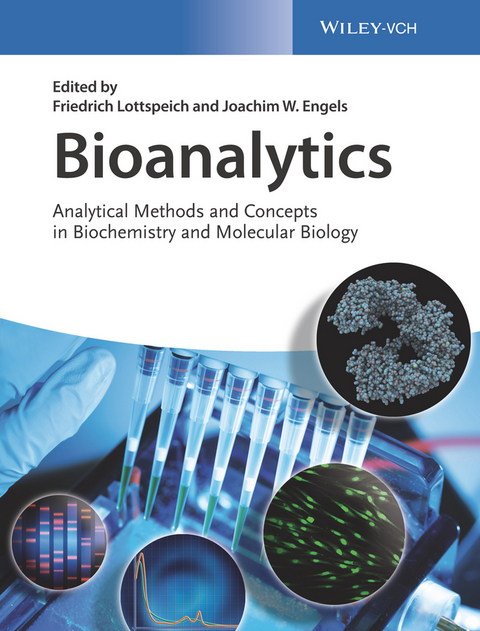
Bioanalytics (eBook)
Wiley-VCH Verlag GmbH & Co. KGaA
978-3-527-69444-0 (ISBN)

The presentation includes frequent cross-references in order to highlight the many connections between different techniques. The book provides a bird's eye view of the entire subject and enables the reader to select the most appropriate method for any given bioanalytical challenge. This makes the book a handy resource for students and researchers in setting up and evaluating experimental research. The depth of the analysis and the comprehensive nature of the coverage mean that there is also a great deal of new material, even for experienced experimentalists.
The following techniques are covered in detail:
- Purification and determination of proteins
- Measuring enzymatic activity
- Microcalorimetry
- Immunoassays, affinity chromatography and other immunological methods
- Cross-linking, cleavage, and chemical modification of proteins
- Light microscopy, electron microscopy and atomic force microscopy
- Chromatographic and electrophoretic techniques
- Protein sequence and composition analysis
- Mass spectrometry methods
- Measuring protein-protein interactions
- Biosensors
- NMR and EPR of biomolecules
- Electron microscopy and X-ray structure analysis
- Carbohydrate and lipid analysis
- Analysis of posttranslational modifications
- Isolation and determination of nucleic acids
- DNA hybridization techniques
- Polymerase chain reaction techniques
- Protein sequence and composition analysis
- DNA sequence and epigenetic modification analysis
- Analysis of protein-nucleic acid interactions
- Analysis of sequence data
- Proteomics, metabolomics, peptidomics and toponomics
- Chemical biology
Friedrich Lottspeich studied chemistry in Vienna and performed his dissertation at the Max-Planck Institute of Biochemistry in Munich. He received his PhD in biochemistry from the University of Vienna. After habilitation in Munich and Innsbruck, Friedrich Lottspeich was head of the protein analytics group at the Max-Planck Institute of Biochemistry in Munich until his retirement in 2013. His research focused on the development and application of methods for the analysis of proteins. Friedrich Lottspeich is author of more than 750 original publications and is a former President of EUPA and DGPF. He received several international prizes such as the ASAC Pregl Medal 2009, the DGMS Award Mass spectrometry in Life Sciences 2012, the AUPA Life Achievement Award 2014 and the EUPA Juan Pablo Albar Proteomics Award 2016.
Joachim W. Engels studied chemistry in Berlin and Munich and received a Ph.D. in Regensburg. He carried out post-doctoral studies at Stanford, did his habilitation in Konstanz and was a visiting scientist at the University of Colorado before joining the company Hoechst in 1981, where he developed gene synthesis. He is a full Professor of Biological Chemistry at the Goethe-University of Frankfurt since 1985. His interests range from chemical biology to bioanalytics. Joachim Engels has served as president of the International Society of Nucleotides and Nucleic Acids (2005/6), held several guest professorships at Chiba Institute, Japan (1989), Hokkaido University, Japan (1998) Shandong University, China (2004), Cady-Ayyad University, Morocco (2010), University Witwatersrand, South Africa (2012). He has authored more than 300 original publications. On retirement, he was chosen Professor Emeritus and he is now President of the Goethe-Wissenschaftliche Gesellschaft (Academy) in Frankfurt.
Friedrich Lottspeich studied chemistry in Vienna and performed his dissertation at the Max-Planck Institute of Biochemistry in Munich. He received his PhD in biochemistry from the University of Vienna. After habilitation in Munich and Innsbruck, Friedrich Lottspeich was head of the protein analytics group at the Max-Planck Institute of Biochemistry in Munich until his retirement in 2013. His research focused on the development and application of methods for the analysis of proteins. Friedrich Lottspeich is author of more than 750 original publications and is a former President of EUPA and DGPF. He received several international prizes such as the ASAC Pregl Medal 2009, the DGMS Award Mass spectrometry in Life Sciences 2012, the AUPA Life Achievement Award 2014 and the EUPA Juan Pablo Albar Proteomics Award 2016. Joachim W. Engels studied chemistry in Berlin and Munich and received a Ph.D. in Regensburg. He carried out post-doctoral studies at Stanford, did his habilitation in Konstanz and was a visiting scientist at the University of Colorado before joining the company Hoechst in 1981, where he developed gene synthesis. He is a full Professor of Biological Chemistry at the Goethe-University of Frankfurt since 1985. His interests range from chemical biology to bioanalytics. Joachim Engels has served as president of the International Society of Nucleotides and Nucleic Acids (2005/6), held several guest professorships at Chiba Institute, Japan (1989), Hokkaido University, Japan (1998) Shandong University, China (2004), Cady-Ayyad University, Morocco (2010), University Witwatersrand, South Africa (2012). He has authored more than 300 original publications. On retirement, he was chosen Professor Emeritus and he is now President of the Goethe-Wissenschaftliche Gesellschaft (Academy) in Frankfurt.
Bioanalytics: Analytical Methods and Concepts in Biochemistry and Molecular Biology 1
Table of Contents 7
Preface 17
Introduction: Bioanalytics - a Science in its Own Right 21
Part I: Protein Analytics 27
Chapter 1: Protein Purification 29
1.1 Properties of Proteins 29
1.2 Protein Localization and Purification Strategy 32
1.3 Homogenization and Cell Disruption 33
1.4 Precipitation 35
1.5 Centrifugation 37
1.5.1 Basic Principles 38
1.5.2 Centrifugation Techniques 38
1.6 Removal of Salts and Hydrophilic Contaminants 41
1.7 Concentration 43
1.8 Detergents and their Removal 44
1.8.1 Properties of Detergents 44
1.8.2 Removal of Detergents 46
1.9 Sample Preparation for Proteome Analysis 48
Further Reading 48
Chapter 2: Protein determination 49
2.1 Quantitative Determination by Staining Tests 51
2.1.1 Biuret Assay 52
2.1.2 Lowry Assay 52
2.1.3 Bicinchoninic Acid Assay (BCA Assay) 53
2.1.4 Bradford Assay 54
2.2 Spectroscopic Methods 54
2.2.1 Measurements in the UV Range 55
2.2.2 Fluorescence Method 57
2.3 Radioactive Labeling of Peptides and Proteins 57
2.3.1 Iodinations 59
Further Reading 59
Chapter 3: Enzyme Activity Testing 61
3.1 The Driving Force behind Chemical Reactions 61
3.2 Rate of Chemical Reactions 62
3.3 Catalysts 63
3.4 Enzymes as Catalysts 63
3.5 Rate of Enzyme-Controlled Reactions 64
3.6 Michaelis-Menten Theory 64
3.7 Determination of Km and Vmax 65
3.8 Inhibitors 66
3.8.1 Competitive Inhibitors 66
3.8.2 Non-competitive Inhibitors 67
3.9 Test System Set-up 67
3.9.1 Analysis of the Physiological Function 68
3.9.2 Selecting the Substrates 68
3.9.3 Detection System 68
3.9.4 Time Dependence 69
3.9.5 pH Value 69
3.9.6 Selecting the Buffer Substance and the Ionic Strength 69
3.9.7 Temperature 70
3.9.8 Substrate Concentration 70
3.9.9 Controls 71
Further Reading 71
Chapter 4: Microcalorimetry 73
4.1 Differential Scanning Calorimetry (DSC) 74
4.2 Isothermal Titration Calorimetry (ITC) 80
4.2.1 Ligand Binding to Proteins 80
4.2.2 Binding of Molecules to Membranes: Insertion and Peripheral Binding 84
4.3 Pressure Perturbation Calorimetry (PPC) 87
Further Reading 88
Chapter 5: Immunological Techniques 89
5.1 Antibodies 89
5.1.1 Antibodies and Immune Defense 89
5.1.2 Antibodies as Reagents 90
5.1.3 Properties of Antibodies 90
5.1.4 Functional Structure of IgG 92
5.1.5 Antigen Interaction at the Combining Site 93
5.1.6 Handling of Antibodies 94
5.2 Antigens 95
5.3 Antigen-Antibody Reaction 97
5.3.1 Immunoagglutination 98
5.3.2 Immunoprecipitation 99
5.3.3 Immune Binding 110
5.4 Complement Fixation 120
5.5 Methods in Cellular Immunology 121
5.6 Alteration of Biological Functions 123
5.7 Production of Antibodies 124
5.7.1 Types of Antibodies 124
5.7.2 New Antibody Techniques (Antibody Engineering) 125
5.7.3 Optimized Monoclonal Antibody Constructs with Effector Functions for Therapeutic Application 128
5.8 Outlook: Future Expansion of the Binding Concepts 132
Dedication 132
Further Reading 132
Chapter 6: Chemical Modification of Proteins and Protein Complexes 133
6.1 Chemical Modification of Protein Functional Groups 134
6.2 Modification as a Means to Introduce Reporter Groups 142
6.2.1 Investigation with Naturally Occurring Proteins 142
6.2.2 Investigation of Recombinant and Mutated Proteins 146
6.3 Protein Crosslinking for the Analysis of Protein Interaction 147
6.3.1 Bifunctional Reagents 147
6.3.2 Photoaffinity Labeling 147
Further Reading 155
Chapter 7: Spectroscopy 157
7.1 Physical Principles and Measuring Techniques 158
7.1.1 Physical Principles of Optical Spectroscopic Techniques 158
7.1.2 Interaction of Light with Matter 159
7.1.3 Absorption Measurement and the Lambert-Beer Law 166
7.1.4 Photometer 169
7.1.5 Time-Resolved Spectroscopy 170
7.2 UV/VIS/NIR Spectroscopy 172
7.2.1 Basic Principles 172
7.2.2 Chromoproteins 173
7.3 Fluorescence Spectroscopy 180
7.3.1 Basic Principles of Fluorescence Spectroscopy 180
7.3.2 Fluorescence: Emission and Action Spectra 182
7.3.3 Fluorescence Studies using Intrinsic and Extrinsic Probes 183
7.3.4 Green Fluorescent Protein (GFP) as a Unique Fluorescent Probe 184
7.3.5 Quantum Dots as Fluorescence Labels 185
7.3.6 Special Fluorescence Techniques: FRAP, FLIM, FCS, TIRF 186
7.3.7 Förster Resonance Energy Transfer (FRET) 186
7.3.8 Frequent Mistakes in Fluorescence Spectroscopy: ``The Seven Sins of Fluorescence Measurements´´ 187
7.4 Infrared Spectroscopy 189
7.4.1 Basic Principles of IR Spectroscopy 189
7.4.2 Molecular Vibrations 190
7.4.3 Technical aspects of Infrared Spectroscopy 191
7.4.4 Infrared Spectra of Proteins 194
7.5 Raman Spectroscopy 197
7.5.1 Basic Principles of Raman Spectroscopy 197
7.5.2 Raman Experiments 198
7.5.3 Resonance Raman Spectroscopy 199
7.6 Single Molecule Spectroscopy 200
7.7 Methods using Polarized Light 201
7.7.1 Linear Dichroism 201
7.7.2 Optical Rotation Dispersion and Circular Dichroism 204
Further Reading 206
Chapter 8: Light Microscopy Techniques - Imaging 207
8.1 Steps on the Road to Microscopy - from Simple Lenses to High Resolution Microscopes 207
8.2 Modern Applications 208
8.3 Basic Physical Principles 209
8.4 Detection Methods 215
8.5 Sample Preparation 221
8.6 Special Fluorescence Microscopic Analysis 223
Further Reading 231
Chapter 9: Cleavage of Proteins 233
9.1 Proteolytic Enzymes 233
9.2 Strategy 234
9.3 Denaturation of Proteins 235
9.4 Cleavage of Disulfide Bonds and Alkylation 235
9.5 Enzymatic Fragmentation 236
9.5.1 Proteases 236
9.5.2 Conditions for Proteolysis 241
9.6 Chemical Fragmentation 242
9.7 Summary 243
Further Reading 244
Chapter 10: Chromatographic Separation Methods 245
10.1 Instrumentation 245
10.2 Fundamental Terms and Concepts in Chromatography 246
10.3 Biophysical Properties of Peptides and Proteins 250
10.4 Chromatographic Separation Modes for Peptides and Proteins 251
10.4.1 High-Performance Size Exclusion Chromatography 253
10.4.2 High-Performance Reversed-Phase Chromatography (HP-RPC) 253
10.4.3 High-Performance Normal-Phase Chromatography (HP-NPC) 254
10.4.4 High-Performance Hydrophilic Interaction Chromatography (HP-HILIC) 255
10.4.5 High-Performance Aqueous Normal Phase Chromatography (HP-ANPC) 256
10.4.6 High-Performance Hydrophobic Interaction Chromatography (HP-HIC) 256
10.4.7 High-Performance Ion Exchange Chromatography (HP-IEX) 258
10.4.8 High-Performance Affinity Chromatography (HP-AC) 259
10.5 Method Development from Analytical to Preparative Scale Illustrated for HP-RPC 260
10.5.1 Development of an Analytical Method 260
10.5.2 Scaling up to Preparative Chromatography 262
10.5.3 Fractionation 263
10.5.4 Analysis of Fractionations 264
10.6 Multidimensional HPLC 264
10.6.1 Purification of Peptides and Proteins by MD-HPLC Methods 264
10.6.2 Fractionation of Complex Peptide and Protein Mixtures by MD-HPLC 265
10.6.3 Strategies for MD-HPLC Methods 265
10.6.4 Design of an Effective MD-HPLC Scheme 266
10.7 Final Remarks 268
Further Reading 268
Chapter 11: Electrophoretic Techniques 269
11.1 Historical Review 270
11.2 Theoretical Fundamentals 271
11.3 Equipment and Procedures of Gel Electrophoreses 274
11.3.1 Sample Preparation 275
11.3.2 Gel Media for Electrophoresis 276
11.3.3 Detection and Quantification of the Separated Proteins 277
11.3.4 Zone Electrophoresis 279
11.3.5 Porosity Gradient Gels 280
11.3.6 Buffer Systems 281
11.3.7 Disc Electrophoresis 281
11.3.8 Acidic Native Electrophoresis 283
11.3.9 SDS Polyacrylamide Gel Electrophoresis 283
11.3.10 Cationic Detergent Electrophoresis 284
11.3.11 Blue Native Polyacrylamide Gel Electrophoresis 285
11.3.12 Isoelectric Focusing 285
11.4 Preparative Techniques 289
11.4.1 Electroelution from Gels 289
11.4.2 Preparative Zone Electrophoresis 290
11.4.3 Preparative Isoelectric Focusing 291
11.5 Free Flow Electrophoresis 292
11.6 High-Resolution Two-Dimensional Electrophoresis 293
11.6.1 Sample Preparation 294
11.6.2 Prefractionation 294
11.6.3 First Dimension: IEF in IPG Strips 295
11.6.4 Second Dimension: SDS Polyacrylamide Gel Electrophoresis 296
11.6.5 Detection and Identification of Proteins 296
11.6.6 Difference Gel Electrophoresis (DIGE) 296
11.7 Electroblotting 298
11.7.1 Blot Systems 298
11.7.2 Transfer Buffers 299
11.7.3 Blot Membranes 299
Further Reading 299
Chapter 12: Capillary Electrophoresis 301
12.1 Historical Overview 301
12.2 Capillary Electrophoresis Setup 302
12.3 Basic Principles of Capillary Electrophoresis 303
12.3.1 Sample Injection 303
12.3.2 The Engine: Electroosmotic Flow (EOF) 304
12.3.3 Joule Heating 305
12.3.4 Detection Methods 305
12.4 Capillary Electrophoresis Methods 307
12.4.1 Capillary Zone Electrophoresis (CZE) 307
12.4.2 Affinity Capillary Electrophoresis (ACE) 311
12.4.3 Micellar Electrokinetic Chromatography (MEKC) 312
12.4.4 Capillary Electrochromatography (CEC) 314
12.4.5 Chiral Separations 315
12.4.6 Capillary Gel Electrophoresis (CGE) 316
12.4.7 Capillary Isoelectric Focusing (CIEF) 317
12.4.8 Isotachophoresis (ITP) 319
12.5 Special Techniques 321
12.5.1 Sample Concentration 321
12.5.2 Online Sample Concentration 321
12.5.3 Fractionation 322
12.5.4 Microchip Electrophoresis 323
12.6 Outlook 323
Further Reading 325
Chapter 13: Amino Acid Analysis 327
13.1 Sample Preparation 328
13.1.1 Acidic Hydrolysis 328
13.1.2 Alkaline Hydrolysis 329
13.1.3 Enzymatic Hydrolysis 329
13.2 Free Amino Acids 329
13.3 Liquid Chromatography with Optical Detection Systems 329
13.3.1 Post-Column Derivatization 329
13.3.2 Pre-column Derivatization 331
13.4 Amino Acid Analysis using Mass Spectrometry 335
13.5 Summary 336
Further Reading 337
Chapter 14: Protein Sequence Analysis 339
14.1 N-Terminal Sequence Analysis: The Edman Degradation 341
14.1.1 Reactions of the Edman Degradation 341
14.1.2 Identification of the Amino Acids 342
14.1.3 Quality of Edman Degradation: the Repetitive Yield 343
14.1.4 Instrumentation 345
14.1.5 Problems of Amino Acid Sequence Analysis 348
14.1.6 State of the Art 351
14.2 C-Terminal Sequence Analysis 351
14.2.1 Chemical Degradation Methods 351
14.2.2 Peptide Quantities and Quality of the Chemical Degradation 353
14.2.3 Degradation of Polypeptides with Carboxypeptidases 353
Further Reading 354
Chapter 15: Mass Spectrometry 355
15.1 Ionization Methods 356
15.1.1 Matrix Assisted Laser Desorption Ionization Mass Spectrometry (MALDI-MS) 356
15.1.2 Electrospray Ionization (ESI) 361
15.2 Mass Analyzer 367
15.2.1 Time-of-Flight Analyzers (TOF) 369
15.2.2 Quadrupole Analyzer 371
15.2.3 Electric Ion Traps 374
15.2.4 Magnetic Ion Trap 375
15.2.5 Orbital Ion Trap 376
15.2.6 Hybrid Instruments 377
15.3 Ion Detectors 381
15.3.1 Secondary Electron Multiplier (SEV) 382
15.3.2 Faraday Cup 383
15.4 Fragmentation Techniques 383
15.4.1 Collision Induced Dissociation (CID) 383
15.4.2 Prompt and Metastable Decay (ISD, PSD) 384
15.4.3 Photon-Induced Dissociation (PID, IRMPD) 386
15.4.4 Generation of Free Radicals (ECD, HECD, ETD) 386
15.5 Mass Determination 388
15.5.1 Calculation of Mass 388
15.5.2 Influence of Isotopy 388
15.5.3 Calibration 391
15.5.4 Determination of the Number of Charges 391
15.5.5 Signal Processing and Analysis 392
15.5.6 Derivation of the Mass 392
15.5.7 Problems 392
15.6 Identification, Detection, and Structure Elucidation 394
15.6.1 Identification 394
15.6.2 Verification 395
15.6.3 Structure Elucidation 395
15.7 LC-MS and LC-MS/MS 401
15.7.1 LC-MS 401
15.7.2 LC-MS/MS 402
15.7.3 Ion Mobility Spectrometry (IMS) 404
15.8 Quantification 404
Further Reading 405
Chapter 16: Protein-Protein Interactions 407
16.1 The Two-Hybrid System 407
16.1.1 Principle of Two-Hybrid Systems 407
16.1.2 Elements of the Two-Hybrid System 408
16.1.3 Construction of Bait and Prey Proteins 408
16.1.4 Which Bait Proteins can be used in a Y2H Screen? 411
16.1.5 AD Fusion Proteins and cDNA Libraries 411
16.1.6 Carrying out a Y2H Screen 412
16.1.7 Other Modifications and Extensions of the Two-Hybrid-Technology 417
16.1.8 Biochemical and Functional Analysis of Interactions 419
16.2 TAP-Tagging and Purification of Protein Complexes 420
16.3 Analyzing Interactions In Vitro: GST-Pulldown 423
16.4 Co-immunoprecipitation 424
16.5 Far-Western 425
16.6 Surface Plasmon Resonance Spectroscopy 426
16.7 Fluorescence Resonance Energy Transfer (FRET) 428
16.7.1 Introduction 428
16.7.2 Key Physical Principles of FRET 429
16.7.3 Methods of FRET Measurements 429
16.7.4 Fluorescent Probes for FRET 432
16.7.5 Alternative Tools for Probing Protein-Protein Interactions: LINC and STET 434
16.8 Analytical Ultracentrifugation 435
16.8.1 Principles of Instrumentation 436
16.8.2 Basics of Centrifugation 437
16.8.3 Sedimentation Velocity Experiments 438
16.8.4 Sedimentation-Diffusion Equilibrium Experiments 441
Further Reading 442
Chapter 17: Biosensors 445
17.1 Dry Chemistry: Test Strips for Detecting and Monitoring Diabetes 446
17.2 Biosensors 446
17.2.1 Concept of Biosensors 446
17.2.2 Construction and Function of Biosensors 447
17.2.3 Cell Sensors 451
17.2.4 Immunosensors 452
17.3 Biomimetic Sensors 453
17.4 From Glucose Enzyme Electrodes to Electronic DNA Biochips 454
17.5 Resume: Biosensor or not Biosensor is no Longer the Question 455
Further Reading 455
Part II: 3D Structure Determination 457
Chapter 18. Magnetic Resonance Spectroscopy of Biomolecules 459
18.1 NMR Spectroscopy of Biomolecules 459
18.1.1 Theory of NMR Spectroscopy 460
18.1.2 One-Dimensional NMR Spectroscopy 464
18.1.3 Two-Dimensional NMR Spectroscopy 469
18.1.4 Three-Dimensional NMR Spectroscopy 475
18.1.5 Resonance Assignment 478
18.1.6 Protein Structure Determination 483
18.1.7 Protein Structures and more - an Overview 488
18.2 EPR Spectroscopy of Biological Systems 492
18.2.1 Basics of EPR Spectroscopy 493
18.2.2 cw- EPR Spectroscopy 494
18.2.3 g-Value 495
18.2.4 Electron Spin Nuclear Spin Coupling (Hyperfine Coupling) 495
18.2.5 g and Hyperfine Anisotropy 496
18.2.6 Electron Spin-Electron Spin Coupling 498
18.2.7 Pulsed EPR Experiments 499
18.2.8 Further Examples of EPR Applications 505
18.2.9 General Remarks on the Significance of EPR Spectra 507
18.2.10 Comparison EPR/NMR 507
Acknowledgements 508
Further Reading 508
Chapter 19: Electron Microscopy 511
19.1 Transmission Electron Microscopy - Instrumentation 513
19.2 Approaches to Preparation 514
19.2.1 Native Samples in Ice 514
19.2.2 Negative Staining 516
19.2.3 Metal Coating by Evaporation 517
19.2.4 Labeling of Proteins 518
19.3 Imaging Process in the Electron Microscope 518
19.3.1 Resolution of a Transmission Electron Microscope 518
19.3.2 Interactions of the Electron Beam with the Object 519
19.3.3 Phase Contrast in Transmission Electron Microscopy 521
19.3.4 Electron Microscopy with a Phase Plate 521
19.3.5 Imaging Procedure for Frozen-Hydrated Specimens 522
19.3.6 Recording Images - Cameras and the Impact of Electrons 523
19.4 Image Analysis and Processing of Electron Micrographs 524
19.4.1 Pixel Size 524
19.4.2 Fourier Transformation 525
19.4.3 Analysis of the Contrast Transfer Function and Object Features 527
19.4.4 Improving the Signal-to-Noise Ratio 530
19.4.5 Principal Component Analysis and Classification 532
19.5 Three-Dimensional Electron Microscopy 534
19.5.1 Three-Dimensional Reconstruction of Single Particles 535
19.5.2 Three-Dimensional Reconstruction of Regularly Arrayed Macromolecular Complexes 537
19.5.3 Electron Tomography of Individual Objects 538
19.6 Analysis of Complex 3D Data Sets 540
19.6.1 Hybrid Approach: Combination of EM and X-Ray Data 540
19.6.2 Segmenting Tomograms and Visualization 541
19.6.3 Identifying Protein Complexes in Cellular Tomograms 541
19.7 Perspectives of Electron Microscopy 542
Further Reading 543
Chapter 20: Atomic Force Microscopy 545
20.1 Introduction 545
20.2 Principle of the Atomic Force Microscope 546
20.3 Interaction between Tip and Sample 547
20.4 Preparation Procedures 548
20.5 Mapping Biological Macromolecules 548
20.6 Force Spectroscopy of Single Molecules 550
20.7 Detection of Functional States and Interactions of Individual Proteins 552
Further Reading 553
Chapter 21: X-Ray Structure Analysis 555
21.1 X-Ray Crystallography 556
21.1.1 Crystallization 557
21.1.2 Crystals and X-Ray Diffraction 559
21.1.3 The Phase Problem 564
21.1.4 Model Building and Structure Refinement 568
21.2 Small Angle X-Ray Scattering (SAXS) 569
21.2.1 Machine Setup 570
21.2.2 Theory 571
21.2.3 Data Analysis 573
21.3 X-Ray Free Electron LASER (XFEL) 575
21.3.1 Machine Setup and Theory 575
Acknowledgement 576
Further Reading 577
Part III: Peptides, Carbohydrates, and Lipids 579
Chapter 22: Analytics of Synthetic Peptides 581
22.1 Concept of Peptide Synthesis 581
22.2 Purity of Synthetic Peptides 586
22.3 Characterization and Identity of Synthetic Peptides 588
22.4 Characterization of the Structure of Synthetic Peptides 590
22.5 Analytics of Peptide Libraries 593
Further Reading 595
Chapter 23: Carbohydrate Analysis 597
23.1 General Stereochemical Basics 598
23.1.1 The Series of d-Sugars 598
23.1.2 Stereochemistry of d-Glucose 599
23.1.3 Important Monosaccharide Building Blocks 600
23.1.4 The Series of l-Sugars 600
23.1.5 The Glycosidic Bond 600
23.2 Protein Glycosylation 605
23.2.1 Structure of the N-Glycans 606
23.2.2 Structure of the O-Glycans 606
23.3 Analysis of Protein Glycosylation 607
23.3.1 Analysis on the Basis of the Intact Glycoprotein 608
23.3.2 Mass Spectrometric Analysis on the Basis of Glycopeptides 614
23.3.3 Release and Isolation of the N-Glycan Pool 616
23.3.4 Analysis of Individual N-Glycans 625
23.4 Genome, Proteome, Glycome 636
23.5 Final Considerations 637
Further Reading 638
Chapter 24: Lipid Analysis 639
24.1 Structure and Classification of Lipids 639
24.2 Extraction of Lipids from Biological Sources 641
24.2.1 Liquid Phase Extraction 642
24.2.2 Solid Phase Extraction 642
24.3 Methods for Lipid Analysis 644
24.3.1 Chromatographic Methods 644
24.3.2 Mass Spectrometry 648
24.3.3 Immunoassays 648
24.3.4 Further Methods in Lipid Analysis 649
24.3.5 Combining Different Analytical Systems 649
24.4 Analysis of Selected Lipid Classes 652
24.4.1 Whole Lipid Extracts 652
24.4.2 Fatty Acids 653
24.4.3 Nonpolar Neutral Lipids 654
24.4.4 Polar Ester Lipids 656
24.4.5 Lipid Hormones and Intracellular Signaling Molecules 659
24.5 Lipid Vitamins 664
24.6 Lipidome Analysis 666
24.7 Perspectives 668
Further Reading 670
Chapter 25: Analysis of Post-translational Modifications: Phosphorylation and Acetylation of Proteins 671
25.1 Functional Relevance of Phosphorylation and Acetylation 671
25.1.1 Phosphorylation 671
25.1.2 Acetylation 672
25.2 Strategies for the Analysis of Phosphorylated and Acetylated Proteins and Peptides 673
25.3 Separation and Enrichment of Phosphorylated and Acetylated Proteins and Peptides 675
25.4 Detection of Phosphorylated and Acetylated Proteins and Peptides 677
25.4.1 Detection by Enzymatic, Radioactive, Immunochemical, and Fluorescence Based Methods 677
25.4.2 Detection of Phosphorylated and Acetylated Proteins by Mass Spectrometry 679
25.5 Localization and Identification of Post-translationally Modified Amino Acids 679
25.5.1 Localization of Phosphorylated and Acetylated Amino Acids by Edman Degradation 680
25.5.2 Localization of Phosphorylated and Acetylated Amino Acids by Tandem Mass Spectrometry 680
25.6 Quantitative Analysis of Post-translational Modifications 685
25.7 Future of Post-translational Modification Analysis 687
Further Reading 687
Part IV: Nucleic Acid Analytics 689
Chapter 26. Isolation and Purification of Nucleic Acids 691
26.1 Purification and Determination of Nucleic Acid Concentration 691
26.1.1 Phenolic Purification of Nucleic Acids 691
26.1.2 Gel Filtration 692
26.1.3 Precipitation of Nucleic Acids with Ethanol 693
26.1.4 Determination of the Nucleic Acid Concentration 694
26.2 Isolation of Genomic DNA 695
26.3 Isolation of Low Molecular Weight DNA 696
26.3.1 Isolation of Plasmid DNA from Bacteria 696
26.3.2 Isolation of Eukaryotic Low Molecular Weight DNA 700
26.4 Isolation of Viral DNA 700
26.4.1 Isolation of Phage DNA 700
26.4.2 Isolation of Eukaryotic Viral DNA 701
26.5 Isolation of Single-Stranded DNA 702
26.5.1 Isolation of M13 Phage DNA 702
26.5.2 Separation of Single- and Double-Stranded DNA 702
26.6 Isolation of RNA 702
26.6.1 Isolation of Cytoplasmic RNA 703
26.6.2 Isolation of Poly(A) RNA 704
26.6.3 Isolation of Small RNA 705
26.7 Isolation of Nucleic Acids using Magnetic Particles 705
26.8 Lab-on-a-chip 706
Further Reading 706
Chapter 27: Analysis of Nucleic Acids 707
27.1 Restriction Analysis 707
27.1.1 Principle of Restriction Analyses 707
27.1.2 Historical Overview 708
27.1.3 Restriction Enzymes 708
27.1.4 In Vitro Restriction and Applications 711
27.2 Electrophoresis 716
27.2.1 Gel Electrophoresis of DNA 717
27.2.2 Gel Electrophoresis of RNA 723
27.2.3 Pulsed-Field Gel Electrophoresis (PFGE) 724
27.2.4 Two-Dimensional Gel Electrophoresis 726
27.2.5 Capillary Gel Electrophoresis 727
27.3 Staining Methods 728
27.3.1 Fluorescent Dyes 728
27.3.2 Silver Staining 730
27.4 Nucleic Acid Blotting 730
27.4.1 Nucleic Acid Blotting Methods 730
27.4.2 Choice of Membrane 730
27.4.3 Southern Blotting 731
27.4.4 Northern Blotting 732
27.4.5 Dot- and Slot-Blotting 733
27.4.6 Colony and Plaque Hybridization 733
27.5 Isolation of Nucleic Acid Fragments 734
27.5.1 Purification using Glass Beads 734
27.5.2 Purification using Gel Filtration or Reversed Phase 734
27.5.3 Purification using Electroelution 734
27.5.4 Other Methods 735
27.6 LC-MS of Oligonucleotides 735
27.6.1 Principles of the Synthesis of Oligonucleotides 735
27.6.2 Investigation of the Purity and Characterization of Oligonucleotides 737
27.6.3 Mass Spectrometric Investigation of Oligonucleotides 738
27.6.4 IP-RP-HPLC-MS Investigation of a Phosphorothioate Oligonucleotide 740
Further Reading 743
Chapter 28: Techniques for the Hybridization and Detection of Nucleic Acids 745
28.1 Basic Principles of Hybridization 746
28.1.1 Principle and Practice of Hybridization 747
28.1.2 Specificity of the Hybridization and Stringency 748
28.1.3 Hybridization Methods 749
28.2 Probes for Nucleic Acid Analysis 755
28.2.1 DNA Probes 756
28.2.2 RNA Probes 757
28.2.3 PNA Probes 758
28.2.4 LNA Probes 758
28.3 Methods of Labeling 759
28.3.1 Labeling Positions 759
28.3.2 Enzymatic Labeling 761
28.3.3 Photochemical Labeling Reactions 763
28.3.4 Chemical Labeling 763
28.4 Detection Systems 764
28.4.1 Staining Methods 764
28.4.2 Radioactive Systems 764
28.4.3 Non-radioactive Systems 765
28.5 Amplification Systems 776
28.5.1 Target Amplification 777
28.5.2 Target-Specific Signal Amplification 777
28.5.3 Signal Amplification 778
Further Reading 779
Chapter 29: Polymerase Chain Reaction 781
29.1 Possibilities of PCR 781
29.2 Basics 782
29.2.1 Instruments 782
29.2.2 Amplification of DNA 784
29.2.3 Amplification of RNA (RT-PCR) 787
29.2.4 Optimizing the Reaction 789
29.2.5 Quantitative PCR 789
29.3 Special PCR Techniques 792
29.3.1 Nested PCR 792
29.3.2 Asymmetric PCR 793
29.3.3 Use of Degenerate Primers 793
29.3.4 Multiplex PCR 793
29.3.5 Cycle sequencing 794
29.3.6 In Vitro Mutagenesis 794
29.3.7 Homogeneous PCR Detection Procedures 794
29.3.8 Quantitative Amplification Procedures 795
29.3.9 In Situ PCR 795
29.3.10 Other Approaches 795
29.4 Contamination Problems 796
29.4.1 Avoiding Contamination 796
29.4.2 Decontamination 797
29.5 Applications 798
29.5.1 Detection of Infectious Diseases 798
29.5.2 Detection of Genetic Defects 799
29.5.3 The Human Genome Project 802
29.6 Alternative Amplification Procedures 803
29.6.1 Nucleic Acid Sequence-Based Amplification (NASBA) 803
29.6.2 Strand Displacement Amplification (SDA) 803
29.6.3 Helicase-Dependent Amplification (HDA) 803
29.6.4 Ligase Chain Reaction (LCR) 805
29.6.5 Q? Amplification 806
29.6.6 Branched DNA Amplification (bDNA) 808
29.7 Prospects 808
Further Reading 808
Chapter 30: DNA Sequencing 811
30.1 Gel-Supported DNA Sequencing Methods 812
30.1.1 Sequencing according to Sanger: The Dideoxy Method 815
30.1.2 Labeling Techniques and Methods of Verification 822
30.1.3 Chemical Cleavage according to Maxam and Gilbert 826
30.2 Gel-Free DNA Sequencing Methods - The Next Generation 832
30.2.1 Sequencing by Synthesis 833
30.2.2 Single Molecule Sequencing 839
Further Reading 841
Chapter 31: Analysis of Epigenetic Modifications 843
31.1 Overview of the Methods to Detect DNA-Modifications 844
31.2 Methylation Analysis with the Bisulfite Method 845
31.2.1 Amplification and Sequencing of Bisulfite-Treated DNA 845
31.2.2 Restriction Analysis after Bisulfite PCR 846
31.2.3 Methylation Specific PCR 848
31.3 DNA Analysis with Methylation Specific Restriction Enzymes 849
31.4 Methylation Analysis by Methylcytosine-Binding Proteins 851
31.5 Methylation Analysis by Methylcytosine-Specific Antibodies 852
31.6 Methylation Analysis by DNA Hydrolysis and Nearest Neighbor-Assays 853
31.7 Analysis of Epigenetic Modifications of Chromatin 854
31.8 Chromosome Interaction Analyses 854
31.9 Outlook 855
Further Reading 855
Chapter 32: Protein-Nucleic Acid Interactions 857
32.1 DNA-Protein Interactions 857
32.1.1 Basic Features for DNA-Protein Recognition: Double-Helical Structures 857
32.1.2 DNA Curvature 858
32.1.3 DNA Topology 859
32.2 DNA-Binding Motifs 861
32.3 Special Analytical Methods 862
32.3.1 Filter Binding 862
32.3.2 Gel Electrophoresis 862
32.3.3 Determination of Dissociation Constants 865
32.3.4 Analysis of DNA-Protein Complex Dynamics 866
32.4 DNA Footprint Analysis 867
32.4.1 DNA Labeling 869
32.4.2 Primer Extension Reaction for DNA Analysis 869
32.4.3 Hydrolysis Methods 870
32.4.4 Chemical Reagents for the Modification of DNA-Protein Complexes 872
32.4.5 Interference Conditions 874
32.4.6 Chemical Nucleases 875
32.4.7 Genome-Wide DNA-Protein Interactions 876
32.5 Physical Analysis Methods 877
32.5.1 Fluorescence Methods 877
32.5.2 Fluorophores and Labeling Procedures 877
32.5.3 Fluorescence Resonance Energy Transfer (FRET) 878
32.5.4 Molecular Beacons 879
32.5.5 Surface Plasmon Resonance (SPR) 879
32.5.6 Scanning Force Microscopy (SFM) 880
32.5.7 Optical Tweezers 881
32.5.8 Fluorescence Correlation Spectroscopy (FCS) 882
32.6 RNA-Protein Interactions 882
32.6.1 Functional Diversity of RNA 882
32.6.2 RNA Secondary Structure Parameters and unusual Base Pairs 883
32.6.3 Dynamics of RNA-Protein Interactions 883
32.7 Characteristic RNA-Binding Motifs 885
32.8 Special Methods for the Analysis of RNA-Protein Complexes 886
32.8.1 Limited Enzymatic Hydrolyses 887
32.8.2 Labeling Methods 887
32.8.3 Primer Extension Analysis of RNA 888
32.8.4 Customary RNases 888
32.8.5 Chemcal Modification of RNA-Protein Complexes 889
32.8.6 Chemical Crosslinking 892
32.8.7 Incorporation of Photoreactive Nucleotides 893
32.8.8 Genome-Wide Identification of Transcription Start Sites (TSS) 893
32.9 Genetic Methods 894
32.9.1 Tri-hybrid Method 894
32.9.2 Aptamers and the Selex Procedure 895
32.9.3 Directed Mutations within Binding Domains 896
Further Reading 896
Part V: Functional and Systems Analytics 899
Chapter 33: Sequence Data Analysis 901
33.1 Sequence Analysis and Bioinformatics 901
33.2 Sequence: An Abstraction for Biomolecules 902
33.3 Internet Databases and Services 903
33.3.1 Sequence Retrieval from Public Databases 904
33.3.2 Data Contents and File Format 905
33.3.3 Nucleotide Sequence Management in the Laboratory 907
33.4 Sequence Analysis on the Web 907
33.4.1 EMBOSS 907
33.5 Sequence Composition 908
33.6 Sequence Patterns 908
33.6.1 Transcription Factor Binding Sites 910
33.6.2 Identification of Coding Regions 911
33.6.3 Protein Localization 912
33.7 Homology 913
33.7.1 Identity, Similarity, Homology 913
33.7.2 Optimal Sequence Alignment 914
33.7.3 Alignment for Fast Database Searches: BLAST 916
33.7.4 Profile-Based Sensitive Database Search: PSI-BLAST 916
33.7.5 Homology Threshold 917
33.8 Multiple Alignment and Consensus Sequences 917
33.9 Structure Prediction 918
33.10 Outlook 919
Chapter 34: Analysis of Promoter Strength and Nascent RNA Synthesis 921
34.1 Methods for the Analysis of RNA Transcripts 921
34.1.1 Overview 921
34.1.2 Nuclease S1 Analysis of RNA 922
34.1.3 Ribonuclease-Protection Assay (RPA) 924
34.1.4 Primer Extension Assay 927
34.1.5 Northern Blot and Dot- and Slot-Blot 928
34.1.6 Reverse Transcription Polymerase Chain Reaction (RT-PCR and RT-qPCR) 930
34.2 Analysis of RNA Synthesis In Vivo 931
34.2.1 Nuclear-run-on Assay 931
34.2.2 Labeling of Nascent RNA with 5-Fluoro-uridine (FUrd) 932
34.3 In Vitro Transcription in Cell-Free Extracts 933
34.3.1 Components of an In Vitro Transcription Assay 933
34.3.2 Generation of Transcription-Competent Cell Extracts and Protein Fractions 934
34.3.3 Template DNA and Detection of In Vitro Transcripts 934
34.4 In Vivo Analysis of Promoter Activity in Mammalian Cells 937
34.4.1 Vectors for Analysis of Gene-Regulatory cis-Elements 937
34.4.2 Transfer of DNA into Mammalian Cells 938
34.4.3 Analysis of Reporter Gene Expression 940
Further Reading 942
Chapter 35: Fluorescent In Situ Hybridization in Molecular Cytogenetics 943
35.1 Methods of Fluorescent DNA Hybridization 943
35.1.1 Labeling Strategy 943
35.1.2 DNA Probes 944
35.1.3 Labeling of DNA Probes 944
35.1.4 In Situ Hybridization 945
35.1.5 Evaluation of Fluorescent Hybridization Signals 946
35.2 Application: FISH and CGH 946
35.2.1 FISH Analysis of Genomic DNA 946
35.2.2 Comparative Genomic Hybridization (CGH) 947
Further Reading 950
Chapter 36: Physical and Genetic Mapping of Genomes 951
36.1 Genetic Mapping: Localization of Genetic Markers within the Genome 951
36.1.1 Recombination 951
36.1.2 Genetic Markers 953
36.1.3 Linkage Analysis - the Generation of Genetic Maps 955
36.1.4 Genetic Map of the Human Genome 957
36.1.5 Genetic Mapping of Disease Genes 958
36.2 Physical Mapping 958
36.2.1 Restriction Mapping of Whole Genomes 958
36.2.2 Mapping of Recombinant Clones 960
36.2.3 Generation of a Physical Map 961
36.2.4 Identification and Isolation of Genes 963
36.2.5 Transcription Maps of the Human Genome 965
36.2.6 Genes and Hereditary Disease - Search for Mutations 966
36.3 Integration of Genome Maps 966
36.4 The Human Genome 968
Further Reading 968
Chapter 37: DNA-Microarray Technology 971
37.1 RNA Analyses 972
37.1.1 Transcriptome Analysis 972
37.1.2 RNA Splicing 973
37.1.3 RNA Structure and Functionality 973
37.2 DNA Analyses 974
37.2.1 Genotyping 974
37.2.2 Methylation Studies 974
37.2.3 DNA Sequencing 975
37.2.4 Comparative Genomic Hybridization (CGH) 977
37.2.5 Protein-DNA Interactions 977
37.3 Molecule Synthesis 978
37.3.1 DNA Synthesis 978
37.3.2 RNA Production 979
37.3.3 On-Chip Protein Expression 979
37.4 Other Approaches 980
37.4.1 Barcode Identification 980
37.4.2 A Universal Microarray Platform 981
37.5 New Avenues 982
37.5.1 Structural Analyses 982
37.5.2 Beyond Nucleic Acids 982
Further Reading 983
Chapter 38: The Use of Oligonucleotides as Tools in Cell Biology 985
38.1 Antisense Oligonucleotides 986
38.1.1 Mechanisms of Antisense Oligonucleotides 986
38.1.2 Triplex-Forming Oligonucleotides 987
38.1.3 Modifications of Oligonucleotides to Decrease their Susceptibility to Nucleases 988
38.1.4 Use of Antisense Oligonucleotides in Cell Culture and in Animal Models 990
38.1.5 Antisense Oligonucleotides as Therapeutics 990
38.2 Ribozymes 991
38.2.1 Discovery and Classification of Ribozymes 991
38.2.2 Use of Ribozymes 992
38.3 RNA Interference and MicroRNAs 993
38.3.1 Basics of RNA Interference 993
38.3.2 RNA Interference Mediated by Expression Vectors 994
38.3.3 Uses of RNA Interference 995
38.3.4 microRNAs 996
38.4 Aptamers: High-Affinity RNA- and DNA-Oligonucleotides 997
38.4.1 Selection of Aptamers 997
38.4.2 Uses of Aptamers 999
38.5 Genome Editing with CRISPR/Cas9 1000
38.6 Outlook 1001
Further Reading 1002
Chapter 39: Proteome Analysis 1003
39.1 General Aspects in Proteome Analysis 1003
39.2 Definition of Starting Conditions and Project Planning 1005
39.3 Sample Preparation for Proteome Analysis 1006
39.4 Protein Based Quantitative Proteome Analysis (Top-Down Proteomics) 1008
39.4.1 Two-Dimensional-Gel-Based Proteomics 1008
39.4.2 Two-Dimensional Differential Gel Electrophoresis (2D DIGE) 1012
39.4.3 Top-Down Proteomics using Isotope Labels 1012
39.4.4 Top-Down Proteomics using Intact Protein Mass Spectrometry 1013
39.4.5 Concepts in Intact Protein Mass Spectrometry 1013
39.5 Peptide Based Quantitative Proteome Analysis (Bottom-Up Proteomics) 1024
39.5.1 Introduction 1024
39.5.2 Bottom-Up Proteomics 1024
39.5.3 Complexity of the Proteome 1026
39.5.4 Bottom-Up Proteomic Strategies 1026
39.5.5 Peptide Quantification 1027
39.5.6 Data Dependent Analysis (DDA) 1028
39.5.7 Selected Reaction Monitoring 1029
39.5.8 SWATH-MS 1036
39.5.9 Summary 1038
39.5.10 Extensions 1038
39.6 Stable Isotope Labeling in Quantitative Proteomics 1039
39.6.1 Stable Isotope Label in Top-Down Proteomics 1039
39.6.2 Stable Isotope Labeling in Bottom-Up Proteomics 1045
Further Reading 1047
Chapter 40: Metabolomics and Peptidomics 1049
40.1 Systems Biology and Metabolomics 1051
40.2 Technological Platforms for Metabolomics 1052
40.3 Metabolomic Profiling 1053
40.4 Peptidomics 1054
40.5 Metabolomics - Knowledge Mining 1055
40.6 Data Mining 1056
40.7 Fields of Application 1058
40.8 Outlook 1058
Further Reading 1058
Chapter 41: Interactomics - Systematic Protein-Protein Interactions 1059
41.1 Protein Microarrays 1059
41.1.1 Sensitivity Increase through Miniaturization - Ambient Analyte Assay 1060
41.1.2 From DNA to Protein Microarrays 1061
41.1.3 Application of Protein Microarrays 1063
Further Reading 1065
Chapter 42: Chemical Biology 1067
42.1 Chemical Biology - Innovative Chemical Approaches to Study Biological Phenomena 1067
42.2 Chemical Genetics - Small Organic Molecules for the Modulation of Protein Function 1069
42.2.1 Study of Protein Functions with Small Organic Molecules 1070
42.2.2 Forward and Reverse Chemical Genetics 1072
42.2.3 The Bump-and-Hole Approach of Chemical Genetics 1073
42.2.4 Identification of Kinase Substrates with ASKA Technology 1076
42.2.5 Switching Biological Systems on and off with Small Organic Molecules 1077
42.3 Expressed Protein Ligation - Symbiosis of Chemistry and Biology for the Study of Protein Functions 1078
42.3.1 Analysis of Lipid-Modified Proteins 1078
42.3.2 Analysis of Phosphorylated Proteins 1080
42.3.3 Conditional Protein Splicing 1080
Further Reading 1081
Chapter 43: Toponome Analysis 1083
``Life is Spatial´´ 1083
43.1 Antibody Based Toponome Analysis using Imaging Cycler Microscopy (ICM) 1083
43.1.1 Concept of the Protein Toponome 1084
43.1.2 Imaging Cycler Robots: Fundament of a Toponome Reading Technology 1085
43.1.3 Summary and Outlook 1089
Acknowledgements 1089
43.2 Mass Spectrometry Imaging 1090
43.2.1 Analytical Microprobes 1090
43.2.2 Mass Spectrometric Pixel Images 1090
43.2.3 Achievable Spatial Resolution 1091
43.2.4 SIMS, ME-SIMS, and Cluster SIMS Imaging: Enhancing the Mass Range 1093
43.2.5 Lateral Resolution and Analytical Limit of Detection 1093
43.2.6 Coarse Screening by MS Imaging 1094
43.2.7 Accurate MALDI Mass Spectrometry Imaging 1094
43.2.8 Identification and Characterization of Analytes 1095
Further Reading 1096
Appendix 1: Amino Acids and Posttranslational Modifications 1099
Appendix 2: Symbols and Abbreviations 1101
Appendix 3: Standard Amino Acids (three and one letter code) 1107
Appendix 4: Nucleic Acid Bases 1109
Index 1111
End User License Agreement 1137
| Erscheint lt. Verlag | 8.3.2018 |
|---|---|
| Sprache | englisch |
| Themenwelt | Naturwissenschaften ► Chemie |
| Schlagworte | Analysis • Analytical • Bioanalytical Chemistry • Bioanalytische Chemie • Biochemie • Biochemie u. Chemische Biologie • Biochemistry (Chemical Biology) • biological • Biowissenschaften • Book • Cell & Molecular Biology • Chemie • Chemistry • Comprehensive • Determination • Different • discussion • enabling tools • Essential • Experimental • Introduction • Life Sciences • Macromolecules • major techniques • Methods • modern biosciences • Molekularbiologie • Physical • Strengths • Zell- u. Molekularbiologie |
| ISBN-10 | 3-527-69444-7 / 3527694447 |
| ISBN-13 | 978-3-527-69444-0 / 9783527694440 |
| Informationen gemäß Produktsicherheitsverordnung (GPSR) | |
| Haben Sie eine Frage zum Produkt? |
 PDF (Adobe DRM)
Kopierschutz: Adobe-DRM
Adobe-DRM ist ein Kopierschutz, der das eBook vor Mißbrauch schützen soll. Dabei wird das eBook bereits beim Download auf Ihre persönliche Adobe-ID autorisiert. Lesen können Sie das eBook dann nur auf den Geräten, welche ebenfalls auf Ihre Adobe-ID registriert sind.
Details zum Adobe-DRM
Dateiformat: PDF (Portable Document Format)
Mit einem festen Seitenlayout eignet sich die PDF besonders für Fachbücher mit Spalten, Tabellen und Abbildungen. Eine PDF kann auf fast allen Geräten angezeigt werden, ist aber für kleine Displays (Smartphone, eReader) nur eingeschränkt geeignet.
Systemvoraussetzungen:
PC/Mac: Mit einem PC oder Mac können Sie dieses eBook lesen. Sie benötigen eine
eReader: Dieses eBook kann mit (fast) allen eBook-Readern gelesen werden. Mit dem amazon-Kindle ist es aber nicht kompatibel.
Smartphone/Tablet: Egal ob Apple oder Android, dieses eBook können Sie lesen. Sie benötigen eine
Geräteliste und zusätzliche Hinweise
Buying eBooks from abroad
For tax law reasons we can sell eBooks just within Germany and Switzerland. Regrettably we cannot fulfill eBook-orders from other countries.
aus dem Bereich