Understanding Development (eBook)
568 Seiten
John Wiley & Sons (Verlag)
978-1-5095-1054-2 (ISBN)

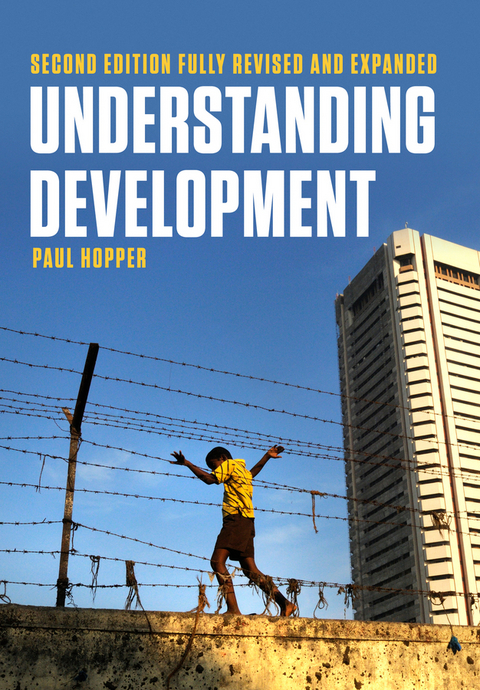
Understanding Development offers a comprehensive introduction to the multidimensional and evolving nature of international development in the contemporary world. This new edition has been fully revised and expanded to incorporate the key events, trends and debates that are shaping development today, such as humanitarianism and the global refugee crisis, the growing number of fragile states, and the contested nature of trade and trade deals. Building on the book's original framework, the second edition also includes three new chapters which explore development in relation to global policy formation, focusing on the end of the UN Millennium Development Goals in 2015 and the start of the UN Sustainable Development Goals, which will run until 2030.
Designed to offer something different to the standard introductions to the topic, this issues-driven text examines the debates that have generated the most interest and passion among practitioners and non-practitioners alike. Always attentive to the contested and plural nature of the field, it makes the case for a genuinely interdisciplinary approach which takes full account of the impact of globalization. Both wide-ranging and critical, Understanding Development is the essential student guide to one of the most challenging subjects of our age.
Dr Paul Hopper lectures in humanities, with a research focus on the politics and cultures of globalisation, at the University of Brighton.
Understanding Development offers a comprehensive introduction to the multidimensional and evolving nature of international development in the contemporary world. This new edition has been fully revised and expanded to incorporate the key events, trends and debates that are shaping development today, such as humanitarianism and the global refugee crisis, the growing number of fragile states, and the contested nature of trade and trade deals. Building on the book's original framework, the second edition also includes three new chapters which explore development in relation to global policy formation, focusing on the end of the UN Millennium Development Goals in 2015 and the start of the UN Sustainable Development Goals, which will run until 2030. Designed to offer something different to the standard introductions to the topic, this issues-driven text examines the debates that have generated the most interest and passion among practitioners and non-practitioners alike. Always attentive to the contested and plural nature of the field, it makes the case for a genuinely interdisciplinary approach which takes full account of the impact of globalization. Both wide-ranging and critical, Understanding Development is the essential student guide to one of the most challenging subjects of our age.
Dr Paul Hopper lectures in humanities, with a research focus on the politics and cultures of globalisation, at the University of Brighton.
"With three new chapters, this revised and updated edition of Understanding Development is essential reading for anyone wishing to explore the intersection of development, globalization and politics in the contemporary world. Paul Hopper offers an interdisciplinary perspective on vital themes, from poverty to international migration and humanitarianism, drawing from a range of academic and policy materials."
Gareth Jones, London School of Economics
"Paul Hopper's book remains an excellent introduction to development studies. Ideal for an undergraduate audience, this well-structured textbook is a great companion for teaching and stimulating debates about some of the most pressing issues of our time."
Tobias Denskus, Malmö University
"Dr. Paul Hopper offers an exemplary exploration of the many dimensions and constantly expanding frontiers of international development. Revised and updated, few accounts of this kind provide readers with a more comprehensive look at the field, from theory to practice. Suffused with contemporary events and cases, Understanding Development is a pristine piece of scholarship and is ideal for anyone new to development studies as well as seasoned scholars and practitioners across a broad range of disciplines."
African Studies Quarterly
Acronyms and Abbreviations
| AAA | Accra Agenda for Action |
| AAPPG | Africa All Party Parliamentary Group |
| ACP | Africa, the Caribbean and the Pacific region |
| ADB | African Development Bank |
| ADF | African Development Fund |
| AFTA | ASEAN Free Trade Area initiative |
| AGE | advisory group of experts |
| AIDS | Acquired Immune Deficiency Syndrome |
| AIIB | Asian Infrastructure Investment Bank |
| AOAV | Action on Armed Violence |
| ART | anti-retroviral therapy |
| ARV | anti-retroviral |
| ASEAN | South East Asian Nations |
| ASI | Adam Smith Institute |
| ATPC | African Trade Policy Centre |
| AU | African Union |
| BNA | Basic Needs Approach |
| BRICS | Brazil, Russia, India, China and South Africa |
| BWIs | Bretton Woods Institutions |
| CAP | Common Agricultural Policy |
| CAR | Central African Republic |
| CBDR | ‘common but differentiated responsibilities’ |
| CBOs | community-based organizations |
| CFCs | chlorofluorocarbons |
| CGD | Commission on Growth and Development |
| CHS | Commission on Human Security |
| CPEs | complex political emergencies |
| CSD | Commission on Sustainable Development |
| CSOs | civil society organizations |
| DAC | Development Assistance Committee |
| DAWN | Development Alternatives with Women for a New Era |
| DDR | disarmament, demobilization and reintegration |
| DFID | UK Department for International Development |
| DPKO | UN Department of Peacekeeping Operations |
| DRR | disaster risk reduction |
| ECLA | Economic Commission for Latin America |
| ECLAC | Economic Commission for Latin America and the Caribbean |
| ECOSOC | United Nations Economic and Social Council |
| EFA | Education for All |
| EJM | environmental justice movement |
| EPAs | Economic Partnership Agreements |
| ERM | European Exchange Rate Mechanism |
| ESAF | Enhanced Structural Adjustment Facility |
| EU | European Union |
| FDI | foreign direct investment |
| FFD3 | Third Financing for Development summit |
| FIDES | Fonds d’Investissement pour le Développement Economique et Social |
| FLO | Fairtrade Labelling Organizations International |
| FTAs | free trade agreements |
| G-77 | Group of 77 countries |
| G8 | Group of 8 countries (Canada, France, Germany, Italy, Japan, Russia, the United Kingdom and the United States) |
| G20 | Group of 20 countries. |
| GAD | Gender and Development |
| GATT | General Agreement on Tariffs and Trade |
| GDI | Gender-related Development Index |
| GDP | gross domestic product |
| GEF | Global Environment Facility |
| GEG | global environmental governance |
| GEM | Gender Empowerment Measure |
| GHI | Global Hunger Index |
| GII | Gender Inequality Index |
| GNI | gross national income |
| GNP | gross national product |
| GOARN | Global Outbreak Alert and Response Network (part of the WHO) |
| GPEDC | Global Partnership for Effective Development Co-operation |
| HDI | United Nations Human Development Index |
| HIPC | Heavily Indebted Poor Countries Initiative |
| HLF | High Level Forum |
| HLP | High-Level Panel |
| HSRP | Human Security Report Project |
| HSU | UN Human Security Unit |
| IATI | International Aid Transparency Initiative |
| ICANN | Internet Corporation for Assigned Names and Numbers |
| ICC | International Criminal Court |
| ICPD | International Conference on Population and Development |
| ICTs | information and communication technologies |
| IDA | International Development Association |
| IDC | International Development Committee (UK) |
| IDPs | internally displaced persons |
| IDPS | International Dialogue on Peacebuilding and Statebuilding |
| IDS | Institute of Development Studies (Brighton, UK) |
| IEAG | Independent Expert Advisory Group |
| IFIs | international financial institutions |
| IFPRI | International Food Policy Research Institute |
| IGO | international intergovernmental organization |
| IISS | International Institute for Strategic Studies |
| ILO | International Labour Organization |
| IMF | International Monetary Fund |
| INGOs | international non-governmental organizations |
| IOM | International Organization for Migration |
| IPA | International Peace Academy |
| IPCC | Intergovernmental Panel on Climate Change |
| IPD | infectious and parasitic disease |
| IPFA | Information Project for Africa |
| ISI | import-substitution industrialization |
| ITU | International Telecommunication Union |
| KRIBP | Kribhco Indo-British Farming Project |
| LA21 | Local Agenda 21 |
| LDCs | least developed countries |
| LEDCs | less economically developed countries |
| LRRD | linking relief, rehabilitation and development |
| MDGs | Millennium Development Goals |
| MDGGTF | MDG Gap Task Force |
| MDRI | Multilateral Debt Relief Initiative |
| MEAs | multilateral environmental agreements |
| MEDCs | more economically developed countries |
| MERCOSUR | Southern Cone Common Market |
| MMR | maternal mortality rate |
| MNCs | multinational corporations |
| MRG | Minority Rights Group International |
| MSF | Médecins Sans Frontières (Doctors Without Borders) |
| NAFTA | North American Free Trade Agreement |
| NAM | Non-Aligned Movement |
| NATO | North Atlantic Treaty Organization |
| NGOs | non-governmental organizations |
| NICs | newly industrializing countries |
| NIEO | new international economic order |
| NNGOs | northern non-governmental organizations |
| NPA | New Policy... |
| Erscheint lt. Verlag | 2.3.2018 |
|---|---|
| Sprache | englisch |
| Themenwelt | Naturwissenschaften |
| Sozialwissenschaften ► Politik / Verwaltung | |
| Sozialwissenschaften ► Soziologie ► Spezielle Soziologien | |
| Schlagworte | BRICs • conflict • Development • Development Policy • Development Studies • Entwicklung • Entwicklungsforschung • Entwicklungspolitik • Entwicklungspolitische Strategien • Entwicklung u. Globalisierung • Foreign Aid • global development goals • Global Inequality • Globalization • Globalization & Development • Global politics • International Relations • Political Science • Politikwissenschaft • Population Growth • Poverty • security • sustainability • Weltpolitik • World trade |
| ISBN-10 | 1-5095-1054-0 / 1509510540 |
| ISBN-13 | 978-1-5095-1054-2 / 9781509510542 |
| Informationen gemäß Produktsicherheitsverordnung (GPSR) | |
| Haben Sie eine Frage zum Produkt? |
 EPUB (Adobe DRM)
Kopierschutz: Adobe-DRM
Adobe-DRM ist ein Kopierschutz, der das eBook vor Mißbrauch schützen soll. Dabei wird das eBook bereits beim Download auf Ihre persönliche Adobe-ID autorisiert. Lesen können Sie das eBook dann nur auf den Geräten, welche ebenfalls auf Ihre Adobe-ID registriert sind.
Details zum Adobe-DRM
Dateiformat: EPUB (Electronic Publication)
EPUB ist ein offener Standard für eBooks und eignet sich besonders zur Darstellung von Belletristik und Sachbüchern. Der Fließtext wird dynamisch an die Display- und Schriftgröße angepasst. Auch für mobile Lesegeräte ist EPUB daher gut geeignet.
Systemvoraussetzungen:
PC/Mac: Mit einem PC oder Mac können Sie dieses eBook lesen. Sie benötigen eine
eReader: Dieses eBook kann mit (fast) allen eBook-Readern gelesen werden. Mit dem amazon-Kindle ist es aber nicht kompatibel.
Smartphone/Tablet: Egal ob Apple oder Android, dieses eBook können Sie lesen. Sie benötigen eine
Geräteliste und zusätzliche Hinweise
Buying eBooks from abroad
For tax law reasons we can sell eBooks just within Germany and Switzerland. Regrettably we cannot fulfill eBook-orders from other countries.
aus dem Bereich