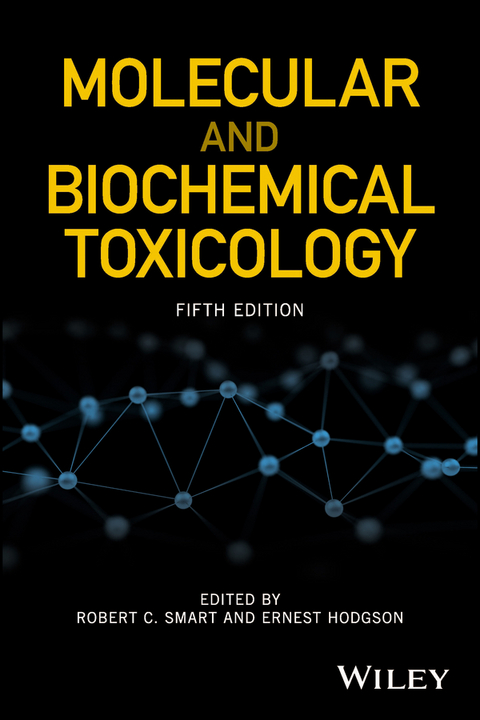
Molecular and Biochemical Toxicology (eBook)
John Wiley & Sons (Verlag)
978-1-119-04243-3 (ISBN)
• Links traditional toxicology to modern molecular techniques, important for teaching to graduate courses and professional studies
• Uses a didactic approach with basic biological or theoretical background for the methodology presented
• Brings together and comprehensively covers a range of dynamic aspects in biochemical and molecular toxicology
• Guides student and professional toxicologists in comprehending a broad range of issues, compiled and authored by a diverse group of experts
• 'A good introductory textbook covering the biochemical toxicology of organic substances and the relevant methodology in some detail.... It offers good value for money and can be recommended as a textbook for appropriate courses' - BTS Newsletter review of the 4th edition
ROBERT C. SMART, PhD, is a William Neal Reynolds Professor of Toxicology, the Director of the Center for Human Health and the Environment, and the former Director of the Toxicology Graduate Program at North Carolina State University. Together with Dr. Hodgson, he coedited the two previous editions of this book.
ERNEST HODGSON, PhD, is Distinguished Professor Emeritus of Environmental and Molecular Toxicology and Executive Director of the Foundation for Agromedicine and Toxicology at North Carolina State University. Alongside the previous editions of this book, he edited four editions of A Textbook of Modern Toxicology (Wiley) and is the Editor of the Journal of Biochemical and Molecular Toxicology.
Written as an advanced text for toxicology students, this book is much more than an introduction and provides in-depth information describing the underlying mechanisms through which toxicants produce their adverse responses. Links traditional toxicology to modern molecular techniques, important for teaching to graduate courses and professional studies Uses a didactic approach with basic biological or theoretical background for the methodology presented Brings together and comprehensively covers a range of dynamic aspects in biochemical and molecular toxicology Guides student and professional toxicologists in comprehending a broad range of issues, compiled and authored by a diverse group of experts A good introductory textbook covering the biochemical toxicology of organic substances and the relevant methodology in some detail.... It offers good value for money and can be recommended as a textbook for appropriate courses BTS Newsletter review of the 4th edition
ROBERT C. SMART, PhD, is a William Neal Reynolds Professor of Toxicology, the Director of the Center for Human Health and the Environment, and the former Director of the Toxicology Graduate Program at North Carolina State University. Together with Dr. Hodgson, he coedited the two previous editions of this book. ERNEST HODGSON, PhD, is Distinguished Professor Emeritus of Environmental and Molecular Toxicology and Executive Director of the Foundation for Agromedicine and Toxicology at North Carolina State University. Alongside the previous editions of this book, he edited four editions of A Textbook of Modern Toxicology (Wiley) and is the Editor of the Journal of Biochemical and Molecular Toxicology.
Preface xxix
List of Contributors xxxi
Section 1 Introduction 1
1 Molecular and Biochemical Toxicology: Definition and Scope 3
Ernest Hodgson and Robert C. Smart
Section 2 Techniques in Biochemical and Molecular Toxicology 11
2 Molecular Techniques for the Study of Gene Function 13
Yoshiaki Tsuji and Robert C. Smart
3 Transcriptomics 55
B. Alex Merrick
4 Proteomics 91
Michael S. Bereman
5 Metabolomics 115
Susan C. J. Sumner, Wimal Pathmasiri, James E. Carlson, Susan L. McRitchie, and Timothy R. Fennell
6 Cellular Techniques 135
Sharon A. Meyer and Barbara A. Wetmore
7 Basic Concepts of Molecular Epidemiological Research Methods 159
Cathrine Hoyo, David A. Skaar, and Randy L. Jirtle
Section 3 Mechanisms in Molecular and Biochemical Toxicology 187
8 Phase I and Phase II Metabolism and Metabolic Interactions: A Summary 189
Ernest Hodgson
9 Structure, Mechanism, and Regulation of Cytochromes P 450 209
John M. Seubert, Matthew L. Edin, and Darryl C. Zeldin
10 Polymorphisms in Phase I and Phase II Genes and Outcomes 239
Yoshiaki Tsuji, Edward L. Croom, and Ernest Hodgson
11 Cellular Transport and Elimination 273
David S. Miller and Ronald E. Cannon
12 Nuclear Receptors 293
Seth W. Kullman, William S. Baldwin, and Gerald A. LeBlanc
13 Mechanisms of Cell Death 327
Mac Law and Susan Elmore
14 Mitochondrial Dysfunction 371
Jun Ninomiya-Tsuji
15 Reactive Metabolites, Reactive Oxygen Species (ROS), and Toxicity 391
Elizabeth L. MacKenzie and Yoshiaki Tsuji
16 DNA Damage and Mutagenesis 421
Zhigang Wang
17 DNA Repair 485
Isabel Mellon
18 Carcinogenesis 535
Robert C. Smart and Jonathan R. Hall
Section 4 Molecular and Biochemical Aspects of Organ Toxicology 589
19 Molecular Mechanisms of Respiratory Toxicity 591
James C. Bonner
20 Molecular Mechanisms of Hepatotoxicity 629
Supriya R. Kulkarni, Andrew D. Wallace, Sharon A. Meyer, and Angela L. Slitt
21 Molecular Mechanisms of Renal Toxicology 665
Lawrence H. Lash
22 Molecular Mechanisms of Neurotoxicity 709
Kimberly P. Keil, Marianna Stamou, and Pamela J. Lein
23 Molecular Mechanisms of Immunotoxicity 773
Tai L. Guo, Joella Xu, Yingjia Chen, Daniel E. Lefever, Guannan Huang, and David A. Lawrence
24 Molecular Mechanisms of Reproductive Toxicity 823
Ayelet Ziv-Gal, Catheryne Chiang, and Jodi Anne Flaws
25 Molecular Mechanisms of Developmental Toxicity 851
Antonio Planchart
Section 5 Emerging Areas in Molecular and Biochemical Toxicology 877
26 Computational and Molecular Approaches to Risk Assessment 879
Richard S. Judson, John Wambaugh, Kristin Isaacs, and Russell S. Thomas
27 Nanotoxicology 909
James C. Bonner
28 Developmental Origins of Health and Disease 933
Michael Cowley
29 Exposome 945
Stephen M. Rappaport
Index 969
1
Molecular and Biochemical Toxicology: Definition and Scope
Ernest Hodgson1 and Robert C. Smart2
1 Center for Human Health and the Environment, Department of Applied Ecology and Toxicology Program, North Carolina State University, Raleigh, NC, USA
2 Center for Human Health and the Environment, Toxicology Program, and Department of Biological Sciences, North Carolina State University, Raleigh, NC, USA
1.1 Introduction
Since the previous edition, toxicology has seen a dramatic increase in the application of the principles and methods of molecular approaches, particularly as it relates to targeted and unbiased approaches in transcriptomics, epigenomics, proteomics, and metabolomics. Biochemical and molecular toxicology is concerned with the definition, at the molecular and cellular levels, of the cascade of events that is initiated by exposure to a toxicant and culminates in the expression of a toxic endpoint. Molecular techniques have provided a wealth of mechanistic information about the role of gene function in the interaction of xenobiotics and living organisms. The development of knockout and knockin mice, as well as “humanized mice” with human genes inserted into their genome, and collaborative cross mice with genetic diversity similar to human populations has proven extremely valuable in investigations of toxicant metabolism, modes of toxic action, and gene‐by‐environment (GxE) interactions. Diverse models including zebrafish, C. elegans, yeast, Drosophila, and Daphnia, among others, also provide important models to study the molecular mechanisms of how environmental toxicants promote disease and induce toxic effects. The field is making rapid and significant progress in understanding the complex molecular and biochemical mechanisms through which environmental stressors interface with pathways, the genome, and the epigenome to influence toxicity and health outcomes, and these advances are reflected in this edition, the fifth. From the biomolecule, pathway, cell, tissue, organ, model organism, and human‐to‐human population, the new edition integrates these levels of biological organization.
Toxicology can be defined as the branch of science dealing with poisons. Having said that, attempts to define all of the various parameters lead to difficulties. The first difficulty is seen in the definition of a poison. Broadly speaking, a poison is any substance causing harmful effects in an organism to which it is administered, either deliberately or by accident. Clearly, this effect is dose related inasmuch as any substance, at a low enough dose, is without effect, while many, if not most, substances have deleterious effects at some higher dose. Much of toxicology deals with compounds exogenous to the normal metabolism of the organism, such compounds being referred to as xenobiotics. However, many endogenous compounds, including metabolic intermediates such as glutamate or hormones such as thyroxine, are toxic when administered in unnaturally high doses. Similarly, trace nutrients such as selenium, which are essential in the diet at low concentrations, are frequently toxic at higher levels. The production of reactive oxygen species (ROS) and subsequent events is a frequent sequel to interaction with xenobiotics that has significant consequences in terms of cell toxicity and health outcomes.
The expression of toxicity and the assessment of toxic effects are other parameters of considerable complexity. Acute toxicity, usually measured as mortality and expressed as the lethal dose or concentration required to kill 50% of an exposed population under defined conditions (LD50 or LC50), is probably the simplest measure of toxicity. Nevertheless, it varies with age, gender, diet, the physiological condition of the animals, environmental conditions, and the method of administration. Chronic toxicity may be manifested in a variety of ways, including cancer, cataracts, peptic ulcers, and reproductive effects, to name only a few. Furthermore, chemicals may have different effects at different doses. For example, vinyl chloride is a potent hepatotoxicant at high doses and a carcinogen with a very long latent period at low doses. Considerable variation also exists in the toxic effects of the same chemical administered to different animal species or even to the same animal when administered via different routes. Malathion, for example, has relatively low toxicity to mammals but is toxic enough to insects to be a widely used commercial insecticide.
Additionally, there are critical windows of susceptibility to certain toxicants; for example, exposures to certain toxicant or dietary conditions during development can influence later susceptibility to certain adult diseases. As described in “Developmental Origins of Health and Disease” (Chapter 28), exposures to certain toxicants or dietary conditions during development can modify the epigenome, and these modifications are important determinants of certain adult diseases/adverse health outcomes.
1.2 Sources of Information
In keeping with the textbook format, the most important sources of information are appended to all 29 chapters as “Suggested Reading” for the user. Taken together they form an in‐depth source of extended information on all aspects of molecular and biochemical toxicology and serve to promote further understanding. Having individual chapter “Suggested Reading” lists rather than a consolidated list is more user friendly and, more important, facilitates a more focused exploration of specific topics. The current fifth edition consists of 29 chapters and is divided into 5 areas following each other in logical sequence. They are:
- Introduction
- Techniques in Molecular and Biochemical Toxicology
- Mechanisms in Molecular and Biochemical Toxicology
- Molecular and Biochemical Aspects of Organ Toxicity
- Emerging Areas in Molecular and Biochemical Toxicology
1.3 Toxicology
Toxicology is clearly related to two of the applied biologies: medicine and agriculture. In medicine, clinical diagnosis and treatment of poisoning as well as the management of toxic side effects of clinical drugs are areas of significance. In agriculture, the development of selective biocides such as insecticides, herbicides, and fungicides is important, and their nontarget effects are of considerable public health significance. Toxicology may also be considered an area of fundamental science because the adaptation of organisms to toxic environments has important implications for ecology and evolution. Toxicology is a critical part of environmental health science and occupational safety and is important in understanding individual and population susceptibility.
The tools of chemistry, biochemistry, and molecular biology are the primary tools of toxicology, and progress in toxicology is closely linked to the development of new methodology in these sciences. Those of chemistry provide analytical methods for toxicants and their metabolites, particularly for forensic toxicology, residue analysis, and toxicant metabolism as well as for proteomic and metabolomics to measure changes in proteins or metabolites, respectively, such as biomarkers of exposure or disease or related to the mechanism of toxicity. Methodologies of biochemistry are employed for the investigation of metabolism and modes of toxic action and those of molecular biology for investigations of the roles of genes and gene expression in toxicity and GxE interactions.
Molecular and biochemical toxicology deals with processes that occur at the cellular and molecular levels when toxic chemicals interact with living organisms. Defining these interactions is fundamental to our understanding of toxic effects, both acute and chronic, and is essential for the development of new therapies, for the determination of environmental occupational toxic hazards, and for the development of new clinical drugs for medicine and biocides for agriculture.
The poisoning process may be thought of as a cascade of more or less distinct events. While biochemical and molecular toxicology is involved in all of these, their involvement in exposure analysis is restricted to the discovery and use of biomarkers of exposure. Following exposure, uptake involves the biochemistry of cell membranes and distribution or transport processes within the body (see Chapter 11). Metabolism, which may take place at portals of entry or, following distribution, in other organs, particularly the liver, may either detoxify toxicants or activate them to reactive metabolites more toxic than the parent chemical (see Chapter 8, “Phase I and Phase II Metabolism and Metabolic Interactions: A Summary”). Polymorphisms in genes that metabolize xenobiotics have important toxicological consequences as described in “Polymorphisms in Phase I and Phase II Genes and Outcomes” (Chapter 10). Chemicals with intrinsic toxicity or reactive metabolites are involved in various modes of toxic action, usually initiated by interactions with macromolecules such as proteins and DNA. Chapters on DNA damage and mutagenesis (Chapter 16), DNA repair (Chapter 17), and carcinogenesis (Chapter 18) focus on the outcomes of the interactions of these reactive metabolites or ROS with DNA. ROS produced by endogenous or exogenous molecules are important in toxicity and have been implicated in numerous human diseases. How damaged cells make decisions to live or die is described in “Mechanisms of...
| Erscheint lt. Verlag | 6.11.2017 |
|---|---|
| Sprache | englisch |
| Themenwelt | Naturwissenschaften ► Biologie ► Biochemie |
| Naturwissenschaften ► Biologie ► Genetik / Molekularbiologie | |
| Naturwissenschaften ► Chemie | |
| Schlagworte | biochemical toxicology • Biochemie • Biochemie u. Chemische Biologie • Biochemistry (Chemical Biology) • Biowissenschaften • Cell & Molecular Biology • cell death • cellular techniques • cellular toxicology • chemical exposure • Chemie • Chemistry • Life Sciences • mechanisms of toxic action • Molecular Epidemiology • Molecular Techniques • Molecular toxicology • organ toxicity • risk assessment • Toxicant mechanisms • Toxicology • Toxikologie • Zell- u. Molekularbiologie |
| ISBN-10 | 1-119-04243-7 / 1119042437 |
| ISBN-13 | 978-1-119-04243-3 / 9781119042433 |
| Informationen gemäß Produktsicherheitsverordnung (GPSR) | |
| Haben Sie eine Frage zum Produkt? |
 EPUB (Adobe DRM)
Kopierschutz: Adobe-DRM
Adobe-DRM ist ein Kopierschutz, der das eBook vor Mißbrauch schützen soll. Dabei wird das eBook bereits beim Download auf Ihre persönliche Adobe-ID autorisiert. Lesen können Sie das eBook dann nur auf den Geräten, welche ebenfalls auf Ihre Adobe-ID registriert sind.
Details zum Adobe-DRM
Dateiformat: EPUB (Electronic Publication)
EPUB ist ein offener Standard für eBooks und eignet sich besonders zur Darstellung von Belletristik und Sachbüchern. Der Fließtext wird dynamisch an die Display- und Schriftgröße angepasst. Auch für mobile Lesegeräte ist EPUB daher gut geeignet.
Systemvoraussetzungen:
PC/Mac: Mit einem PC oder Mac können Sie dieses eBook lesen. Sie benötigen eine
eReader: Dieses eBook kann mit (fast) allen eBook-Readern gelesen werden. Mit dem amazon-Kindle ist es aber nicht kompatibel.
Smartphone/Tablet: Egal ob Apple oder Android, dieses eBook können Sie lesen. Sie benötigen eine
Geräteliste und zusätzliche Hinweise
Buying eBooks from abroad
For tax law reasons we can sell eBooks just within Germany and Switzerland. Regrettably we cannot fulfill eBook-orders from other countries.
aus dem Bereich