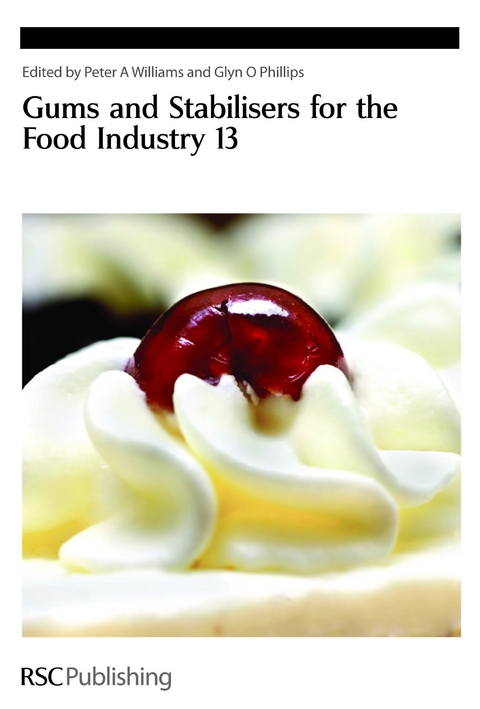
The science and technology of hydrocolloids used in food and related systems has seen many new developments and advances over recent years. Gums and Stabilisers for the Food Industry 13 presents the latest research from leading experts in the field including: * Biochemical characterisation, the use of antibodies, immunostaining and enzyme hydrolysis * Chemical and physicochemical characterisation, including rheological investigation and AFM studies * Engineering food microstructure including exploiting association and phase separation in mixed polymer systems and interaction with particles * The role of biopolymers in the formation of emulsions and foams * Influence of hydrocolloids on organoleptic properties * The application of hydrocolloids in foods and beverages * Health aspects This book will be a useful information source for researchers and other professionals in industry and academia, particularly those involved directly with food science.
Part 1: The Food Hydrocolloids Trust Medal Lecture; Probing food structure; Part 2: Overview of Hydrocolloids; An overview of the structure - function relationships of hydrocolloids; Part 3: Biochemical, Chemical and Physicochemical Characterisation; The use of antibodies to characterise complex polysaccharides; Localising pectin in dairy products using direct immunostaining; Enzymatic analysis of - hybrid carrageenan; Distribution of kappa and iota structures in hybrid carrageenans; Another approach to pectin blockiness - use of partial polygalacturonase digestion; Fine structure modification of pectin - analytical characterisation and rheological implications; Characterising heterogeneity of plant polysaccharides using AFM; Influence of molecular structure imaged with AFM on the rheological behaviour of carrageenan in aqueous system in the presence or absence of cations; Interaction of sodium caseinate with kappa carrageenan studied by size exclusion -HPLC / MALS; Solution characteristics of malva nut gum extracted under alkaline conditions; Extensional rheology of poly(acrylamide) and hydroxypropylcellulose studied using capillary break-up; A unique method to characterise the suspension properties of gellan stabilised beverages; Vane yield stress of starch - carrageenan - skim milk systems; Part 4: Engineering Microstructure; Microstructure control for ingredient processing; Mixed biopolymer gelation: a route to versatile soft solids and complex gel microstructure; Microstructures designed to control the mechanical properties of mixed biopolymer gels; Effect of molar mass on the synergistic interaction between xanthan and galactomannan; Structural properties of high and low water kappa carragwwnan / gelatine mixtures; Effect of kappa carrageenan on konjac glucomannan gelation; Modification of gelling kinetics and elastic properties by nano structuring of alginate gels exploiting the properties of polyguluronate; The effect of soy protein on the aggregation behaviour of milk proteins during heating and acidification; Altered rheology of skim milk - waxy maize starch dispersions due to high pressure treatment; Effect of co-solutes on drying and rehydration of biopolymer networks; Microgel evaluation in model food systems; Encapsulation of food ingredients: Principles and applications for flavours; Determination of microvoids of maltodextrin with various DE by the dual sorption model; Arabinoxylan gels: structural, rheological and protein release properties; Part 5: Emulsions and Foams; Understanding the structure of adsorbed layers of food proteins in the presence of surfactant; Understanding the stabilising property of casein in heated milk protein emulsions; Microstructural evolution of viscoelastic emulsions stabilised by sodium caseinate and pectin; Use of hydroxypropyl cellulose to improve the whipping quality of dairy whipped cream; Alternative stabilisation of whipped emulsions by gelatine or hydrocolloids; Foaming, emulsification and gelation properties of the molecular fractions of a soy isolate; Microstructural evolution during thermal processing of a high-sugar aerated system stabilised by food proteins; Part 6: Application in Foods and Beverages; Hydrocolloids in dairy applications; Influence of lamda-carrageenan and fat content on viscoelastic properties of dairy desserts; Hydrocolloid functionality in spreads and related products; Hydrocolloids in savoury and meat products; Hydrocolloid applications in frozen foods: An end-user's viewpoint; Controlling specific rheological parameters in water jellies using a new type of pectin; Application of hydrocolloids in the beverage industry; Influence of the dosing process on the rheological and microstructural properties of American muffin batters; Part 7: Organoleptic Aspects; Sensory / instrumental correlation in water gels; Aspects of sensory perception of food emulsions thickened by polysaccharides; Effect of viscosity and solution structure on flavour perception in starch pastes; Part 8: Hydrocolloids for Health; Health promoting effects of dietary fibre; An overview of polysaccharide therapeutics and future directions; Subject Index
| Erscheint lt. Verlag | 31.10.2007 |
|---|---|
| Reihe/Serie | ISSN | ISSN |
| Verlagsort | Cambridge |
| Sprache | englisch |
| Themenwelt | Naturwissenschaften ► Chemie ► Physikalische Chemie |
| Technik ► Lebensmitteltechnologie | |
| Schlagworte | 13 • Food • Gums • Industry • Stabilisers |
| ISBN-10 | 1-84755-535-7 / 1847555357 |
| ISBN-13 | 978-1-84755-535-9 / 9781847555359 |
| Informationen gemäß Produktsicherheitsverordnung (GPSR) | |
| Haben Sie eine Frage zum Produkt? |
 PDF (Adobe DRM)
Kopierschutz: Adobe-DRM
Adobe-DRM ist ein Kopierschutz, der das eBook vor Mißbrauch schützen soll. Dabei wird das eBook bereits beim Download auf Ihre persönliche Adobe-ID autorisiert. Lesen können Sie das eBook dann nur auf den Geräten, welche ebenfalls auf Ihre Adobe-ID registriert sind.
Details zum Adobe-DRM
Dateiformat: PDF (Portable Document Format)
Mit einem festen Seitenlayout eignet sich die PDF besonders für Fachbücher mit Spalten, Tabellen und Abbildungen. Eine PDF kann auf fast allen Geräten angezeigt werden, ist aber für kleine Displays (Smartphone, eReader) nur eingeschränkt geeignet.
Systemvoraussetzungen:
PC/Mac: Mit einem PC oder Mac können Sie dieses eBook lesen. Sie benötigen eine
eReader: Dieses eBook kann mit (fast) allen eBook-Readern gelesen werden. Mit dem amazon-Kindle ist es aber nicht kompatibel.
Smartphone/Tablet: Egal ob Apple oder Android, dieses eBook können Sie lesen. Sie benötigen eine
Geräteliste und zusätzliche Hinweise
Buying eBooks from abroad
For tax law reasons we can sell eBooks just within Germany and Switzerland. Regrettably we cannot fulfill eBook-orders from other countries.
aus dem Bereich