Chemistry of Polymers (eBook)
190 Seiten
Rsc (Verlag)
978-1-84755-265-5 (ISBN)
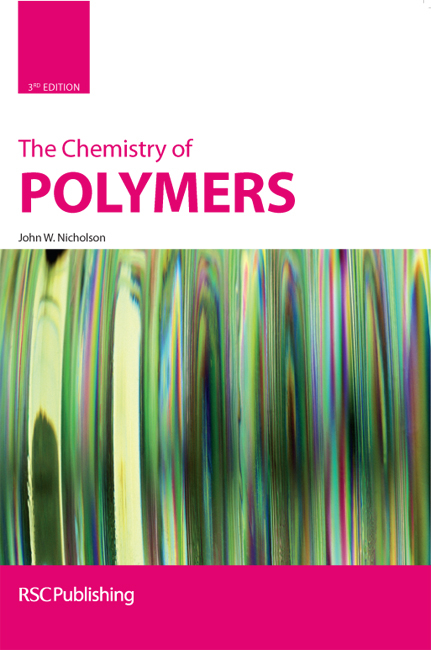
The Chemistry of Polymers, Third edition, is a well established and highly readable introductory text book on polymer science, ideal for chemists requiring a broad introduction to the subject. Like its predecessors it has been written primarily from an applications point of view, emphasising practical applications and providing a comprehensive introduction on all aspects of polymer science including polymer synthesis, characterisation, reaction kinetics and materials science. Specialised topics such as polymer degradation, polymers and pollution and a variety of technological developments are also discussed in an informative and up-to-date manner. This third edition of the book has been extensively revised to include the latest developments in polymer science. Highlights and updates include a new chapter on dendrimers - a field of chemistry that has grown enormously in the last ten years. Coverage of 'Special topics in polymer chemistry' and 'Polymers in the environment' have both been updated to reflect recent developments in the field, including polymer recycling. This text is essential reading for university students, teachers and scientists who wish to acquire an up-to-the-minute overview of polymer science and its many specialised topics in an informative and easy to read style.
Chapter 1: Polymer Chemistry; 1.1: Basic Concepts; 1.2: The History of the Concept of the Macromolecule; 1.3: Classification of Polymers; 1.4: Structure and Properties of Polymers; Chapter 2: Polymerisation Reactions; 2.1: Chain Polymerisation; 2.2: Arrangement of Monomer Units; 2.3: Kinetics of Chain Polymerisation; 2.4: Autoacceleration; 2.5: Practical Methods of Chain Polymerisation; 2.6: Other Chain Polymerisation Mechanisms; 2.7: Step Polymerisation; 2.8: Step polymerisation with Polyfunctional monomers; 2.9: Copolymerisation; Chapter 3: Polymer Structure; 3.1: Polymer Stereochemistry; 3.2: Polymer Crystallinity; 3.3: Thermal and Mechanical Properties; Chapter 4: Crosslinking; 4.1: Introduction; 4.2: Phenol-Formaldehyde Resins; 4.3: Unsaturated Polyester Resins; 4.4: Polyurethanes; 4.5: Epoxy Resins; Chapter 5: Polymer Solutions; 5.1: Introduction; 5.2: Dissolution of Polymers; 5.3: Solubility Parameters; 5.4: Simple Liquid Mixtures and Raoult's Law; 5.5: Entropy of Mixing; 5.6: Real Molecules in Dilute Solution; 5.7: Shapes of Polymer Molecules in Solution; 5.8: Reptation Model of Molecular Motion; 5.9: Water-Soluble Polymers; 5.10: Uses of High-Viscosity Polymer Solutions; 5.11: Polymer Melts; Chapter 6: Methods of Determining Relative Molar Mass; 6.1: Introduction; 6.2: Molar Masses from Colligative Properties; 6.2: .1 Vapour Phase Osmometry; 6.3: Light Scattering; 6.3: .1 Experimental Determination; 6.4: Viscosity Methods of Determining Relative Molar Mass; 6.5: End Group Analysis; 6.6: Gel Permeation Chromatography; Chapter 7: Mechanical Properties of Polymers; 7.1: Introduction; 7.2: Stress, Strain, and Young's Modulus; 7.3: Brittle and Tough Fracture; 7.4: Types of Strength; 7.5: The Influence of Surfaces; 7.6: Viscoelasticity; 7.7: Creep and Stress Relaxation; 7.8: Cold Drawing; 7.9: Dynamic Tests; 7.10: Time/Temperature Relationship; 7.11: Rubberlike Elasticity; 7.12: Reinforced Polymers; 7.13: Practical Measurements of Mechanical Properties; 7.14: Further Reading; Chapter 8: Polymer Degradation; 8.1: Introduction; 8.2: Behaviour of Polymers In Fires; 8.3: Assessment of Combustion Behaviour; 8.4: Improvement of Stability of Polymers in Fires; 8.5: Weathering of Polymers; 8.6: Protection of Polymers from Photo-oxidation; 8.7: Biological Degradation of Polymers; 8.8: Exploitation of Polymer Degradation; Chapter 9: Dendrimers; 9.1: Introduction; 9.2: Organic Dendrimers; 9.3: Supramolecular Dendrimers; 9.4: Shapes and Conformations of Dendrimers; 9.5: Dendrimer Micelles; 9.6: Characterization of Dendrimers; 9.7: Applications of Dendrimers; 9.8: Megamers; Further Reading; Chapter 10 Special Topics in Polymer Chemistry; 10.1: Introduction; 10.2: Polymers in Medicine; 10.3: Ionomers; 10.4: Electronically Conducting Polymers; 10.5: Interpenetrating Polymer Networks; 10.6: Inorganic Polymers; 10.7: Polymer Liquid Crystals; 10.8: Polymers for Food Packaging; Chapter 11 Polymers and the Environment; 11.1: Introduction; 11.2: Pollution by Polymers; 11.3: The Nature of the Problem; 11.4: Polymers and Energy; 11.5: Recycling of Polymers; 11.6: Degradable Polymers; 11.7: The Future; Further Reading; Bibliography; Subject Index
| Erscheint lt. Verlag | 31.10.2007 |
|---|---|
| Verlagsort | Cambridge |
| Sprache | englisch |
| Themenwelt | Naturwissenschaften ► Chemie ► Organische Chemie |
| Schlagworte | 3E • ATRP techniques • Chemistry • crosslinking chemistry • Dendritic Polymers • lithium-polymer batteries • Mechanical Properties of Polymers • polymer degradation • Polymers • polymer synthesis • Raft Polymerization |
| ISBN-10 | 1-84755-265-X / 184755265X |
| ISBN-13 | 978-1-84755-265-5 / 9781847552655 |
| Informationen gemäß Produktsicherheitsverordnung (GPSR) | |
| Haben Sie eine Frage zum Produkt? |
 PDF (Adobe DRM)
Kopierschutz: Adobe-DRM
Adobe-DRM ist ein Kopierschutz, der das eBook vor Mißbrauch schützen soll. Dabei wird das eBook bereits beim Download auf Ihre persönliche Adobe-ID autorisiert. Lesen können Sie das eBook dann nur auf den Geräten, welche ebenfalls auf Ihre Adobe-ID registriert sind.
Details zum Adobe-DRM
Dateiformat: PDF (Portable Document Format)
Mit einem festen Seitenlayout eignet sich die PDF besonders für Fachbücher mit Spalten, Tabellen und Abbildungen. Eine PDF kann auf fast allen Geräten angezeigt werden, ist aber für kleine Displays (Smartphone, eReader) nur eingeschränkt geeignet.
Systemvoraussetzungen:
PC/Mac: Mit einem PC oder Mac können Sie dieses eBook lesen. Sie benötigen eine
eReader: Dieses eBook kann mit (fast) allen eBook-Readern gelesen werden. Mit dem amazon-Kindle ist es aber nicht kompatibel.
Smartphone/Tablet: Egal ob Apple oder Android, dieses eBook können Sie lesen. Sie benötigen eine
Geräteliste und zusätzliche Hinweise
Buying eBooks from abroad
For tax law reasons we can sell eBooks just within Germany and Switzerland. Regrettably we cannot fulfill eBook-orders from other countries.
aus dem Bereich