


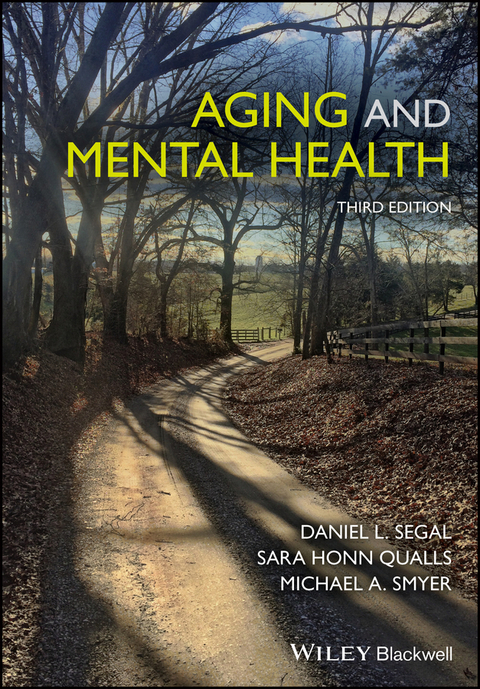
Aging and Mental Health (eBook)
John Wiley & Sons (Verlag)
978-1-119-13316-2 (ISBN)
Fully updated and revised, this new edition of a highly successful text provides students, clinicians, and academics with a thorough introduction to aging and mental health.
The third edition of Aging and Mental Health is filled with new updates and features, including the impact of the DSM-5 on diagnosis and treatment of older adults. Like its predecessors, it uses case examples to introduce readers to the field of aging and mental health. It also provides both a synopsis of basic gerontology needed for clinical work with older adults and an analysis of several facets of aging well.
Introductory chapters are followed by a series of chapters that describe the major theoretical models used to understand mental health and mental disorders among older adults. Following entries are devoted to the major forms of mental disorders in later life, with a focus on diagnosis, assessment, and treatment issues. Finally, the book focuses on the settings and contexts of professional mental health practice and on emerging policy issues that affect research and practice. This combination of theory and practice helps readers conceptualize mental health problems in later life and negotiate the complex decisions involved with the assessment and treatment of those problems.
- Features new material on important topics including positive mental health, hoarding disorder, chronic pain, housing, caregiving, and ethical and legal concerns
- Substantially revised and updated throughout, including reference to the DSM-5
- Offers chapter-end recommendations of websites for further information
- Includes discussion questions and critical thinking questions at the end of each chapter
Aging and Mental Health, Third Edition is an ideal text for advanced undergraduate and graduate students in psychology, for service providers in psychology, psychiatry, social work, and counseling, and for clinicians who are experienced mental health service providers but who have not had much experience working specifically with older adults and their families.
Daniel L. Segal, PhD, is Professor of Psychology at the University of Colorado at Colorado Springs.
Sara Honn Qualls, PhD, is Kraemer Professor of Aging Studies, Professor of Psychology, and Director of the Gerontology Center at the University of Colorado at Colorado Springs.
Michael A. Smyer, PhD, is Professor of Psychology and former Provost at Bucknell University.
Fully updated and revised, this new edition of a highly successful text provides students, clinicians, and academics with a thorough introduction to aging and mental health. The third edition of Aging and Mental Health is filled with new updates and features, including the impact of the DSM-5 on diagnosis and treatment of older adults. Like its predecessors, it uses case examples to introduce readers to the field of aging and mental health. It also provides both a synopsis of basic gerontology needed for clinical work with older adults and an analysis of several facets of aging well. Introductory chapters are followed by a series of chapters that describe the major theoretical models used to understand mental health and mental disorders among older adults. Following entries are devoted to the major forms of mental disorders in later life, with a focus on diagnosis, assessment, and treatment issues. Finally, the book focuses on the settings and contexts of professional mental health practice and on emerging policy issues that affect research and practice. This combination of theory and practice helps readers conceptualize mental health problems in later life and negotiate the complex decisions involved with the assessment and treatment of those problems. Features new material on important topics including positive mental health, hoarding disorder, chronic pain, housing, caregiving, and ethical and legal concerns Substantially revised and updated throughout, including reference to the DSM-5 Offers chapter-end recommendations of websites for further information Includes discussion questions and critical thinking questions at the end of each chapter Aging and Mental Health, Third Edition is an ideal text for advanced undergraduate and graduate students in psychology, for service providers in psychology, psychiatry, social work, and counseling, and for clinicians who are experienced mental health service providers but who have not had much experience working specifically with older adults and their families.
Daniel L. Segal, PhD, is Professor of Psychology at the University of Colorado at Colorado Springs. Sara Honn Qualls, PhD, is Kraemer Professor of Aging Studies, Professor of Psychology, and Director of the Gerontology Center at the University of Colorado at Colorado Springs. Michael A. Smyer, PhD, is Professor of Psychology and former Provost at Bucknell University.
Title Page 7
Copyright Page 8
Contents 11
Preface 13
Part I Introduction 19
Chapter 1 Mental Health and Aging 21
What Is Normal Aging? 22
What Is Abnormal or Unhealthy Aging? 24
Mental Health and Mental Disorder 25
Diagnostic and Statistical Manual of Mental Disorders (DSM?5) 25
Linking the Physical and Mental in Later Life: Comorbidity 28
Individual Differences and Assessment of Risk 29
The Context of Clinicians and Clients: Now What Do We Do? 32
The Biopsychosocial Model 33
Summary and Conclusions 34
Critical Thinking / Discussion Questions 35
Website Resources 35
References 35
Chapter 2 Basic Gerontology for Working with Older Adults 39
Developmental Issues in Mental Health and Aging 40
The Complexity of Working with Older Adults: Contexts, Cohorts, and Specific Challenges 49
Summary and Conclusions 57
Critical Thinking / Discussion Questions 58
Website Resources 58
References 58
Chapter 3 Psychological Bases of Positive Mental Health 63
What do Models have to Account for? 64
Successful Aging 65
Selective Optimization with Compensation (SOC) 68
Resilience 70
Contributions from Psychological Science: Stereotype Threat and Positive Psychology 72
Are There Secrets to Aging Well? 75
Summary and Conclusions 76
Critical Thinking / Discussion Questions 77
Website Resources 77
References 77
Part II Models of Mental Health in Later Life 83
References 86
Chapter 4 Psychodynamic Model 87
Introduction to the Model 88
Adult Development: The Context for Aging 89
Development in the Second Half of Life 91
Mental Health in Later Life 92
Development of Psychopathology 93
Assessment 97
Treatment 97
Summary and Conclusions 103
Critical Thinking / Discussion Questions 103
Website Resources 104
References 104
Chapter 5 Cognitive-Behavioral Model 107
Introduction to the Model 107
Cognitive Aspects of the CBT Model 108
Behavioral Aspects of the CBT Model 111
Mental Health from the Cognitive?Behavioral Model 114
Mental Health in Older Adults 114
Assessment 116
Treatment 123
Additional Comments about the Cognitive?Behavioral Model 130
Summary and Conclusions 131
Critical Thinking / Discussion Questions 131
Website Resources 132
References 132
Chapter 6 Stress and Coping Model 135
Introduction to the Model 136
Conceptualizing Coping 142
Stress and Coping: Normal and Abnormal Adaptation 143
Assessment Strategies 144
General Treatment Strategies and Health Psychology 151
Treatment Strategies 152
Summary and Conclusions 156
Critical Thinking / Discussion Questions 157
Website Resources 157
References 158
Chapter 7 Family Systems Model 163
Introduction to the Model: Aging Families 164
Family Dynamics: A Systems Model 167
Mental Health within a Systems Model 171
Assessment 172
Intervention 176
Summary and Conclusions 179
Critical Thinking / Discussion Questions 179
Website Resources 179
References 180
Part II Summary and Commentary: Choosing Among Models of Mental Disorders in Later Life 183
Applying Models to Individual Life Circumstances 184
Reference 187
Part III Introduction to Mental Disorders 189
References 192
Chapter 8 Cognitive Impairment and Neurocognitive Disorders 193
Is Cognitive Impairment Normal for Older Adults? 195
Diagnostic Categories: A Time of Transition 199
Delirium: A Common, Reversible Cause of Cognitive Impairment 200
Mild Cognitive Impairment and Mild NCD 203
Major Neurocognitive Disorders 205
Depression and Cognitive Impairment 208
Summary of the Types of Cognitive Impairment 209
Assessment 209
Interventions 211
Summary and Conclusions 217
Critical Thinking / Discussion Questions 217
Website Resources 217
References 218
Chapter 9 Major Depression and Bipolar Disorder 225
Definition of Depression 226
Prevalence of Depression in Older Adults 228
Theories of Etiology 230
Vascular Depression and its Link to Dementia 236
Assessment 236
Interventions 239
Prevention of Depression 244
Suicide 245
Bipolar Disorder 248
Prevalence of Bipolar Disorder in Older Adults 250
Etiology, Assessment, and Interventions 251
Summary and Conclusions 253
Critical Thinking / Discussion Questions 253
Website Resources 253
References 254
Chapter 10 Serious Mental Disorders in Older Adults: Schizophrenia and Other Late-Life Psychoses 259
Overview of Schizophrenia Throughout the Lifespan 261
Distinguishing Schizophrenia from Other Psychotic Disorders 262
Differences in the Onset, Course, and Outcome of Schizophrenia 263
Factors Complicating the Course and Outcomes of Schizophrenia 264
The Aging Person with Schizophrenia: Early-Onset Schizophrenia (EOS) 267
The Aging Person with Schizophrenia: Late-Onset Schizophrenia (LOS) 278
Future Directions and Opportunities 282
Summary and Conclusions 288
Critical Thinking / Discussion Questions 289
Website Resources 289
References 289
Chapter 11 Anxiety Disorders, Hoarding Disorder, and Post-Traumatic Stress Disorder 299
Anxiety 300
Hoarding Disorder 311
Post-Traumatic Stress Disorder (PTSD) 316
Summary and Conclusions 323
Critical Thinking / Discussion Questions 323
Website Resources 324
References 324
Chapter 12 Sexual Disorders, Sleep Disorders, and Chronic Pain 331
Sexual Disorders 332
Sleep Disorders 339
Chronic Pain 345
Summary and Conclusions 353
Critical Thinking / Discussion Questions 353
Website Resources 354
References 354
Chapter 13 Substance-Related Disorders and Personality Disorders 361
Substance-Related Disorders 361
Prevalence 364
Presentation in Older Adults 367
Theories of Etiology 368
Assessment of Substance Use and Abuse 369
Interventions for Substance Abuse 373
Personality Disorders 375
Prevalence 378
Presentation in Older Adults 379
Theories of Etiology 382
Assessment of Personality Disorders 384
Interventions for Personality Disorders 385
Summary and Conclusions 387
Critical Thinking / Discussion Questions 388
Website Resources 388
References 388
Part IV Settings and Contexts of Mental Health 393
Chapter 14 Health Services Delivery Systems 395
Health Service Delivery Systems 101 396
Mental Health Services Industry 401
Looking to the Future: Integration of Health Services 404
Summary and Conclusions 408
Critical Thinking / Discussion Questions 408
Website Resources 408
References 408
Chapter 15 Housing, Social Services, and Mental Health 411
Person–Environment Fit: A Key Principle That Shapes Housing Choices and Challenges 411
The Continuum of Senior Housing 415
Social Services 419
Summary and Conclusions 422
Critical Thinking / Discussion Questions 423
Website Resources 423
References 423
Chapter 16 Family and Friend Relationships, and Caregiving 425
Social Networks in Later Life 426
Family Caregiving Relationships and Mental Health 429
Interventions to Assist Families 434
Summary and Conclusions 438
Critical Thinking / Discussion Questions 438
Website Resources 438
References 438
Chapter 17 Ethical Issues in Work with Older Adults: Advanced Care, Financial Decision-Making, and the Impacts of Climate Change 441
Advanced Illness and Advanced Care Directives 442
Financial Fraud and Abuse 451
Aging and Climate Change: Another Context for Concern 454
Inequality and Issues of Justice 456
Summary and Conclusions 458
Critical Thinking / Discussion Questions 458
Website Resources 458
References 459
Epilogue 463
Index 465
EULA 474
"Aging and Mental Health is that rare book which is both pleasurable to read and deeply informative. The science of psychiatric diagnosis and treatment is set forth through rich conceptual frameworks of gerontology and psychology, and - new in this edition - critical health service contexts. As a comprehensive and skillfully crafted resource all in one volume, the book is an indispensable gem for students and practitioners alike."
Jennifer Moye, PhD, Associate Director for Education and Evaluation New England GRECC (VA Boston and Bedford) and Professor of Psychology, Harvard Medical School
"The Third Edition of Aging and Mental Health offers far more than an update. It is a thoughtfully and creatively designed textbook poised to serve as a strong introduction to major clinical disorders, dominant models of therapy, service delivery systems, and ethical issues, together rounding out the universe of mental health and mental illness in older adults. Generous and well-selected references for each topic are provided."
Erlene Rosowsky, PsyD, Director of the Center for Mental Health and Aging and Associate Professor of Psychology, William James College
"Kudos to the authors of this updated new edition on Aging & Mental Health. Life span developmental theory, normative biopsychosocial processes, and models of successful aging inform clinical recommendations for mental health professionals who provide services to older adults. This is an excellent volume to read and reference if one desires to employ an evidence-based state-of-the art approach to assess and treat the mental health problems of older adults and to promote integrated care in geriatric settings."
Victor Molinari, PhD, President of the American Board of Geropsychology and Professor, School of Aging Studies, University of South Florida
"I've used Aging and Mental Health as a textbook for my undergraduate class in "Gerontological Counseling" and my graduate class in "Aging and Mental Disorders" for a decade. This book is unique in including reviews of fundamental issues in gerontology (e.g. age-related changes), major theoretical models of mental health, the most common mental disorders of late life, and contextual issues such as policy, housing, and caregiving issues. The text is full of vivid case studies and practical information. The Third Edition includes valuable updates, such as incorporation of the DSM-5 and recent research information. The authors bring years of experience in clinical practice, research, and public policy related to mental health to bear on the topic. This is the perfect text for instructors from diverse fields who want to engage their students in understanding mental health and aging, and help them develop a passion for providing excellent care for older adults and their families. "
William E. Haley, PhD, Professor, School of Aging Studies, University of South Florida
| Erscheint lt. Verlag | 31.10.2017 |
|---|---|
| Reihe/Serie | Understanding Aging |
| Understanding Aging | Understanding Aging |
| Sprache | englisch |
| Themenwelt | Geisteswissenschaften ► Psychologie ► Entwicklungspsychologie |
| Naturwissenschaften ► Chemie | |
| Schlagworte | age and mental health • aging • Aging & Adult Development • Aging studies • Altern • Altern, Entwicklung Erwachsener • Caregiving • caregiving for elderly • Clinical psychology • evidence-based practice • Gerontology • geropsychological practice • Geropsychology • housing for mentally ill older adults • Klinische Psychologie • mental disorders in older adults • Mental Health • mental health of older adults • mental health of the aged • Positive Aging • Psychische Gesundheit • Psychologie • Psychology • Social Policy & Welfare • social services for older adults • Social Work • Sozialarbeit • Sozialpolitik u. Wohlfahrt • The aging brain • the aging mind |
| ISBN-10 | 1-119-13316-5 / 1119133165 |
| ISBN-13 | 978-1-119-13316-2 / 9781119133162 |
| Informationen gemäß Produktsicherheitsverordnung (GPSR) | |
| Haben Sie eine Frage zum Produkt? |
 PDF (Adobe DRM)
Kopierschutz: Adobe-DRM
Adobe-DRM ist ein Kopierschutz, der das eBook vor Mißbrauch schützen soll. Dabei wird das eBook bereits beim Download auf Ihre persönliche Adobe-ID autorisiert. Lesen können Sie das eBook dann nur auf den Geräten, welche ebenfalls auf Ihre Adobe-ID registriert sind.
Details zum Adobe-DRM
Dateiformat: PDF (Portable Document Format)
Mit einem festen Seitenlayout eignet sich die PDF besonders für Fachbücher mit Spalten, Tabellen und Abbildungen. Eine PDF kann auf fast allen Geräten angezeigt werden, ist aber für kleine Displays (Smartphone, eReader) nur eingeschränkt geeignet.
Systemvoraussetzungen:
PC/Mac: Mit einem PC oder Mac können Sie dieses eBook lesen. Sie benötigen eine
eReader: Dieses eBook kann mit (fast) allen eBook-Readern gelesen werden. Mit dem amazon-Kindle ist es aber nicht kompatibel.
Smartphone/Tablet: Egal ob Apple oder Android, dieses eBook können Sie lesen. Sie benötigen eine
Geräteliste und zusätzliche Hinweise
Buying eBooks from abroad
For tax law reasons we can sell eBooks just within Germany and Switzerland. Regrettably we cannot fulfill eBook-orders from other countries.
aus dem Bereich


