Engineering Principles in Biotechnology (eBook)
John Wiley & Sons (Verlag)
978-1-119-15904-9 (ISBN)
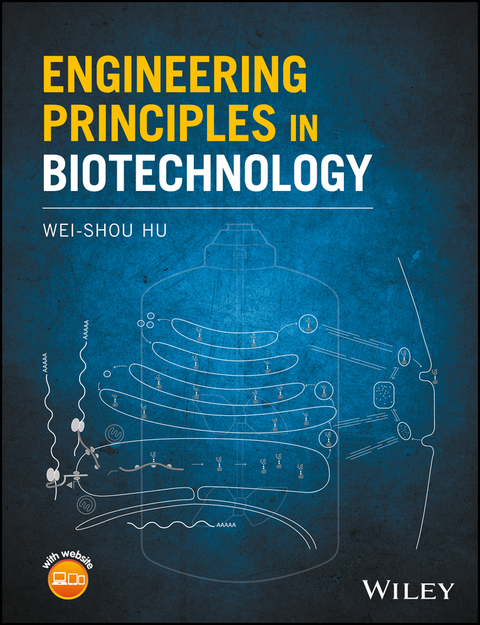
This book is a short introduction to the engineering principles of harnessing the vast potential of microorganisms, and animal and plant cells in making biochemical products. It was written for scientists who have no background in engineering, and for engineers with minimal background in biology. The overall subject dealt with is process. But the coverage goes beyond the process of biomanufacturing in the bioreactor, and extends to the factory of cell's biosynthetic machinery.
Starting with an overview of biotechnology and organism, engineers are eased into biochemical reactions and life scientists are exposed to the technology of production using cells. Subsequent chapters allow engineers to be acquainted with biochemical pathways, while life scientist learn about stoichiometric and kinetic principles of reactions and cell growth. This leads to the coverage of reactors, oxygen transfer and scale up. Following three chapters on biomanufacturing of current and future importance, i.e. cell culture, stem cells and synthetic biology, the topic switches to product purification, first with a conceptual coverage of operations used in bioseparation, and then a more detailed analysis to provide a conceptual understanding of chromatography, the modern workhorse of bioseparation.
Drawing on principles from engineering and life sciences, this book is for practitioners in biotechnology and bioengineering. The author has used the book for a course for advanced students in both engineering and life sciences. To this end, problems are provided at the end of each chapter.
WEI-SHOU HU is Professor in the Department of Chemical Engineering and Materials Science, University of Minnesota, Minneapolis, USA.
This book is a short introduction to the engineering principles of harnessing the vast potential of microorganisms, and animal and plant cells in making biochemical products. It was written for scientists who have no background in engineering, and for engineers with minimal background in biology. The overall subject dealt with is process. But the coverage goes beyond the process of biomanufacturing in the bioreactor, and extends to the factory of cell s biosynthetic machinery. Starting with an overview of biotechnology and organism, engineers are eased into biochemical reactions and life scientists are exposed to the technology of production using cells. Subsequent chapters allow engineers to be acquainted with biochemical pathways, while life scientist learn about stoichiometric and kinetic principles of reactions and cell growth. This leads to the coverage of reactors, oxygen transfer and scale up. Following three chapters on biomanufacturing of current and future importance, i.e. cell culture, stem cells and synthetic biology, the topic switches to product purification, first with a conceptual coverage of operations used in bioseparation, and then a more detailed analysis to provide a conceptual understanding of chromatography, the modern workhorse of bioseparation. Drawing on principles from engineering and life sciences, this book is for practitioners in biotechnology and bioengineering. The author has used the book for a course for advanced students in both engineering and life sciences. To this end, problems are provided at the end of each chapter.
WEI-SHOU HU is Professor in the Department of Chemical Engineering and Materials Science, University of Minnesota, Minneapolis, USA.
Dedication
Preface
About the companion website
1. An overview of bioprocess technology and biochemical engineering
2. An introduction to industrial microbiology and cell biotechnology
3. Stoichiometry of biochemical reactions and cell growth
4. Kinetics of biochemical reactions
5. Kinetics of cell growth process
6. Kinetics of continuous culture
7. Bioreactor kinetics
8. Oxygen transfer in bioreactors
9. Scale-up of bioreactors and bioprocess
10. Cell culture bioprocess and biomanufacturing
11. Introduction to Stem Cell bioprocess
12. Synthetic biotechnology-from metabolic engineering to synthetic microbes
13. Process engineering of bioproduct recovery
14. Chromatographic operations in bioseparation
Index
Chapter 1
An Overview of Bioprocess Technology and Biochemical Engineering
1.1 A Brief History of Biotechnology and Biochemical Engineering
For thousands of years, humans have harnessed the metabolic activities of microbes. Microbes are important contributors to the generation of many foods, including bread, cheese, and pickled vegetables. Microbes are our unwitting life partners, but humans were not even aware of their existence until Antony van Leeuwenhoek discovered microorganisms. In the 1860s, Louis Pasteur discovered that microbes are responsible for lactic acid and the ethanol fermentation of sugar. He directly linked microbial metabolism to the synthesis of products.
Before the turn of the twentieth century, both researchers and food producers began to use microbes more purposefully. They were increasingly used to ferment milk and wine. This period is now considered to be the dawn of microbiology, or applied microbiology. In the early years, microbiology as a scientific field was closely linked to food microbiology, due to the positive roles of microbes in food fermentation as well as food spoilage and resulting illness.
1.1.1 Classical Biotechnology
In the beginning of the twentieth century, the use of microorganisms was extended beyond fermenting foods to the production of chemical compounds. Lactic acid was produced by fermentation using Lactobacillus spp. This marked the start of genuine industrial microbial fermentation. One of the first workhorses was the anaerobic bacterium Clostridium acetobutylicum, which was used to ferment sugar to acetone, ethanol, and butanol. Citric acid production using the mold Aspergillus niger also came about in the 1920s.
Penicillin production, the predecessor of modern fermentation, did not start until the 1940s. Alexander Fleming discovered penicillin after observing the inhibition of bacterial growth by a compound produced by a green mold. This observation led to the development of the bioprocess we know today. In nature, the compound was produced only at low concentrations. Thus, a large volume of culture was needed to generate the amount needed for clinical trials.
The demand for large quantities of penicillin led to the development of submerged culture in liquid medium, as opposed to the traditionally used agar-surface culture. Along with the use of liquid-submerged culturing techniques came the search for a better medium composition and the utilization of corn steep liquor, a practice that continued for more than five decades.
The successful use of microbial fermentation to produce chemicals and natural products began a long and prosperous period. During this time, research laboratories and pharmaceutical and food companies isolated microorganisms from various sources (e.g., soil, gardens, and forests) to look for microbial species that produce various useful compounds. In addition to penicillin, many other microbial natural products with antibiotic activities were discovered. In the 1950s, Corynebacterium glutamicum began to be used to produce glutamic acid, which was used in a common food seasoning, monosodium glutamate. This led the way to a large amino acid industry. This period is considered to be the “classical period” of biotechnology (Figure 1.1).
Figure 1.1 Milestones in biotechnology and historical advances in biochemical engineering.
Unlike the earlier solvent-producing bacteria, the molds and bacteria used in the production of antibiotics, amino acids, and other biochemicals are aerobic microorganisms. In order to produce a large quantity of a product, the volume of the culture and cell concentration must be increased, which in turn increases the demand for oxygen by microbes in culture. The demand for oxygen during scaling up led to the use of stirred-tank bioreactors with continuous sparging of air. A scaled-up process also produces more heat from the increased cellular metabolism and mechanical agitation.
The technical challenges associated with process scale-up spurred a golden period of bioprocess research. Many technical advances were made in bioreactor design to enhance oxygen transfer, sterility control, and process performance during the 1950s and 1960s.
In the second half of the twentieth century, microbiology became the core of industrial biotechnology. Many more antibiotics were discovered. The spectra of new secondary metabolites expanded from antibacterial (e.g., streptomycin, actinomycin, and cepharosporin) products to antifungal (e.g., nystatin and fungicidin), anticancer (e.g., mitomycin), and immunomodulating (e.g., cyclosporin) products. Many other microbial metabolites found their applications in the food, chemical, agricultural, and pharmaceutical industries and were successfully commercialized. Nucleosides produced by microorganisms were used to season food. Fermentation-derived lysine became an important additive to animal feed, and supported a vast industry of farm animals. Citric acid fermentation became a bioproduced commodity chemical.
In addition to metabolites, enzymes produced by microorganisms or isolated from plant and animal tissues have been utilized in food processing. For instance, amylases are used in starch processing, renin is used in cheese fermentation, and various proteases are used for protein hydrolysis. Many enzymes are also used in biocatalytic processes to produce new products. Glucose isomerase catalyzes the isomerization of the glucose molecules derived from cornstarch into high-fructose corn syrup, a staple ingredient in many processed foods. Penicillin isomerases are used to convert the side chain in penicillin from a phenylacetyl group to different acyl groups. Unlike the original penicillin G discovered by Fleming, these new penicillin-derived antibiotics are not sensitive to acid hydrolysis within the human digestive system. They also have expanded antimicrobial spectra.
During the decades following World War II, there was an unprecedented expansion of government-funded research in universities and other research institutions. The advances in fundamental biochemistry, biophysics, and molecular biology enhanced our understanding of the nature of life and the universe. These fundamentals enabled mechanism-based discoveries that paved the way for the modern field of biotechnology, touched upon many aspects of human life, and spurred economic growth. The statins, which inhibit the rate-controlling enzyme in cholesterol biosynthesis, became star drugs for controlling cholesterol metabolism. Another example is mitomycin, an anticancer drug that is toxic because it crosslinks DNA molecules.
In the second half of the twentieth century, researchers gained a basic understanding of the structure and biochemistry of DNA and its role in genetics. These advances led to contemporary molecular biology. New understanding of the regulation of gene expression transformed industrial biotechnology and many other economic sectors. The invention of recombinant DNA technology then allowed the never-before-imagined insertion of engineered DNA sequences into a host organism for expression.
1.1.2 Recombinant DNA
Recombinant DNA (rDNA) technology enabled a new generation of products. It enabled a human protein to be produced in a host cell, be it a bacterium or a cultured human or hamster cell (Figure 1.2). It allowed us to modify the metabolic pathway of an organism by amplifying, deleting, or changing an enzyme in the pathway. Importantly, this enabling technology also spurred many venture-capital-financed startups like Genentech, Cetus, and Biogen. Thus began a new era of entrepreneur-driven innovation, forming the early stages of the next rapid expansion phase of industrial biotechnology.
Figure 1.2 Expression of recombinant DNA (rDNA) proteins in host cells.
Using rDNA technology, human insulin was produced in Escherichia coli by Genentech and licensed by Eli Lilly Company in 1981. Prior to that, type I diabetes patients had to use insulin isolated from pig pancreas, which has one amino acid different from the human form. After 1981, the insulin being used by patients was identical to the insulin that is produced in humans. A new era of producing human proteins for disease treatment then followed. Although difficult to produce before the age of recombinant technology, many of these proteins could now be cloned into a host cell and produced in sufficient quantities for treating patients. The benefit of producing these therapeutic proteins in a host cell lies not only in their increased availability; they also have increased purity. Proteins isolated from pooled donor blood might harbor harmful contaminants such as bloodborne viruses. By using rDNA technology for protein production, such danger is eliminated.
The list of heterologous proteins (or proteins produced using a different species of host cell) expressed in E. coli and yeast cells includes: interferon, human growth hormone, and cytokines for therapeutic uses; hepatitis B surface antigen as a vaccine; and bovine growth hormone for use in cows. However, many human proteins need to be modified after they are translated to produce the final biologically active form (Figure 1.3). Such posttranscriptional modifications, including glycosylation, complex disulfide bond formation, phosphorylation, and γ-carboxylation, are not carried out in microbes in the same way as they are in humans. To ensure their faithful expression with the requisite posttranslational modifications, mammalian cells are often employed.
Figure 1.3...
| Erscheint lt. Verlag | 6.9.2017 |
|---|---|
| Sprache | englisch |
| Themenwelt | Naturwissenschaften ► Chemie ► Technische Chemie |
| Technik ► Umwelttechnik / Biotechnologie | |
| Schlagworte | biochemical engineering • Biochemische Verfahrenstechnik • Bioengineering • Biomanufacturing • Bioprocess • bioreactor • Bioseparation • Biosystem • Biotechnologie • Biotechnologie i. d. Biowissenschaften • Biotechnologie i. d. Chemie • Biotechnology • Biowissenschaften • chemical engineering • Chemie • Chemische Verfahrenstechnik • Chemistry • Fermentation technology • Life Sciences |
| ISBN-10 | 1-119-15904-0 / 1119159040 |
| ISBN-13 | 978-1-119-15904-9 / 9781119159049 |
| Informationen gemäß Produktsicherheitsverordnung (GPSR) | |
| Haben Sie eine Frage zum Produkt? |
 EPUB (Adobe DRM)
Kopierschutz: Adobe-DRM
Adobe-DRM ist ein Kopierschutz, der das eBook vor Mißbrauch schützen soll. Dabei wird das eBook bereits beim Download auf Ihre persönliche Adobe-ID autorisiert. Lesen können Sie das eBook dann nur auf den Geräten, welche ebenfalls auf Ihre Adobe-ID registriert sind.
Details zum Adobe-DRM
Dateiformat: EPUB (Electronic Publication)
EPUB ist ein offener Standard für eBooks und eignet sich besonders zur Darstellung von Belletristik und Sachbüchern. Der Fließtext wird dynamisch an die Display- und Schriftgröße angepasst. Auch für mobile Lesegeräte ist EPUB daher gut geeignet.
Systemvoraussetzungen:
PC/Mac: Mit einem PC oder Mac können Sie dieses eBook lesen. Sie benötigen eine
eReader: Dieses eBook kann mit (fast) allen eBook-Readern gelesen werden. Mit dem amazon-Kindle ist es aber nicht kompatibel.
Smartphone/Tablet: Egal ob Apple oder Android, dieses eBook können Sie lesen. Sie benötigen eine
Geräteliste und zusätzliche Hinweise
Buying eBooks from abroad
For tax law reasons we can sell eBooks just within Germany and Switzerland. Regrettably we cannot fulfill eBook-orders from other countries.
aus dem Bereich