


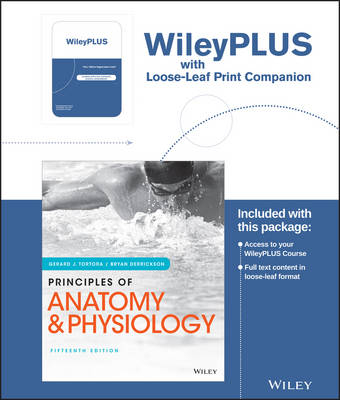
Principles of Anatomy and Physiology, 15e Loose-Leaf Print Companion WileyPlus
John Wiley & Sons Inc (Verlag)
978-1-119-28775-9 (ISBN)
- Titel ist leider vergriffen;
keine Neuauflage - Artikel merken
1 An Introduction to the Human Body 1
1.1 Anatomy and Physiology Defined 2
1.2 Levels of Structural Organization and Body Systems 2
1.3 Characteristics of the Living Human Organism 5
1.4 Homeostasis 8
1.5 Basic Anatomical Terminology 13
1.6 Aging and Homeostasis 21
1.7 Medical Imaging 22
Chapter Review 25 / Critical Thinking Questions 27 / Answers to Figure Questions 27
2 The Chemical Level of Organization 28
2.1 How Matter Is Organized 29
2.2 Chemical Bonds 32
2.3 Chemical Reactions 36
2.4 Inorganic Compounds and Solutions 39
2.5 Overview of Organic Compounds 43
2.6 Carbohydrates 44
2.7 Lipids 46
2.8 Proteins 49
2.9 Nucleic Acids 54
2.10 Adenosine Triphosphate 56
Chapter Review 57 / Critical Thinking Questions 59 / Answers to Figure Questions 59
3 The Cellular Level of Organization 60
3.1 Parts of a Cell 61
3.2 The Plasma Membrane 62
3.3 Transport across the Plasma Membrane 65
3.4 Cytoplasm 74
3.5 Nucleus 85
3.6 Protein Synthesis 88
3.7 Cell Division 92
3.8 Cellular Diversity 99
3.9 Aging and Cells 99
Chapter Review 102 / Critical Thinking Questions 104 / Answers to Figure Questions 105
4 The Tissue Level of Organization 106
4.1 Types of Tissues 107
4.2 Cell Junctions 108
4.3 Comparison between Epithelial and Connective Tissues 109
4.4 Epithelial Tissue 110
4.5 Connective Tissue 122
4.6 Membranes 133
4.7 Muscular Tissue 135
4.8 Nervous Tissue 137
4.9 Excitable Cells 138
4.10 Tissue Repair: Restoring Homeostasis 138
4.11 Aging and Tissues 139
Chapter Review 141 / Critical Thinking Questions 142 / Answers to Figure Questions 143
5 The Integumentary System 144
5.1 Structure of the Skin 145
5.2 Accessory Structures of the Skin 152
5.3 Types of Skin 158
5.4 Functions of the Skin 158
5.5 Maintaining Homeostasis: Skin Wound Healing 160
5.6 Development of the Integumentary System 161
5.7 Aging and the Integumentary System 163
Chapter Review 169 / Critical Thinking Questions 170 /Answers to Figure Questions 170
6 The Skeletal System: Bone Tissue 171
6.1 Functions of Bone and the SkeletalSystem 172
6.2 Structure of Bone 172
6.3 Histology of Bone Tissue 174
6.4 Blood and Nerve Supply of Bone 177
6.5 Bone Formation 178
6.6 Fracture and Repair of Bone 185
6.7 Bone’s Role in Calcium Homeostasis 188
6.8 Exercise and Bone Tissue 189
6.9 Aging and Bone Tissue 189
Chapter Review 192 / Critical Thinking Questions 193 / Answers to Figure Questions 193
7 The Skeletal System: The Axial Skeleton 194
7.1 Divisions of the Skeletal System 195
7.2 Types of Bones 197
7.3 Bone Surface Markings 197
7.4 Skull: An Overview 198
7.5 Cranial Bones 199
7.6 Facial Bones 208
7.7 Special Features of the Skull 210
7.8 Hyoid Bone 215
7.9 Vertebral Column 215
7.10 Vertebral Regions 218
7.11 Thorax 225
Chapter Review 231 / Critical Thinking Questions 232 / Answers to Figure Questions 232
8 The Skeletal System: The Appendicular Skeleton 234
8.1 Pectoral (Shoulder) Girdle 235
8.2 Upper Limb (Extremity) 238
8.3 Pelvic (Hip) Girdle 243
8.4 False and True Pelves 245
8.5 Comparison of Female and Male Pelves 247
8.6 Lower Limb (Extremity) 247
8.7 Development of the Skeletal System 255
Chapter Review 259
9 Joints 260
9.1 Joint Classifications 261
9.2 Fibrous Joints 261
9.3 Cartilaginous Joints 263
9.4 Synovial Joints 264
9.5 Types of Movements at Synovial Joints 266
9.6 Types of Synovial Joints 271
9.7 Factors Aff ecting Contact and Range of Motion at Synovial Joints 274
9.8 Selected Joints of the Body 274
9.9 Temporomandibular Joint 277
9.10 Shoulder Joint 278
9.11 Elbow Joint 281
9.12 Hip Joint 282
9.13 Knee Joint 284
9.14 Aging and Joints 287
9.15 Arthroplasty 287
Chapter Review 291 / Critical Thinking Questions 292 / Answers to Figure Questions 292
10 Muscular Tissue 293
10.1 Overview of Muscular Tissue 294
10.2 Structure of Skeletal Muscle Tissue 295
10.3 Contraction and Relaxation of Skeletal Muscle Fibers 304
10.4 Muscle Metabolism 312
10.5 Control of Muscle Tension 315
10.6 Types of Skeletal Muscle Fibers 318
10.7 Exercise and Skeletal Muscle Tissue 319
10.8 Cardiac Muscle Tissue 321
10.9 Smooth Muscle Tissue 321
10.10 Regeneration of Muscular Tissue 323
10.11 Development of Muscle 325
10.12 Aging and Muscular Tissue 325
Chapter Review 327 / Critical Thinking Questions 329 / Answers to Figure Questions 329
11 The Muscular System 330
11.1 How Skeletal Muscles Produce Movements 331
11.2 How Skeletal Muscles Are Named 335
11.3 Overview of the Principal Skeletal Muscles 335
11.4 Muscles of the Head That Produce Facial Expressions 339
11.5 Muscles of the Head That Move the Eyeballs (Extrinsic Eye Muscles) and Upper Eyelids 342
11.6 Muscles That Move the Mandible and Assist in Mastication and Speech 344
11.7 Muscles of the Head That Move the Tongue and Assist in Mastication and Speech 345
11.8 Muscles of the Anterior Neck That Assist in Deglutition and Speech 347
11.9 Muscles of the Neck That Move the Head 349
11.10 Muscles of the Abdomen That Protect Abdominal Viscera and Move the Vertebral Column 351
11.11 Muscles of the Thorax That Assist in Breathing 354
11.12 Muscles of the Pelvic Floor That Support the Pelvic Viscera and Function as Sphincters 357
11.13 Muscles of the Perineum 358
11.14 Muscles of the Thorax That Move the Pectoral Girdle 360
11.15 Muscles of the Thorax and Shoulder That Move the Humerus 363
11.16 Muscles of the Arm That Move the Radius and Ulna 366
11.17 Muscles of the Forearm That Move the Wrist, Hand, Thumb, and Digits 370
11.18 Muscles of the Palm That Move the Digits—Intrinsic Muscles of the Hand 375
11.19 Muscles of the Neck and Back That Move the Vertebral Column 379
11.20 Muscles of the Gluteal Region That Move the Femur 383
11.21 Muscles of the Thigh That Move the Femur, Tibia, and Fibula 389
11.22 Muscles of the Leg That Move the Foot and Toes 391
11.23 Intrinsic Muscles of the Foot That Move the Toes 396
Chapter Review 401 / Critical Thinking Questions 402 / Answers to Figure Questions 402
12 Nervous Tissue 403
12.1 Overview of the Nervous System 404
12.2 Histology of Nervous Tissue 406
12.3 Electrical Signals in Neurons: An Overview 414
12.4 Resting Membrane Potential 418
12.5 Graded Potentials 420
12.6 Action Potentials 422
12.7 Signal Transmission at Synapses 428
12.8 Neurotransmitters 435
12.9 Neural Circuits 438
12.10 Regeneration and Repair of Nervous Tissue 440
Chapter Review 442 / Critical Thinking Questions 444 / Answers to Figure Questions 444
13 The Spinal Cord and Spinal Nerves 446
13.1 Spinal Cord Anatomy 447
13.2 Spinal Nerves 453
13.3 Cervical Plexus 456
13.4 Brachial Plexus 458
13.5 Lumbar Plexus 461
13.6 Sacral and Coccygeal Plexuses 463
13.7 Spinal Cord Physiology 465
Chapter Review 475 / Critical Thinking Questions 476 / Answers to Figure Questions 476
14 The Brain and Cranial Nerves 477
14.1 Brain Organization, Protection, and Blood Supply 478
14.2 Cerebrospinal Fluid 481
14.3 The Brainstem and Reticular Formation 486
14.4 The Cerebellum 491
14.5 The Diencephalon 493
14.6 The Cerebrum 496
14.7 Functional Organization of the Cerebral Cortex 501
14.8 Cranial Nerves: An Overview 506
14.9 Olfactory (I) Nerve 507
14.10 Optic (II) Nerve 508
14.11 Oculomotor (III), Trochlear (IV), and Abducens (VI) Nerves 509
14.12 Trigeminal (V) Nerve 511
14.13 Facial (VII) Nerve 512
14.14 Vestibulocochlear (VIII) Nerve 513
14.15 Glossopharyngeal (IX) Nerve 514
14.16 Vagus (X) Nerve 515
14.17 Accessory (XI) Nerve 516
14.18 Hypoglossal (XII) Nerve 517
14.19 Development of the Nervous System 519
14.20 Aging and the Nervous System 521
Chapter Review 523 / Critical Thinking Questions 525 / Answers to Figure Questions 525
15 The Autonomic Nervous System 526
15.1 Comparison of Somatic and Autonomic Nervous Systems 527
15.2 Anatomy of Autonomic Motor Pathways 529
15.3 ANS Neurotransmitters and Receptors 537
15.4 Physiology of the ANS 540
15.5 Integration and Control of Autonomic Functions 543
Chapter Review 546 / Critical Thinking Questions 546 / Answers to Figure Questions 547
16 Sensory, Motor, and Integrative Systems 548
16.1 Sensation 549
16.2 Somatic Sensations 552
16.3 Somatic Sensory Pathways 557
16.4 Control of Body Movement 562
16.5 Integrative Functions of the Cerebrum 569
Chapter Review 574 / Critical Thinking Questions 575 / Answers to Figure Questions 575
17 The Special Senses 576
17.1 Olfaction: Sense of Smell 577
17.2 Gustation: Sense of Taste 580
17.3 Vision: An Overview 584
17.4 Accessory Structures of the Eye 584
17.5 Anatomy of the Eyeball 587
17.6 Physiology of Vision 592
17.7 Hearing 601
17.8 Equilibrium 610
17.9 Development of the Eyes and Ears 615
17.10 Aging and the Special Senses 617
Chapter Review 619 / Critical Thinking Questions 620 / Answers to Figure Questions 620
18 The Endocrine System 622
18.1 Comparison of Control by the Nervous and Endocrine Systems 623
18.2 Endocrine Glands 623
18.3 Hormone Activity 624
18.4 Mechanisms of Hormone Action 626
18.5 Control of Hormone Secretion 629
18.6 Hypothalamus and Pituitary Gland 630
18.7 Thyroid Gland 639
18.8 Parathyroid Glands 643
18.9 Adrenal Glands 646
18.10 Pancreatic Islets 650
18.11 Ovaries and Testes 654
18.12 Pineal Gland and Thymus 654
18.13 Other Endocrine Tissues and Organs, Eicosanoids, and Growth Factors 655
18.14 The Stress Response 656
18.15 Development of the Endocrine System 658
18.16 Aging and the Endocrine System 660
Chapter Review 665 / Critical Thinking Questions 667 / Answers to Figure Questions 667
19 The Cardiovascular System: The Blood 668
19.1 Functions and Properties of Blood 669
19.2 Formation of Blood Cells 672
19.3 Red Blood Cells 674
19.4 White Blood Cells 678
19.5 Platelets 681
19.6 Stem Cell Transplants from Bone Marrow andCord Blood 683
19.7 Hemostasis 683
19.8 Blood Groups and Blood Types 687
Chapter Review 693 / Critical Thinking Questions 694 /Answers to Figure Questions 694
20 The Cardiovascular System:The Heart 695
20.1 Anatomy of the Heart 696
20.2 Heart Valves and Circulation of Blood 703
20.3 Cardiac Muscle Tissue and the Cardiac ConductionSystem 709
20.4 The Cardiac Cycle 717
20.5 Cardiac Output 719
20.6 Exercise and the Heart 723
20.7 Help for Failing Hearts 724
20.8 Development of the Heart 726
Chapter Review 734 / Critical Thinking Questions 735 /Answers to Figure Questions 736
21 The Cardiovascular System: Blood Vessels and Hemodynamics 737
21.1 Structure and Function of Blood Vessels 738
21.2 Capillary Exchange 746
21.3 Hemodynamics: Factors Aff ecting BloodFlow 749
21.4 Control of Blood Pressure and Blood Flow 752
21.5 Checking Circulation 756
21.6 Shock and Homeostasis 758
21.7 Circulatory Routes: Systemic Circulation 760
21.8 The Aorta and Its Branches 762
21.9 Ascending Aorta 765
21.10 The Arch of the Aorta 766
21.11 Thoracic Aorta 770
21.12 Abdominal Aorta 773
21.13 Arteries of the Pelvis and Lower Limbs 778
21.14 Veins of the Systemic Circulation 781
21.15 Veins of the Head and Neck 783
21.16 Veins of the Upper Limbs 785
21.17 Veins of the Thorax 789
21.18 Veins of the Abdomen and Pelvis 791
21.19 Veins of the Lower Limbs 793
21.20 Circulatory Routes: The Hepatic PortalCirculation 796
21.21 Circulatory Routes: The PulmonaryCirculation 797
21.22 Circulatory Routes: The FetalCirculation 798
21.23 Development of Blood Vessels and Blood 801
21.24 Aging and the Cardiovascular System 802
Chapter Review 805 / Critical Thinking Questions 807 /Answers to Figure Questions 807
22 The Lymphatic Systemand Immunity 808
22.1 The Concept of Immunity 809
22.2 Overview of the Lymphatic System 809
22.3 Lymphatic Vessels and LymphCirculation 809
22.4 Lymphatic Organs and Tissues 814
22.5 Development of Lymphatic Tissues 819
22.6 Innate Immunity 820
22.7 Adaptive Immunity 825
22.8 Cell-Mediated Immunity 830
22.9 Antibody-Mediated Immunity 834
22.10 Self-Recognition and Self-Tolerance 839
22.11 Stress and Immunity 841
22.12 Aging and the ImmuneSystem 841
Chapter Review 846 / Critical Thinking Questions 848 /Answers to Figure Questions 848
23 The Respiratory System 850
23.1 Overview of the Respiratory System 851
23.2 The Upper Respiratory System 853
23.3 The Lower Respiratory System 856
23.4 Pulmonary Ventilation 869
23.5 Lung Volumes and Capacities 874
23.6 Exchange of Oxygen and CarbonDioxide 875
23.7 Transport of Oxygen and CarbonDioxide 878
23.8 Control of Breathing 884
23.9 Exercise and the RespiratorySystem 888
23.10 Development of the Respiratory System 889
23.11 Aging and the Respiratory System 890
Chapter Review 895 / Critical Thinking Questions 896 / Answers to Figure Questions 896
24 The Digestive System 898
24.1 Overview of the Digestive System 899
24.2 Layers of the GI Tract 900
24.3 Neural Innervation of the GI Tract 902
24.4 Peritoneum 903
24.5 Mouth 905
24.6 Pharynx 911
24.7 Esophagus 912
24.8 Deglutition 913
24.9 Stomach 914
24.10 Pancreas 920
24.11 Liver and Gallbladder 922
24.12 Small Intestine 927
24.13 Large Intestine 937
24.14 Phases of Digestion 943
24.15 Development of the DigestiveSystem 945
24.16 Aging and the Digestive System 945
Chapter Review 949 / Critical Thinking Questions 951 /Answers to Figure Questions 952
25 Metabolism and Nutrition 953
25.1 Metabolic Reactions 954
25.2 Energy Transfer 955
25.3 Carbohydrate Metabolism 956
25.4 Lipid Metabolism 966
25.5 Protein Metabolism 969
25.6 Key Molecules at Metabolic Crossroads 971
25.7 Metabolic Adaptations 972
25.8 Energy Balance 977
25.9 Regulation of Body Temperature 980
25.10 Nutrition 983
Chapter Review 990 / Critical Thinking Questions 991 / Answers to Figure Questions 992
26 The Urinary System 993
26.1 Overview of the Urinary System 994
26.2 Anatomy of the Kidneys 995
26.3 The Nephron 999
26.4 Overview of Renal Physiology 1005
26.5 Glomerular Filtration 1006
26.6 Tubular Reabsorption and TubularSecretion 1010
26.7 Production of Dilute and ConcentratedUrine 1018
26.8 Evaluation of Kidney Function 1022
26.9 Urine Transportation, Storage, andElimination 1024
26.10 Waste Management in Other Body Systems 1028
26.11 Development of the Urinary System 1028
26.12 Aging and the Urinary System 1030
Chapter Review 1033 / Critical Thinking Questions 1035 /Answers to Figure Questions 1035
27 Fluid, Electrolyte, and Acid–Base Homeostasis 1036
27.1 Fluid Compartments and Fluid Homeostasis 1037
27.2 Electrolytes in Body Fluids 1042
27.3 Acid–Base Balance 1046
27.4 Aging and Fluid, Electrolyte, and Acid–Base Homeostasis 1051
Chapter Review 1052 / Critical Thinking Questions 1053 / Answers to Figure Questions 1054
28 The Reproductive Systems 1055
28.1 Male Reproductive System 1056
28.2 Female Reproductive System 1070
28.3 The Female Reproductive Cycle 1086
28.4 The Human Sexual Response 1091
28.5 Birth Control Methods and Abortion 1092
28.6 Development of the Reproductive Systems 1095
28.7 Aging and the Reproductive Systems 1097
Chapter Review 1103 / Critical Thinking Questions 1105 / Answers to Figure Questions 1105
29 Development and Inheritance 1107
29.1 Overview of Development 1108
29.2 The First Two Weeks of the EmbryonicPeriod 1108
29.3 The Remaining Weeks of the EmbryonicPeriod 1115
29.4 Fetal Period 1124
29.5 Teratogens 1126
29.6 Prenatal Diagnostic Tests 1127
29.7 Maternal Changes during Pregnancy 1129
29.8 Exercise and Pregnancy 1132
29.9 Labor 1132
29.10 Adjustments of the Infant at Birth 1134
29.11 The Physiology of Lactation 1135
29.12 Inheritance 1136
Chapter Review 1144 / Critical Thinking Questions 1145 / Answers to Figure Questions 1145
APPENDIX A Measurements A-1
APPENDIX B Periodic Table B-3
APPENDIX C Normal Values for Selected Blood Tests C-4
GLOSSARY / INDEX
| Erscheinungsdatum | 20.01.2018 |
|---|---|
| Verlagsort | New York |
| Sprache | englisch |
| Maße | 235 x 275 mm |
| Gewicht | 2623 g |
| Themenwelt | Naturwissenschaften ► Biologie |
| ISBN-10 | 1-119-28775-8 / 1119287758 |
| ISBN-13 | 978-1-119-28775-9 / 9781119287759 |
| Zustand | Neuware |
| Informationen gemäß Produktsicherheitsverordnung (GPSR) | |
| Haben Sie eine Frage zum Produkt? |


