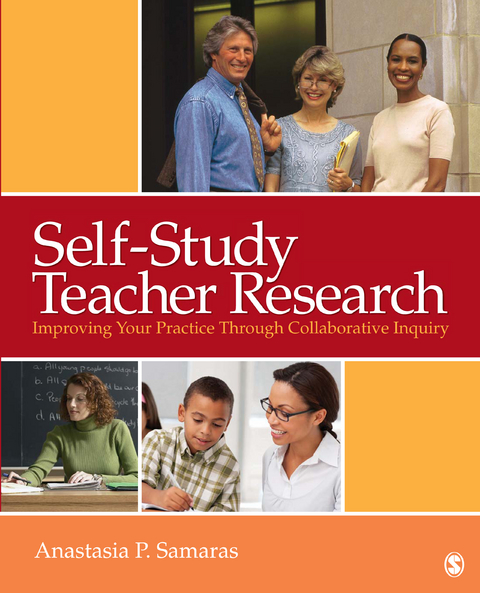
Self-Study Teacher Research (eBook)
344 Seiten
Sage Publications, Inc (Verlag)
978-1-5063-3255-0 (ISBN)
Preface
PART I: THE 6Ws OF SELF-STUDY RESEARCH
1. Understanding Self-Study: What and Why
What is Self-Study Teacher Research?
What Self-Study Teacher Research is Not
Why Conduct Self-Study Teacher Research?
Key Ideas
2. Overview of the Self-Study Process: What and How
Self-Study Research Project Planner
Self-Study Research Project Timeline
Self-Study Teacher Research Exemplar Brief
3. The Self-Study Community: When and Where and Who
Culture of the Self-Study Community
Paradigm Shift
Influence, Confluence, and Divergence
Important Events in Outgrowth of Self-Study School
Critique and Sustainability
Key Ideas
4. The Self-Study Research Methodology: Why and How
Characteristics of Self-Study Research
Five Foci Framework: Methodological Components of Self-Study Research
Key Ideas
5. Self-Study Methods: How
Choosing a Self-Study Method
Challenges in Choosing a Method
Key Ideas
PART II: YOUR SELF-STUDY PROJECT
6. Design
Design Matters
Seven Key Design Components
Key Ideas
7. Protect
Questioning the Ethics of Your Study
School Division Review
The Role of Professional Organizations
Standards of Research Ethics
Institutional Review Boards
Key Ideas
8. Organize Data
Alignment of Data with Question
Document
Categorize
Overlapping Research Phases
Key Ideas
9. Collect Data
Data Gathering Techniques
Alternative Data Gathering Techniques
Quantifiable Data
Key Ideas
10. Analyze Data
Research as a Recursive Act
Coding
Coding Families
Categories and Connections
Grounded Theory and the Constant Comparative Method
Concept Maps
Computer Software Tools
Key Ideas
11. Assess Research Quality
Multiple Sources of Data
Transparency, validation, exemplars, and trustworthiness
Reliability
Generalizability
Key Ideas
12. Write
Some Friendly Writing Advice
Writing Your Research Report
Writing Your Abstract
Welcoming Peer Critique
Key Ideas
13. Present and Publish
The Importance of Presenting Your Research
Challenge the Status Quo of Presentations
Pointers for Presenting
Writing Your Self-Study Proposal
Advice for Presenting
The Proposal Review Process
Advice for Getting Published
Key Ideas
Closing Remarks
Appendix A:Sample of a Self-Study Teacher Research Exemplar Brief
Appendix B:Self-Study is Not Just for Classroom Teachers
Glossary
References
Index
About the Author
| Erscheint lt. Verlag | 22.4.2010 |
|---|---|
| Verlagsort | Thousand Oaks |
| Sprache | englisch |
| Themenwelt | Schulbuch / Wörterbuch ► Lektüren / Interpretationen |
| Naturwissenschaften | |
| Sozialwissenschaften ► Pädagogik | |
| Sozialwissenschaften ► Soziologie ► Empirische Sozialforschung | |
| Schlagworte | Samaras |
| ISBN-10 | 1-5063-3255-2 / 1506332552 |
| ISBN-13 | 978-1-5063-3255-0 / 9781506332550 |
| Informationen gemäß Produktsicherheitsverordnung (GPSR) | |
| Haben Sie eine Frage zum Produkt? |
 EPUB (Adobe DRM)
Kopierschutz: Adobe-DRM
Adobe-DRM ist ein Kopierschutz, der das eBook vor Mißbrauch schützen soll. Dabei wird das eBook bereits beim Download auf Ihre persönliche Adobe-ID autorisiert. Lesen können Sie das eBook dann nur auf den Geräten, welche ebenfalls auf Ihre Adobe-ID registriert sind.
Details zum Adobe-DRM
Dateiformat: EPUB (Electronic Publication)
EPUB ist ein offener Standard für eBooks und eignet sich besonders zur Darstellung von Belletristik und Sachbüchern. Der Fließtext wird dynamisch an die Display- und Schriftgröße angepasst. Auch für mobile Lesegeräte ist EPUB daher gut geeignet.
Systemvoraussetzungen:
PC/Mac: Mit einem PC oder Mac können Sie dieses eBook lesen. Sie benötigen eine
eReader: Dieses eBook kann mit (fast) allen eBook-Readern gelesen werden. Mit dem amazon-Kindle ist es aber nicht kompatibel.
Smartphone/Tablet: Egal ob Apple oder Android, dieses eBook können Sie lesen. Sie benötigen eine
Geräteliste und zusätzliche Hinweise
Buying eBooks from abroad
For tax law reasons we can sell eBooks just within Germany and Switzerland. Regrettably we cannot fulfill eBook-orders from other countries.
aus dem Bereich