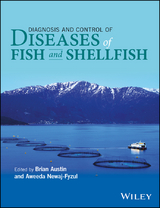
There has been a continual expansion in aquaculture, such that total production is fast approaching that of wild-caught fisheries. Yet the expansion is marred by continued problems of disease. New pathogens emerge, and others become associated with new conditions. Some of these pathogens become well established, and develop into major killers of aquatic species.
Diagnosis and Control of Diseases of Fish and Shellfish focuses on the diagnosis and control of diseases of fish and shellfish, notably those affecting aquaculture. Divided into 12 chapters, the book discusses the range of bacterial, viral and parasitic pathogens, their trends, emerging problems, and the relative significance to aquaculture. Developments in diagnostics and disease management, including the widespread use of serological and molecular methods, are presented. Application/dose and mode of action of prebiotics, probiotics and medicinal plant products used to control disease are examined, as well as the management and hygiene precautions that can be taken to prevent/control the spread of disease.
This book will be a valuable resource for researchers, students, diagnosticians, veterinarians, fish pathologists and microbiologists concerned with the management of diseases of fish and shellfish.
About the Editors
Brian Austin is Professor Emeritus of Microbiology, and formerly Director, of the Institute of Aquaculture, University of Stirling, Scotland, UK. He has over 30 years of experience researching the diagnosis and control of bacterial fish diseases.
Aweeda Newaj-Fyzul, University of the West Indies, Trinidad and Agriquatics, Chaguanas, Trinidad.
There has been a continual expansion in aquaculture, such that total production is fast approaching that of wild-caught fisheries. Yet the expansion is marred by continued problems of disease. New pathogens emerge, and others become associated with new conditions. Some of these pathogens become well established, and develop into major killers of aquatic species. Diagnosis and Control of Diseases of Fish and Shellfish focuses on the diagnosis and control of diseases of fish and shellfish, notably those affecting aquaculture. Divided into 12 chapters, the book discusses the range of bacterial, viral and parasitic pathogens, their trends, emerging problems, and the relative significance to aquaculture. Developments in diagnostics and disease management, including the widespread use of serological and molecular methods, are presented. Application/dose and mode of action of prebiotics, probiotics and medicinal plant products used to control disease are examined, as well as the management and hygiene precautions that can be taken to prevent/control the spread of disease. This book will be a valuable resource for researchers, students, diagnosticians, veterinarians, fish pathologists and microbiologists concerned with the management of diseases of fish and shellfish.
About the Editors Brian Austin is Professor Emeritus of Microbiology, and formerly Director, of the Institute of Aquaculture, University of Stirling, Scotland, UK. He has over 30 years of experience researching the diagnosis and control of bacterial fish diseases. Aweeda Newaj-Fyzul, University of the West Indies, Trinidad and Agriquatics, Chaguanas, Trinidad.
Chapter 2
Bacterial Diagnosis and Control in Fish and Shellfish
Mags Crumlish
Institute of Aquaculture, University of Stirling, Stirling, Scotland, UK
Introduction
Aquaculture is described as an ‘organised production of the crop in the aquatic medium’ (FAO, 1987) and while this might be considered a very generic description, it is actually quite accurate given the diversity in production and range of species farmed. These systems are often categorized as either intensive, semi-intensive or extensive which is more a reflection of the production levels in these types of systems as the boundaries between each category are not well defined. Aquaculture is practised in all parts of the world and farms may be located in coastal areas, open marine water and inland in earthen ponds or river-based cages. Given the ubiquitous presence of bacteria within the environment, disease outbreaks can occur in each of these production types and locations.
Global aquaculture production has continued to expand at approximately 9% per year since the 1970s, with Asia dominating the production levels, particularly in finfish (FAO, 2014). It is in Asia that we see the largest and most rapid expansion. The growth of Asian aquaculture has outstripped that of European and North American production, which remains high but with limited capacity for significant growth compared with Asian aquaculture (Bostock et al., 2010). This is primarily due to the increasing desire for intensification but also the availability of the more diverse species range suitable for farming in Asia. At present, it is estimated that more than 600 aquatic species are raised in freshwater, brackish and marine farms of varied intensity (FAO, 2014). These 600 species include both vertebrate and invertebrate animal species as well as plants, but for the purposes of this chapter, we will focus our attention on the most intensive farmed species that are traded globally for human food and include examples from finfish and crustaceans only. From this point onwards, the use of the term ‘fish’ includes finfish and shrimp unless otherwise stated.
Bacterial Infections in Aquaculture
Bacteria are described as single-celled organisms that have a rather simple cellular structure, lacking membrane-bound organelles. They are found ubiquitously in all habitats, including fresh and sea water, and display a range of cellular morphologies. Bacterial classification relies on identification of phenotypic and genotypic characteristics and the relatively simple Gram stain reaction remains the most reliable method allowing species to be separated into either Gram-positive or Gram-negative groups. It is the chemical and physical properties of the bacterial cell wall that allow the retention of the coloured dye used during the Gram stain reaction. In aquaculture, disease outbreaks occur from both Gram-negative and Gram-positive bacterial species, which may be rod-like or spherical cocci in shape. It is not the purpose of this chapter to discuss in detail the varied bacterial species; the reader is referred to Austin and Austin (2016) for more in-depth detail on specific aquatic bacterial pathogens. A list of the commonly reported bacterial diseases that affect intensive monoculture systems is provided in Table 2.1.
Table 2.1 Bacterial pathogens commonly reported in intensive production systems
| Disease | Pathogen | Comments |
| Gram-negative bacteria |
| Skin ulcers | Aliivibrio logei |
| Cold water vibriosis or Hitra disease | Aliivibrio salmonicida |
| Septicaemia or motile Aeromonas septicaemia (MAS) | Aeromonas hydrophila Aeromonas sobria Aeromonas caviae | Taxonomically difficult to identify at times, usually a complex |
| Furunculosis | Aeromonas salmonicida |
| Enteric septicaemia of catfish (ESC) and bacillary necrosis of pangasius (BNP) | Edwardsiella ictaluri |
| Edwardsiellosis | Edwardsiella tarda |
| Edwardsiellosis | Edwardsiella piscicida |
| Rainbow trout fry syndrome (RTFS) or cold water disease | Flavobacterium psychrophilum | Formerly Cytophaga psychrophila |
| Columnaris or saddleback | Flavobacterium columnare | Formerly Flexibacter/Cytophaga columnaris |
| Gill disease or gill rot | Flavobacterium branchiophilum |
| Francisellosis | Francisella asiatica Francisella noatunensis | Warm-water species Cold-water species |
| Winter ulcer disease | Moritella viscosa |
| Septicaemia | Pseudomonas fluorescens |
| Red spot or winter disease | Pseudomonas anguilliseptica |
| Pasteurellosis | Photobacterium damselae subsp. piscicida | Formerly Pasteurella piscicida |
| Marine columnaris | Tenacibaculum maritimum | Formerly Flexibacter maritimus |
| Septicaemia | Vibrio alginolyticus |
| Vibriosis | Vibrio anguillarum | Also known as Listonella anguillarum |
| Vibriosis | Vibrio ordalii |
| Enteric red mouth disease (ERM) | Yersinia ruckeri |
| Gram-positive bacteria |
| Streptococcosis | Streptococcus agalactiae Streptococcus iniae | Formerly S. difficilis |
| Lactococcosis | Lactococcus garvieae |
| Bacterial kidney disease (BKD) | Renibacterium salmoninarum |
| Mycobacteriosis ‘fish tuberculosis’ | Mycobacterium spp. |
The bacterial pathogens that have been identified and characterized the most are those that cause greater economic impact as determined through high mortalities or morbidity at the farm. At present, it is fair to say that we see more infections from Gram-negative than Gram-positive species (see Table 2.1). However, further intensification and introduction of novel host species combined with increasing consumer demand for non-local or exotic food types may change this in the future. Furthermore, bacterial identification and taxonomy is a rapidly developing area (Austin and Austin, 2016) as we move away from phenotypic-only tests and rely more on molecular tools for pathogen identification. This will not only result in taxonomic changes but with appropriate development, such methods may provide additional diagnostic tools leading to the production of novel control strategies applicable within aquaculture.
Bacterial Disease Diagnostics and Control of Infections
The principles behind aquatic bacterial diagnostics are similar to those practised in human clinical and terrestrial veterinary medicine. While the methods and approaches are similar, the type of samples and the diagnostic tests used will depend on the reason for the initial investigation. In aquaculture, diagnostic samples are provided to the laboratory to determine the health status of animals prior to transportation of live shipments or used to confirm that animals are specific pathogen free (SPF). However, like other farming sectors, the most common use of diagnostics in aquaculture is investigation of an unexpected mortality or morbidity within the farmed stocks from a suspected disease. Not all causes of mortality are infectious and so disease outbreaks can only be confirmed using a diagnostic approach. This means that to perform the diagnosis, we need to have a combination of information which includes the farm history and outbreak or event history, followed by a visual examination of the animals with and without clinical signs prior to taking samples for the laboratory tests.
Disease outbreaks are multifactorial, where the clinical outcome is dependent on the interaction between the host and the pathogen. To be more accurate, it is the interaction of the host immune response with the virulence factors produced by the pathogen that provides the range of clinical signs observed. Disease outbreaks in aquatic farms are often described as either acute or chronic, which is a reflection of the onset of the disease condition rather than an accurate description of the infection itself.
Reliance on observations of gross clinical signs of disease in aquaculture is limited, as the clinical presentation can vary tremendously and not all clinical signs have a microbial aetiology. Infections due to the Gram-negative bacterium Edwardsiella ictaluri in Asian catfish species Pangasianodon hypophthalmus provide few if any external clinical signs (Ferguson...
| Erscheint lt. Verlag | 20.3.2017 |
|---|---|
| Sprache | englisch |
| Themenwelt | Naturwissenschaften ► Biologie |
| Technik | |
| Weitere Fachgebiete ► Land- / Forstwirtschaft / Fischerei | |
| Schlagworte | Aquaculture • Aquaculture, Fisheries & Fish Science • Aquakultur, Fischereiwesen u. Fischforschung • Biowissenschaften • Diagnostics • Disease • Fischkrankheit • Fischkrankheiten • fish • Fish Diseases • immunity • Life Sciences • Microbiology & Virology • Mikrobiologie • Mikrobiologie u. Virologie • Molecular Techniques • Pathology • prophylaxis • shellfish • therapy • Veterinärmedizin • Veterinärmedizin / Fische • Veterinärmedizin • Veterinärmedizin / Fische • Veterinary Medicine • Veterinary Medicine - Fish |
| ISBN-13 | 9781119152132 / 9781119152132 |
| Informationen gemäß Produktsicherheitsverordnung (GPSR) | |
| Haben Sie eine Frage zum Produkt? |
 EPUB (Adobe DRM)
Kopierschutz: Adobe-DRM
Adobe-DRM ist ein Kopierschutz, der das eBook vor Mißbrauch schützen soll. Dabei wird das eBook bereits beim Download auf Ihre persönliche Adobe-ID autorisiert. Lesen können Sie das eBook dann nur auf den Geräten, welche ebenfalls auf Ihre Adobe-ID registriert sind.
Details zum Adobe-DRM
Dateiformat: EPUB (Electronic Publication)
EPUB ist ein offener Standard für eBooks und eignet sich besonders zur Darstellung von Belletristik und Sachbüchern. Der Fließtext wird dynamisch an die Display- und Schriftgröße angepasst. Auch für mobile Lesegeräte ist EPUB daher gut geeignet.
Systemvoraussetzungen:
PC/Mac: Mit einem PC oder Mac können Sie dieses eBook lesen. Sie benötigen eine
eReader: Dieses eBook kann mit (fast) allen eBook-Readern gelesen werden. Mit dem amazon-Kindle ist es aber nicht kompatibel.
Smartphone/Tablet: Egal ob Apple oder Android, dieses eBook können Sie lesen. Sie benötigen eine
Geräteliste und zusätzliche Hinweise
Buying eBooks from abroad
For tax law reasons we can sell eBooks just within Germany and Switzerland. Regrettably we cannot fulfill eBook-orders from other countries.
aus dem Bereich