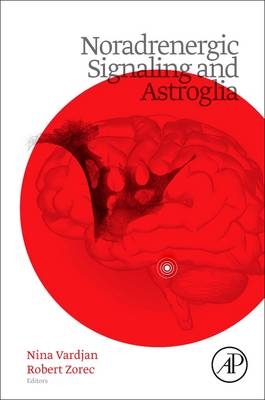
Noradrenergic Signaling and Astroglia
Academic Press Inc (Verlag)
9780128050880 (ISBN)
Nina Vardjan, Ph.D., Assistant Professor of Biochemistry is Coordinating Director of the Neuroglia Projects, part of the National Programme of Cell Physiology (jointly carried out by the Laboratory of Neuroendocrinology-Molecular Cell Physiology at Institute of Pathophysiology, Faculty of Medicine, University of Ljubljana, and the Cell Engineering Laboratory at Celica Biomedical, Tech Park Ljubljana, Slovenia). Her fields of study include Biochemistry, Molecular Biology, Neuroscience, Cell Physiology, Neuroendocrinology and Biophysics. She obtained her B.Sc. in Microbiology at the Biotechnical Faculty, University of Ljubljana, Slovenia in 1999. In 2003 she received her Ph.D. in Biochemistry and Molecular Biology at the Post-graduate Study of Biomedicine, Faculty of Medicine, University of Ljubljana, Slovenia. During her Ph.D. she held the position of a Young Researcher and from 2003 to 2004 she was Associate Research Scientist at the Department of Biochemistry and Molecular Biology, Jožef Stefan Institute, Ljubljana, Slovenia. In 2002, she obtained a FEBS Fellowship for training in neuromuscular junction physiology at the Department of Physiology and Pharmacology, University of Strathclyde, Glasgow, UK. Since 2004, she holds a Research Scientist position at the Celica Biomedical and the Faculty of Medicine, Ljubljana, Slovenia. From 2006, she is involved in teaching (General Physiology, Cell Physiology, Molecular Physiology, Cell Engineering) at the Faculty of Chemistry and Chemical Technology and Biotechnical Faculty, University of Ljubljana, Slovenia. She co-edited a special volume of the Annals of the New York Academy of Sciences “Mechanisms of Exocytosis and co-organized the international meetings ISN Satellite Meeting: Glial Cells in (Patho)physiology (2011), FEPS 2009 (2009), and Mechanism(s) of Exocytosis (2008) and 15th Young Neuroscientists Meeting (2008). Robert Zorec, Ph.D., Professor of Pathophysiology at the University of Ljubljana, Faculty of Medicine, a Full Member of Academia Europaea (London) and Slovenian Academy of Sciences and Arts (continuation of Academia Operosorum Labacensis from 1693), as well as a past Member of the Committee for Advanced Therapy at the European Medicines Agency (London). He received his Ph.D. from the University of Ljubljana in 1986 for his work conducted at the Newcastle Medical School and at the MRC Neuroendocrinology Unit in Newcastle upon Tyne, UK, in Dr. R.N. McBurney's laboratory studying single-channel chloride currents activated by GABA and glycine in spinal cord neurons. He introduced the patch-clamp technique in Ljubljana in 1985. Dr. Zorec’s post-doctoral experience was at Cambridge, UK, in Dr. W.T. Mason's laboratory. Independently of the laboratory of the Nobel Laureate, Erwin Neher, he developed his own membrane capacitance measurements (MCM) to monitor processes such as endo-and exocytosis in real time. In Prof. M. Berridge's laboratory at Cambridge University (UK), he studied cytosolic calcium homeostasis by imaging related to the MCM approach. In 1991, he conducted experiments on plant secretory cells at the University of Adelaide, Australia. He used his MCM technique to study regulated exocytosis in skeletal muscle, taste cells, neurons, and glia. Since 1991, he has been Head of the Laboratory of Neuroendocrinology-Molecular Cell Physiology and in 1997 he received the Republic of Slovenia Prize for Science. In 2000, he established the Cell Engineering Laboratory at Celica Biomedical, Ljubljana Tech Park (http://celicabiomedical.com/) where he has been a CEO since 2006 and the head of the Carl Zeiss Reference Center for Confocal Microscopy. Recently, his laboratory has developed research on astrocytes, the most heterogeneous neuroglial cells in the brain, to learn how vesicle traffic and regulated exocytosis are altered in these cells under pathologic conditions. In addition to MCM, super-resolution fluorescence microscopy has been developed in his laboratory to study subcellular vesicle traffic and more than 160 peer-reviewed papers have been published. He has lectured at over 100 distinguished universities, international meetings, and research institutions worldwide. He has been a reviewer for leading scientific journals including Nature, Science, PNAS, Neuron, Journal of Neuroscience, Journal of Physiology, Biophysical Journal, Brain Research, and others. In addition to basic research, the laboratory is also developing advanced cell-based medicines such as hybridoma cells to treat cancer; one product, HybriCure, is currently in phase 1/2 clinical trials.
1. Locus coeruleus noradrenergic neurons and astroglia in health and disease
2. Astroglial adrenergic receptor signaling in brain cortex
3. White matter astrocytes: Adrenergic mechanisms
4. Role for astroglial a1-adrenergic receptors in glia-neuron communications and aging-related metaplasticity in the neocortex
5. Adrenergic Ca2+ and cAMP excitability: Effects on glucose availability and cell morphology in astrocytes
6. Adrenergic receptors on astrocytes modulate gap junctions
7. Fluxes of lactate into, from, and among gap junction-coupled astroglia and their interaction with noradrenaline
8. Dialogue between astrocytes and noradrenergic neurones via L-lactate
9. Noradrenergic system and memory: The role of astrocytes
10. Hippocampal noradrenaline regulates spatial working memory in the rat
11. Enteric astroglia and noradrenergic/purinergic signaling
12. Noradrenaline drives structural changes in astrocytes and brain extracellular space
13. Signalling pathway of B-adrenergic receptor in astrocytes and its relevance to brain oedema
14. Noradrenaline, astroglia, and neuroinflammation
15. Astrocytic B2 adrenergic receptors and multiple sclerosis
16. Potentiation of B-amyloid–induced cortical inflammation by noradrenaline and noradrenergic depletion: Implications for Alzheimer’s disease
| Erscheinungsdatum | 08.08.2017 |
|---|---|
| Verlagsort | San Diego |
| Sprache | englisch |
| Maße | 152 x 229 mm |
| Gewicht | 700 g |
| Themenwelt | Medizin / Pharmazie ► Medizinische Fachgebiete ► Neurologie |
| Naturwissenschaften ► Biologie ► Humanbiologie | |
| Naturwissenschaften ► Biologie ► Zoologie | |
| ISBN-13 | 9780128050880 / 9780128050880 |
| Zustand | Neuware |
| Informationen gemäß Produktsicherheitsverordnung (GPSR) | |
| Haben Sie eine Frage zum Produkt? |
aus dem Bereich