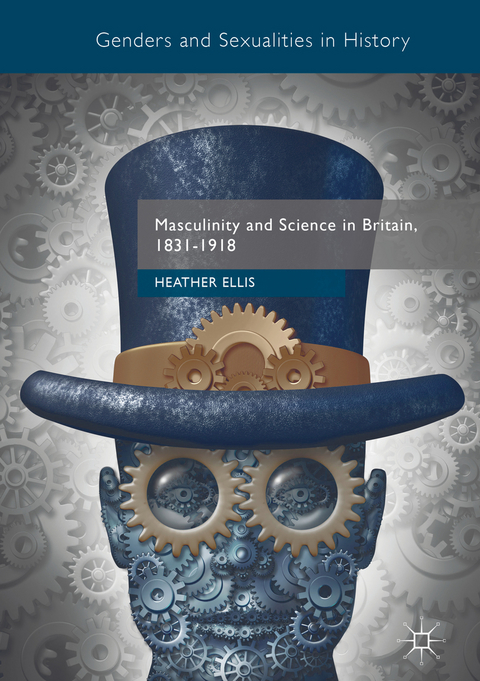
Masculinity and Science in Britain, 1831–1918 (eBook)
240 Seiten
Palgrave Macmillan UK (Verlag)
9781137311740 (ISBN)
This book offers the first in-depth study of the masculine self-fashioning of scientific practitioners in nineteenth and early twentieth-century Britain. Focusing on the British Association for the Advancement of Science, founded in 1831, it explores the complex and dynamic shifts in the public image of the British 'man of science' and questions the status of the natural scientist as a modern masculine hero. Until now, science has been examined by cultural historians primarily for evidence about the ways in which scientific discourses have shaped prevailing notions about women and supported the growth of oppressive patriarchal structures. This volume, by contrast, offers the first in-depth study of the importance of ideals of masculinity in the construction of the male scientist and British scientific culture in the nineteenth and early twentieth centuries. From the eighteenth-century identification of the natural philosopher with the reclusive scholar, to early nineteenth-century attempts to reinvent the scientist as a fashionable gentleman, to his subsequent reimagining as the epitome of Victorian moral earnestness and meritocracy, Heather Ellis analyzes the complex and changing public image of the British 'man of science'.
Heather Ellis is Vice-Chancellor's Fellow at the University of Sheffield, UK. She researches the cultural history of higher education, science and gender. She is the author of Generational Conflict and University Reform: Oxford in the Age of Revolution (2012) which was awarded the 2014 Kevin Brehony prize by the History of Education Society UK.
This book offers the first in-depth study of the masculine self-fashioning of scientific practitioners in nineteenth and early twentieth-century Britain. Focusing on the British Association for the Advancement of Science, founded in 1831, it explores the complex and dynamic shifts in the public image of the British 'man of science' and questions the status of the natural scientist as a modern masculine hero. Until now, science has been examined by cultural historians primarily for evidence about the ways in which scientific discourses have shaped prevailing notions about women and supported the growth of oppressive patriarchal structures. This volume, by contrast, offers the first in-depth study of the importance of ideals of masculinity in the construction of the male scientist and British scientific culture in the nineteenth and early twentieth centuries. From the eighteenth-century identification of the natural philosopher with the reclusive scholar, to early nineteenth-century attempts to reinvent the scientist as a fashionable gentleman, to his subsequent reimagining as the epitome of Victorian moral earnestness and meritocracy, Heather Ellis analyzes the complex and changing public image of the British 'man of science'.
Heather Ellis is Vice-Chancellor’s Fellow at the University of Sheffield, UK. She researches the cultural history of higher education, science and gender. She is the author of Generational Conflict and University Reform: Oxford in the Age of Revolution (2012) which was awarded the 2014 Kevin Brehony prize by the History of Education Society UK.
Introduction: The Man of Science as a Gendered Ideal.- 1. The Changing Public Image of the Man of Science, 1600-1830.- 2. New Masculine Heroes: Davy, Bacon and the Construction of the Gentleman-Scientist.- 3. 'An Effete World': Gendered Criticism and the British Association.- 4. Thomas Carlyle, the X-Club and the Hero as Man of Science.- 5. The Decline of the British Association? Marginalization, Masculinity and Marconi.- 6. Reuniting Theory and Practice: The Man of Science and the First World War.- Conclusion.
| Erscheint lt. Verlag | 20.1.2017 |
|---|---|
| Reihe/Serie | Genders and Sexualities in History | Genders and Sexualities in History |
| Zusatzinfo | XII, 240 p. |
| Verlagsort | London |
| Sprache | englisch |
| Themenwelt | Geschichte ► Allgemeine Geschichte ► Neuzeit (bis 1918) |
| Geisteswissenschaften ► Geschichte ► Regional- / Ländergeschichte | |
| Geschichte ► Teilgebiete der Geschichte ► Kulturgeschichte | |
| Naturwissenschaften | |
| Sozialwissenschaften ► Politik / Verwaltung | |
| Sozialwissenschaften ► Soziologie ► Gender Studies | |
| Technik | |
| Schlagworte | Gender • 'Man of science' • Natural Philosophy • Natural science • Scientific institutions |
| ISBN-13 | 9781137311740 / 9781137311740 |
| Informationen gemäß Produktsicherheitsverordnung (GPSR) | |
| Haben Sie eine Frage zum Produkt? |
 PDF (Wasserzeichen)
DRM: Digitales Wasserzeichen
Dieses eBook enthält ein digitales Wasserzeichen und ist damit für Sie personalisiert. Bei einer missbräuchlichen Weitergabe des eBooks an Dritte ist eine Rückverfolgung an die Quelle möglich.
Dateiformat: PDF (Portable Document Format)
Mit einem festen Seitenlayout eignet sich die PDF besonders für Fachbücher mit Spalten, Tabellen und Abbildungen. Eine PDF kann auf fast allen Geräten angezeigt werden, ist aber für kleine Displays (Smartphone, eReader) nur eingeschränkt geeignet.
Systemvoraussetzungen:
PC/Mac: Mit einem PC oder Mac können Sie dieses eBook lesen. Sie benötigen dafür einen PDF-Viewer - z.B. den Adobe Reader oder Adobe Digital Editions.
eReader: Dieses eBook kann mit (fast) allen eBook-Readern gelesen werden. Mit dem amazon-Kindle ist es aber nicht kompatibel.
Smartphone/Tablet: Egal ob Apple oder Android, dieses eBook können Sie lesen. Sie benötigen dafür einen PDF-Viewer - z.B. die kostenlose Adobe Digital Editions-App.
Buying eBooks from abroad
For tax law reasons we can sell eBooks just within Germany and Switzerland. Regrettably we cannot fulfill eBook-orders from other countries.
aus dem Bereich