Recent Climate Change Impacts on Mountain Glaciers (eBook)
John Wiley & Sons (Verlag)
978-1-119-06814-3 (ISBN)
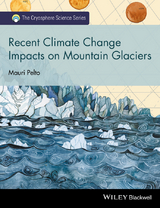
The goal of this volume is to tell the story, glacier by glacier, of response to climate change from 1984-2015. Of the 165 glaciers examined in 10 different alpine regions, 162 have retreated significantly. It is evident that the changes are significant, not happening at a 'glacial' pace, and are profoundly affecting alpine regions. There is a consistent result that reverberates from mountain range to mountain range, which emphasizes that although regional glacier and climate feedbacks differ, global changes are driving the response. This book considers ten different glaciated regions around the individual glaciers, and offers a different tune to the same chorus of glacier volume loss in the face of climate change.
Mauri Pelto is Professor of Environmental Science at Nichols College in Massachusetts, USA. He is founder and director of the North Cascade Glacier Climate Project since 1984. This project monitors the mass balance and behavior of more glaciers than any other in North America. Mauri has spent the last 35 summers working in the field on glaciers in Alaska and Washington with the Juneau Icefield Research Program and the North Cascade Glacier Climate Project. He is the United States representative to the World Glacier Monitoring Service, which collects all mass balance and terminus change data for glaciers. He also blogs for the American Geophysical Union, 'From a Glaciers Perspective'.
Glaciers are considered a key and an iconic indicator of climate change. The World Glacier Monitoring Service has noted that global alpine balance has been negative for 35 consecutive years. This highlights the dire future that alpine glaciers face.The goal of this volume is to tell the story, glacier by glacier, of response to climate change from 1984-2015. Of the 165 glaciers examined in 10 different alpine regions, 162 have retreated significantly. It is evident that the changes are significant, not happening at a "e;glacial"e; pace, and are profoundly affecting alpine regions. There is a consistent result that reverberates from mountain range to mountain range, which emphasizes that although regional glacier and climate feedbacks differ, global changes are driving the response. This book considers ten different glaciated regions around the individual glaciers, and offers a different tune to the same chorus of glacier volume loss in the face of climate change.
Mauri Pelto is Professor of Environmental Science at Nichols College in Massachusetts, USA. He is founder and director of the North Cascade Glacier Climate Project since 1984. This project monitors the mass balance and behavior of more glaciers than any other in North America. Mauri has spent the last 35 summers working in the field on glaciers in Alaska and Washington with the Juneau Icefield Research Program and the North Cascade Glacier Climate Project. He is the United States representative to the World Glacier Monitoring Service, which collects all mass balance and terminus change data for glaciers. He also blogs for the American Geophysical Union, "From a Glaciers Perspective".
Chapter 1
Alpine Glaciers: An Introduction
1.1 Glacier Observation Programs
Glaciers have been studied as sensitive indicators of climate for more than a century (Forel, 1895; Zemp et al., 2015). Glacier fluctuations in terminus position, mass balance, and area are recognized as one of the most reliable indicators of climate change (Haeberli, Cihlar, and Barry, 2000; Oerlemans, 2005). The recognition of glacier sensitivity to climate led to the development of a global reporting system for glacier terminus change and glacier mass balance during the International Geophysical Year (IGY). Today, this system is managed by the World Glacier Monitoring Service (WGMS). WGMS annually collects standardized observations on changes in mass, volume, area, and length of glaciers with time. This data on individual glacier fluctuations has been enhanced and supplemented in recent years by glacier inventories derived from satellite imagery. Glacier fluctuation and inventory data are today high-priority key variables in climate system monitoring (Sharp et al., 2015; Pelto, 2015b) (Fig. 1.1).
Figure 1.1 Decrease in Glacier Mass Balance based on data from Pelto (2015a) to illustrate the dramatic decline in North Cascades glaciers, WA. (Watercolor, Jill Pelto 2015).
Observations of alpine glaciers most commonly focus on changes in terminus behavior, to identify glacier response to climate changes (Forel, 1895). A number of nations have long-running annual terminus survey programs: Austria, Italy, Switzerland, Norway, and Iceland (WGMS, 2012). The data set of terminus change compiled by the WGMS has 42,000 measurements on 2000 glaciers (Zemp et al., 2015).
Annual mass balance measurements are the most accurate indicator of short-term glacier response to climate change (Haeberli, Cihlar, and Barry, 2000; Zemp, Hoelzle, and Haeberli, 2009). Annual mass balance is the change in mass of a glacier during a year resulting from the difference between net accumulation and net ablation. The importance of monitoring glacier mass balance was recognized during the IGY in 1957. For the IGY, a number of benchmark glaciers around the world were chosen where mass balance would be monitored. This network continued by the WGMS has proven valuable with a total of annual glacier observations; from 1985 to 2014, the average number of glaciers reporting annual mass balance has been approximately 100. Thirty-seven of these are considered reference glaciers with at least a continuous 30-year record of mass balance.
In addition, the advent of frequent high-resolution satellite imagery has allowed for the completion of global mountain glacier inventories led by the Global Land Ice Measurements from Space (GLIMS) and the Randolph Glacier Inventory (RGI) (Arendt et al., 2012; Pfeffer et al., 2014). Detailed repeated inventories have developed a standard approach and also identified changes through time (Kääb et al., 2002; Fischer et al., 2014; Radić and Hock, 2014). The inventories focus on using standard methodologies to define glacier outlines and glacier attributes. Typical attributes include area, length, slope, aspect, terminal environment, elevation range, and shape classification. Satellite images can also be used to map transient snowlines (TSLs), the snowline separating the ablation and accumulation zone during the summer; the end of summer TSL represents the equilibrium line altitude (ELA) on most alpine glaciers that lack superimposed ice formation (Østrem, 1975; Mernild et al., 2013). These data provide baseline information for an assessment of glacier changes.
The geodetic inventories assess glacier area and in many cases glacier volume. ICESat and other instruments provide elevation change data to compliment areal extent change assessment (Neckel et al., 2014). The remote sensing geodetic inventories and the field glaciological observations both indicate that rates of early twenty-first-century mass loss are historically unprecedented at global scale (Zemp et al., 2015). The largest negative mass balances have occurred in one of the last two decades, depending on the region (WGMS, 2013). The decadal mean annual mass balance was −221 mm in the 1980s, −389 mm in the 1990s, and −726 mm for 2000s. The continued large negative annual balances reported indicate that glaciers are not approaching equilibrium (Pelto, 2010). The strong negative mass balance suggests that glaciers of many regions are committed to further volume loss even under current climatic conditions (Zemp et al., 2015). Radić and Hock, (2014) indicate that future climate change will enhance the mass losses substantially.
The RGI version 3.2 was completed in 2014, compiling digital outlines of glaciers, excluding the ice sheets using satellite imageries from 1999 to 2010. The inventory identified 198,000 glaciers, with a total extent estimated at 726,800 ± 34,000 km2 (Pfeffer et al., 2014). An earlier RGI 2.0 has been used to estimate global alpine glacier volume at ∼150,000 Gt (Radić and Hock, 2014), quantifying the important role as a water resource and potential contributor to sea-level rise.
This information on glacier mass balance and terminus change has been collected and made available from internationally coordinated efforts (WGMS, 2011, 2013). GLIMS and the RGI have made available their glacier inventory data as well (Arendt et al., 2012; Pfeffer et al., 2014). This is a wealth of information on the state of glaciers.
1.2 Importance of Mountain Glaciers
Mountain glaciers are important as water resources for agriculture, hydropower, aquatic life, and basic water supply (Schaner et al., 2012; Bliss, Hock, and Radić, 2014). Alpine glaciers in many areas of the world are important for water resources – melting in the summer when precipitation is lowest and water demand from society is largest. The timing and magnitude of glacier melt are sensitive to climate change; hence, rational water resource management depends on understanding future changes in water resources from glaciated mountain ranges (Immerzeel, Beek van, and Bierkens, 2010).
Mountain glaciers have also contributed to sea-level rise (Radić et al., 2013; Marzeion, Jarosch, and Hofer, 2012). The annual contribution has been approximately 1 mm a−1 during the twentieth century since (Marzeion, Jarosch, and Hofer, 2012). Mountain glaciers can also increase local natural hazards such as glacial lake outburst floods (Bajracharya and Mool, 2009).
1.3 Glacier Terminus Response to Climate Change
In this book, we examine glacier responses during the 1985–2015 period, with the primary climate change being the global temperature rise since 1976 (GISTEMP Team, 2015). Changes in mass balance control a glacier's long-term behavior. Terminus and glacier area changes are then impacted with a lag time for both an initial and more complete response.
For any glacier, there is a lag time (Ts) between a significant climate change and the initial observed terminus response (Paterson, 1994); this is also referred to as the reaction time of the glacier. It should be noted that Ts cannot be considered a physical property of a glacier and is expected to depend on the mass balance history and physical characteristics of the glacier.
In addition, for each glacier there is a response time to approach a new steady state for a given climate-driven mass balance change (Tm), referred to as length of memory by Johannesson, Raymond, and Waddington (1989). They defined Tm as the timescale for exponential asymptotic approach to a final steady state (approximately 63% of a full response), resulting from a sudden change in climate to a new constant climate. The magnitudes of Ts and Tm are crucial to interpreting past and current glacier fluctuations and predicting future changes (Paterson, 1994; Johannesson, Raymond, and Waddington, 1989).
For glaciers in the North Cascades, Washington, Pelto and Hedlund (2001) found a Ts of 10–20 years and a Tm of 20–100 years.
1.3.1 Equilibrium Response
Typically, glacier terminus retreat results in the loss of the lowest elevation region of the glacier. Since higher elevations are cooler than lower elevations, the disappearance of the lowest portion of the glacier reduces overall ablation, thereby increasing mass balance and potentially reestablishing equilibrium (Pelto, 2010). Typically, a glacier's thinning is greatest at the terminus, and at some distance above the terminus; usually in the accumulation zone, the glacier is no longer thinning appreciably even during retreat (Schwitter and Raymond, 1993). This behavior of greatest thinning at the terminus and limited thinning in the accumulation zone suggests a glacier that will retreat to a new stable position (Schwitter and Raymond, 1993).
A period of sustained positive mass balance will lead to an increase in glacier thickness, an increase in velocity, and eventually an advance. The advance expands the area of the glacier at the lowest elevations where mass balance is more negative. When the expansion at low elevation is sufficient to offset the increased mass balance, the retreat will end as equilibrium is reached.
1.3.2 Disequilibrium Response
In recent years, an increasing number of glaciers have been identified to be experiencing a disequilibrium response to climate (Pelto, 2010; Carturan et al., 2013). There is no point to which such a glacier can retreat to reach...
| Erscheint lt. Verlag | 3.11.2016 |
|---|---|
| Reihe/Serie | The Cryosphere Science Series |
| The Cryosphere Science Series | The Cryosphere Science Series |
| Sprache | englisch |
| Themenwelt | Naturwissenschaften ► Biologie ► Ökologie / Naturschutz |
| Naturwissenschaften ► Geowissenschaften ► Geologie | |
| Technik | |
| Schlagworte | ALPINE • alpine regions • Balance • Change • climate change • Climatology & Palaeoclimatology • consecutive • Different • dire • earth sciences • Examined • Fluvial Hydrology & Limnology • Future • Geowissenschaften • Glacier • Glaciers • glaciers face • Global • goal • Hydrologie der Flüsse u. Binnengewässer • Hydrologie der Flüsse u. Binnengewässer • iconic • Indicator • Klimatologie u. Paläoklimatologie • Klimatologie u. Paläoklimatologie • Monitoring • Negative • Quartärforschung, Glaziologie • Quartärforschung, Glaziologie • Quaternary Science & Glaciology • response • Story • Volume • world glacier • years |
| ISBN-10 | 1-119-06814-2 / 1119068142 |
| ISBN-13 | 978-1-119-06814-3 / 9781119068143 |
| Informationen gemäß Produktsicherheitsverordnung (GPSR) | |
| Haben Sie eine Frage zum Produkt? |
 EPUB (Adobe DRM)
Kopierschutz: Adobe-DRM
Adobe-DRM ist ein Kopierschutz, der das eBook vor Mißbrauch schützen soll. Dabei wird das eBook bereits beim Download auf Ihre persönliche Adobe-ID autorisiert. Lesen können Sie das eBook dann nur auf den Geräten, welche ebenfalls auf Ihre Adobe-ID registriert sind.
Details zum Adobe-DRM
Dateiformat: EPUB (Electronic Publication)
EPUB ist ein offener Standard für eBooks und eignet sich besonders zur Darstellung von Belletristik und Sachbüchern. Der Fließtext wird dynamisch an die Display- und Schriftgröße angepasst. Auch für mobile Lesegeräte ist EPUB daher gut geeignet.
Systemvoraussetzungen:
PC/Mac: Mit einem PC oder Mac können Sie dieses eBook lesen. Sie benötigen eine
eReader: Dieses eBook kann mit (fast) allen eBook-Readern gelesen werden. Mit dem amazon-Kindle ist es aber nicht kompatibel.
Smartphone/Tablet: Egal ob Apple oder Android, dieses eBook können Sie lesen. Sie benötigen eine
Geräteliste und zusätzliche Hinweise
Buying eBooks from abroad
For tax law reasons we can sell eBooks just within Germany and Switzerland. Regrettably we cannot fulfill eBook-orders from other countries.
aus dem Bereich